.jpeg)
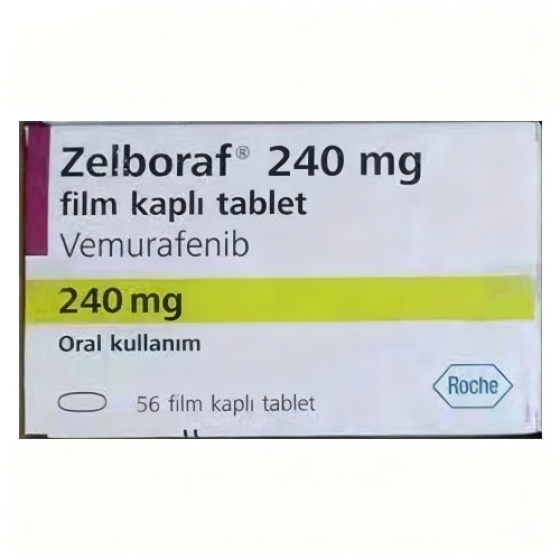
Vemurafenib (Zelboraf) Complete Medication Guide
1.Standard Dosage Regimen
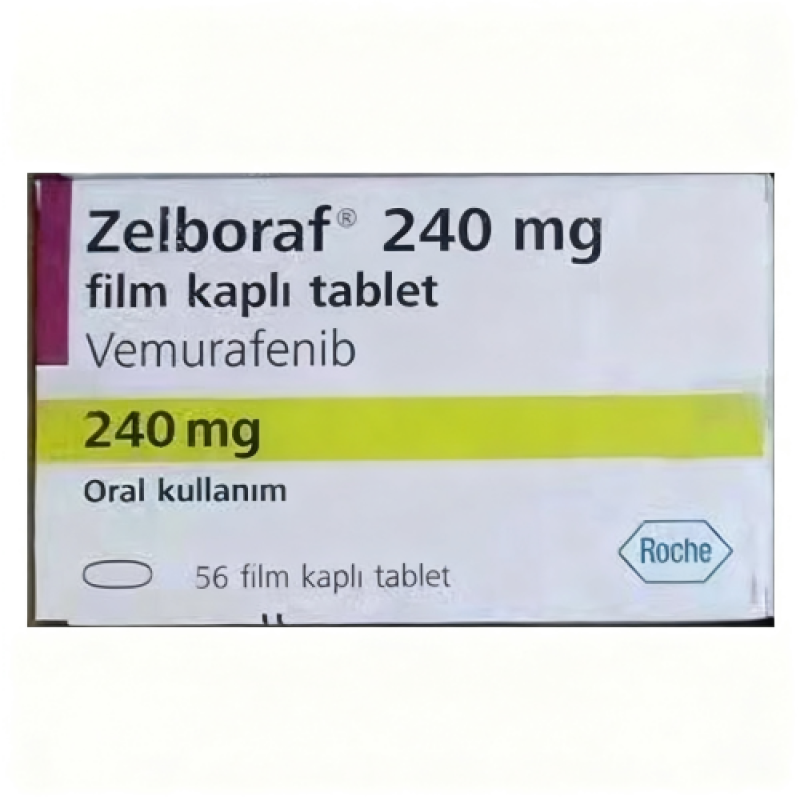
Vemurafenib is indicated for the treatment of unresectable or metastatic melanoma with confirmed BRAF V600 mutation.The standard recommended dose is 960mg(four 240mg tablets)taken orally twice daily,approximately 12 hours apart(once in the morning and once in the evening),resulting in a total daily dose of 1920mg.Tablets should be swallowed whole with water and must not be crushed,chewed,or dissolved.
2.Administration Instructions
Vemurafenib should be taken with food or within 1 hour after a meal.This not only reduces gastrointestinal side effects such as nausea and diarrhea but also ensures consistent drug absorption.It is important to note that high-fat meals increase drug absorption by approximately 30%.Therefore,patients should maintain a relatively consistent dietary pattern to avoid significant fluctuations in blood drug concentrations.
Patients should take vemurafenib at the same times each day,such as 8 AM and 8 PM,and may set alarms to remind them.If a dose is missed,it should be taken as soon as remembered if there are more than 6 hours until the next scheduled dose.If less than 6 hours remain until the next dose,the missed dose should be skipped,and the regular dosing schedule should resume.Do not take a double dose to make up for a missed dose.
If vomiting occurs within 30 minutes after taking a dose,an additional dose may be taken.If vomiting occurs more than 30 minutes after dosing,no additional dose is needed,and the next dose should be taken at the regularly scheduled time.
3.Dose Adjustment Guidelines
Vemurafenib should be interrupted in patients who develop Grade 3 or 4 adverse events.Treatment may be restarted at a reduced dose once the adverse event has resolved to Grade 1 or lower.Dose adjustments follow this stepwise approach:
First dose reduction:720mg(three tablets)twice daily
Second dose reduction:480mg(two tablets)twice daily
Third dose reduction:240mg(one tablet)twice daily
Permanent discontinuation is recommended if patients cannot tolerate vemurafenib at 240mg twice daily.Common toxicities requiring dose adjustment include:
Grade 3 rash(affecting>30%of body surface area):Reduce to 720mg twice daily
QTc interval>500ms:Reduce to 720mg twice daily
Alanine aminotransferase(ALT)>5 times the upper limit of normal:Reduce to 720mg twice daily;permanently discontinue if elevations persist despite dose reduction
4.Special Populations
Hepatic impairment:No dose adjustment is needed for mild hepatic impairment(Child-Pugh Class A).For moderate hepatic impairment(Child-Pugh Class B),the recommended starting dose is 720mg twice daily.Vemurafenib is contraindicated in patients with severe hepatic impairment(Child-Pugh Class C).
Renal impairment:No dose adjustment is needed for mild to moderate renal impairment.Caution is advised in patients with severe renal impairment(creatinine clearance<30mL/min).
Elderly patients(65 years and older):No initial dose adjustment is generally required.However,elderly patients are more likely to experience QTc prolongation and skin toxicities,and therefore require closer monitoring during treatment.
5.Treatment Duration and Monitoring
Vemurafenib should be continued long-term until disease progression or unacceptable toxicity occurs.Imaging assessments(CT or MRI scans)should be performed every 8 weeks to evaluate treatment response.Even if a complete response is achieved,continued treatment for at least 6 months is recommended to reduce the risk of disease recurrence.
The following monitoring tests should be performed regularly during treatment:
Liver function tests:Before treatment initiation and monthly thereafter
Electrocardiograms(ECGs):Before treatment initiation,on day 15 of treatment,and every 3 months thereafter
Dermatologic examinations:Every 2 months to screen for new skin neoplasms,including keratoacanthomas and cutaneous squamous cell carcinomas
Complete blood counts:Every 2-3 months
6.Drug Interactions and Patient Education
During treatment with vemurafenib,patients should avoid consuming grapefruit and grapefruit juice,as well as Seville oranges.These foods inhibit the activity of the CYP3A4 enzyme,which may affect drug metabolism and lead to increased blood drug concentrations.
Vemurafenib is associated with a high risk of photosensitivity reactions.Patients must take strict sun protection measures during treatment and for several days after discontinuation.This includes using a broad-spectrum sunscreen with a sun protection factor(SPF)of at least 50,along with physical protection such as hats,long-sleeved clothing,and sunglasses.Sun protection should be maintained even on cloudy days and when inside vehicles.
Patients should closely monitor their skin and seek immediate medical attention if they develop any new skin lesions,such as papules,nodules,ulcers,or erythema.
Regarding pricing,the cost of the original brand medication(240mg×56 tablets per box)varies by region worldwide.Generic versions are available in some countries and regions.Patients should consult local healthcare providers or pharmacies for accurate pricing information.
7.Summary
Vemurafenib is the standard targeted therapy for BRAF V600 mutation-positive melanoma,with a recommended standard dose of 960mg twice daily.Patients must take the medication strictly as scheduled,maintain a consistent dietary pattern,carefully manage skin and cardiac toxicities,and undergo regular monitoring as directed by their healthcare provider to ensure the safety and effectiveness of treatment.
[ 免责声明 ] 本页面内容来自公开渠道(如FDA官网、Drugs官网、原研药厂官网等),仅供持有医疗专业资质的人员用于医学药学研究参考,不构成任何治疗建议或药品推荐。所涉药品可能未在中国大陆获批上市,不适用于中国境内销售和使用。如需治疗,请咨询正规医疗机构。本站不提供药品销售或代购服务。