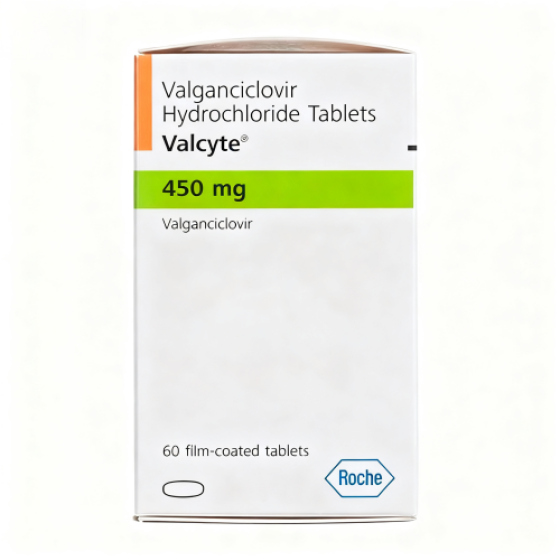
.jpeg)
Valganciclovir (Valcyte) in Post-Transplant CMV Management: A Comprehensive Guide
1.Drug Positioning:The Cornerstone of Post-Transplant CMV Defense
Valganciclovir is the L-valyl ester prodrug of ganciclovir,rapidly converted to its active form after oral administration.It selectively inhibits CMV DNA polymerase,thereby blocking viral replication.With an oral bioavailability approximately tenfold higher than ganciclovir capsules,valganciclovir allows patients to complete their anti-CMV course without prolonged intravenous access,greatly improving convenience.
In solid organ transplantation,valganciclovir is endorsed by the Transplantation Society(TTS)and multiple international guidelines as the first-line agent for CMV prophylaxis in high-risk recipients.In donor CMV-seropositive/recipient CMV-seronegative(D+/R−)pairs,appropriate valganciclovir prophylaxis reduces the incidence of CMV disease by approximately 50%and improves long-term graft and patient survival.In the pediatric setting,the drug is approved for CMV prophylaxis in kidney transplant recipients aged 4 months to 16 years and heart transplant recipients aged 1 month to 16 years.Importantly,valganciclovir is not indicated for CMV prophylaxis in hematopoietic stem cell(bone marrow)transplant recipients,who typically receive intravenous ganciclovir.
2.Prophylactic Regimens:Tailored by Transplant Type
The duration of prophylaxis varies according to the type of organ transplanted.Kidney transplant recipients should initiate valganciclovir 900 mg once daily within 10 days post-transplant and continue through day 200.Heart and kidney-pancreas transplant recipients follow the same 900 mg once-daily dosing but continue through day 100.Pediatric dosing is individualized based on body surface area and creatinine clearance.
These durations are designed to cover the highest-risk window for CMV reactivation.Premature discontinuation or inconsistent dosing may result in breakthrough CMV viremia,making strict adherence to the prescribed schedule essential.
3.Adverse Effect Surveillance:Myelosuppression at the Forefront
The most clinically significant adverse effect of valganciclovir is myelosuppression,manifesting as neutropenia,anemia,and thrombocytopenia.In the early post-transplant period,patients are already receiving multiple immunosuppressive agents such as tacrolimus and mycophenolate mofetil,and bone marrow recovery is still underway.Adding valganciclovir amplifies the risk of cytopenias.Gastrointestinal effects,including diarrhea and nausea,are also relatively common and may be compounded by polypharmacy.
Complete blood counts should be monitored weekly during therapy.If the absolute neutrophil count falls below 500/μL or the platelet count drops below 25,000/μL,valganciclovir should be withheld immediately and supportive measures initiated.The transplant team will reassess whether to resume therapy once hematologic parameters recover.
4.Managing Adverse Effects:Proactive Intervention and Symptomatic Care
For patients at high risk of myelosuppression,prophylactic granulocyte colony-stimulating factor(G-CSF)may be considered to maintain adequate neutrophil levels.Platelet transfusion may be warranted in cases of severe thrombocytopenia.
Gastrointestinal symptoms are managed through dietary modifications—small,frequent,bland meals—and adequate hydration to protect renal function.Ondansetron may be prescribed for persistent nausea,and loperamide can be used short-term for diarrhea.Patients who develop intractable vomiting or severe diarrhea should seek prompt medical evaluation to prevent dehydration and electrolyte imbalances that could compromise the transplanted kidney.
5.Dose Adjustment and Discontinuation:Guided by Renal Function
Valganciclovir is eliminated primarily by the kidneys.Transplant recipients should undergo regular serum creatinine testing and creatinine clearance calculations.Any decline in renal function necessitates dose reduction in accordance with the prescribing information to prevent drug accumulation and toxicity.
If CMV viremia recurs or viral loads rise during prophylaxis,antiviral resistance should be suspected.Genotypic resistance testing of the CMV UL97 and UL54 genes should be performed.Confirmed resistance may require a switch to alternative agents such as foscarnet or cidofovir.Upon completion of the planned prophylactic course,if serial CMV-DNA quantitative tests show no evidence of infection,the drug may be stopped on schedule without tapering.
6.Drug Interactions and Special Clinical Scenarios
Co-administration of valganciclovir with mycophenolate mofetil can produce additive myelosuppressive effects,necessitating more frequent hematologic monitoring.Interactions with probenecid,zidovudine,and other agents should also be considered when the immunosuppressive regimen is modified.
For transplant recipients who progress to severe CMV end-organ disease such as CMV pneumonitis or encephalitis,oral valganciclovir alone is insufficient.Intravenous ganciclovir is the preferred initial therapy,with transition to oral valganciclovir once clinical stability is achieved.Renal impairment is prevalent among transplant recipients,particularly those with comorbid diabetes or chronic hypertension,underscoring the need for meticulous dose management.
7.Adherence and Long-Term Follow-Up:Securing Prophylactic Efficacy
Prophylactic courses of 100 to 200 days demand consistent adherence.Patients should take valganciclovir at a fixed time each day,preferably with food to enhance absorption.Pill organizers and phone alarms can serve as useful reminders.If a dose is missed,it should be taken as soon as remembered;however,if the next scheduled dose is approaching,the missed dose should be skipped rather than doubled.
Regular follow-up at the transplant clinic is essential,including complete blood counts,renal function panels,and CMV-DNA quantitative testing.Family support and gentle reminders play an irreplaceable role in sustaining patient adherence throughout the prophylactic period.
[ 免责声明 ] 本页面内容来自公开渠道(如FDA官网、Drugs官网、原研药厂官网等),仅供持有医疗专业资质的人员用于医学药学研究参考,不构成任何治疗建议或药品推荐。所涉药品可能未在中国大陆获批上市,不适用于中国境内销售和使用。如需治疗,请咨询正规医疗机构。本站不提供药品销售或代购服务。