.jpeg)
Cemiplimab Mechanism of Action: How PD-1 Inhibition Restores Antitumor Immunity
1.Overview and Core Mechanism
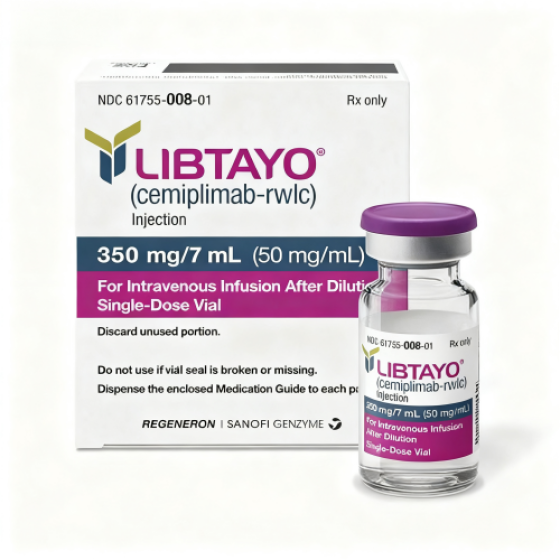
Cemiplimab is a recombinant human IgG4 monoclonal antibody and a PD-1 immune checkpoint inhibitor.Instead of directly killing tumor cells,it binds to programmed death receptor 1(PD-1)on T cells,blocking the interaction of PD-1 with its ligands PD-L1 and PD-L2.This reduces PD-1-mediated suppression of T-cell function,helping the immune system recognize and attack tumors.
2.PD-1 Pathway and Tumor Immune Evasion
Under normal conditions,PD-1 binding to PD-L1/PD-L2 prevents excessive T-cell activation and maintains immune balance.In the tumor microenvironment,however,this pathway is often exploited by tumor cells and related cells,leading to suppression of antitumor T cells.Reduced T-cell immune surveillance allows tumor cells to grow and evade immune attack.
3.How the Drug Releases Immune Suppression
By binding to PD-1,cemiplimab prevents PD-L1 and PD-L2 from interacting with PD-1,thereby releasing PD-1-mediated immune suppression.With this"immune brake"lifted,T-cell proliferation,cytokine secretion,and cytotoxic functions are restored or enhanced,improving antitumor immune responses.
4.Clinical Use and Patient Selection
Cemiplimab is currently used for cutaneous squamous cell carcinoma,basal cell carcinoma,and certain non-small cell lung cancers(NSCLC).Patient selection criteria vary by indication;for example,NSCLC treatment requires assessment of PD-L1 expression levels and genetic alterations such as EGFR,ALK,and ROS1.
5.Conclusion
The core of cemiplimab's mechanism lies in blocking the PD-1/PD-L1/PD-L2 pathway to release immune suppression and restore T-cell antitumor immunity.This defines its role as a key PD-1 immune checkpoint inhibitor.
[ 免责声明 ] 本页面内容来自公开渠道(如FDA官网、Drugs官网、原研药厂官网等),仅供持有医疗专业资质的人员用于医学药学研究参考,不构成任何治疗建议或药品推荐。所涉药品可能未在中国大陆获批上市,不适用于中国境内销售和使用。如需治疗,请咨询正规医疗机构。本站不提供药品销售或代购服务。