.jpeg)
Axitinib: Indications, Mechanism of Action & Key Safety Warnings
Drug Profile and Approved Indications
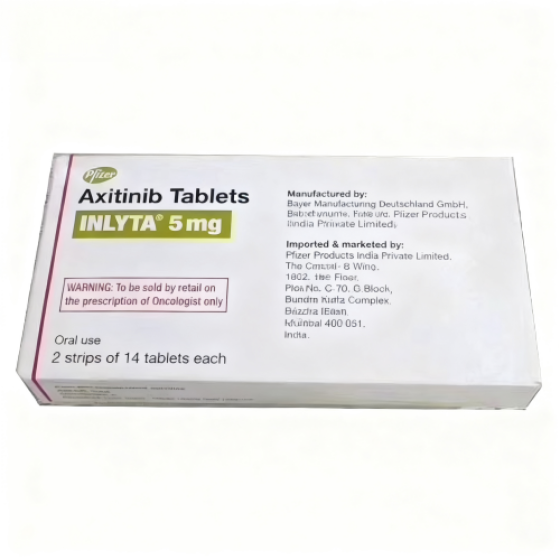
Axitinib(brand name:Inlyta)is a small-molecule oral tyrosine kinase inhibitor positioned as a targeted therapy for advanced renal cell carcinoma(RCC).It carries three approved indications:in combination with avelumab as first-line treatment for advanced RCC;in combination with pembrolizumab as first-line treatment for advanced RCC;and as monotherapy for patients with advanced RCC who have progressed after one prior line of systemic therapy.By suppressing tumor angiogenesis and cell proliferation,axitinib delays disease progression and improves survival outcomes.
Composition and Physicochemical Properties
The active pharmaceutical ingredient is axitinib,chemically designated as N-methyl-2-[3-((E)-2-pyridin-2-yl-vinyl)-1H-indazol-6-ylsulfanyl]benzamide,with a molecular weight of approximately 386.It is available as film-coated tablets in 1 mg and 5 mg strengths.Inactive ingredients include microcrystalline cellulose,lactose,croscarmellose sodium,and magnesium stearate.The drug exhibits favorable oral bioavailability,supporting long-term outpatient management.
Mechanism of Antitumor Action
Axitinib competitively binds to the ATP-binding site within the intracellular tyrosine kinase domain of VEGFR-1,VEGFR-2,and VEGFR-3,inhibiting receptor autophosphorylation and downstream signaling cascades including the RAS-RAF-MEK-ERK and PI3K-AKT pathways.This blockade impairs VEGF-driven neovascularization and tumor cell proliferation.Compared with first-generation multi-target TKIs such as sunitinib,axitinib demonstrates markedly higher selectivity and potency against VEGFR-2,with substantially weaker activity against off-target kinases such as c-KIT and PDGFR,resulting in a more favorable safety profile.
Pre-Treatment Warning:Blood Pressure Management
Hypertension is the most common adverse event requiring active intervention during axitinib therapy.Nearly all patients experience some degree of blood pressure elevation.Prior to initiating treatment,baseline blood pressure should be well controlled below 140/90 mmHg.Daily blood pressure monitoring is recommended throughout therapy.If systolic pressure persistently exceeds 140 mmHg or diastolic pressure exceeds 90 mmHg,antihypertensive therapy—preferably with ACE inhibitors,ARBs,or calcium channel blockers—should be initiated or adjusted.In the event of hypertensive crisis or hypertensive encephalopathy,axitinib must be withheld immediately and resumed only after blood pressure has stabilized under medical supervision.
Pre-Treatment Warning:Thrombotic and Bleeding Events
Axitinib may increase the risk of arterial thromboembolic events(myocardial infarction,stroke)and hemorrhagic events(epistaxis,hematuria,and rarely intracranial hemorrhage).A thorough assessment of cardiovascular history and bleeding risk should be performed before treatment.Caution is warranted in patients with a prior history of arterial thrombosis.Those receiving concurrent anticoagulants or antiplatelet agents require close monitoring for signs of bleeding.Permanent discontinuation is required if a serious hemorrhagic or thromboembolic event occurs.
Pre-Treatment Warning:Thyroid Function Monitoring
Hypothyroidism occurs in approximately 10%–15%of patients treated with axitinib.Thyroid function tests(TSH and free T4)should be obtained before starting therapy and repeated every 4–6 weeks during treatment.If TSH is elevated with a decreased free T4,levothyroxine replacement should be initiated.Clinicians should be aware that symptoms of hypothyroidism—fatigue,cold intolerance,and weight gain—may be mistakenly attributed to nonspecific drug side effects or the underlying malignancy.
Pre-Treatment Warning:Gastrointestinal Perforation and Wound Healing
Axitinib carries a risk of gastrointestinal perforation and fistula formation,presenting with sudden-onset abdominal pain,fever,and peritoneal signs that require urgent surgical evaluation.For elective surgery,axitinib should be withheld for at least 24–48 hours beforehand;in clinical practice,a 5-to 7-day discontinuation window is commonly observed.Therapy may resume only after adequate wound healing is confirmed.Patients with a history of peptic ulcer disease or diverticulitis should use axitinib with particular caution.
Drug Interactions
Axitinib is predominantly metabolized by hepatic CYP3A4.Co-administration with strong CYP3A4 inhibitors(e.g.,itraconazole,clarithromycin)may significantly elevate axitinib plasma concentrations,necessitating dose reduction and enhanced monitoring.Conversely,strong CYP3A4 inducers(e.g.,rifampin,phenytoin)may substantially reduce axitinib exposure and compromise efficacy;concurrent use should be avoided.Patients should also refrain from consuming grapefruit or grapefruit juice during treatment to prevent interference with drug metabolism.
[ 免责声明 ] 本页面内容来自公开渠道(如FDA官网、Drugs官网、原研药厂官网等),仅供持有医疗专业资质的人员用于医学药学研究参考,不构成任何治疗建议或药品推荐。所涉药品可能未在中国大陆获批上市,不适用于中国境内销售和使用。如需治疗,请咨询正规医疗机构。本站不提供药品销售或代购服务。