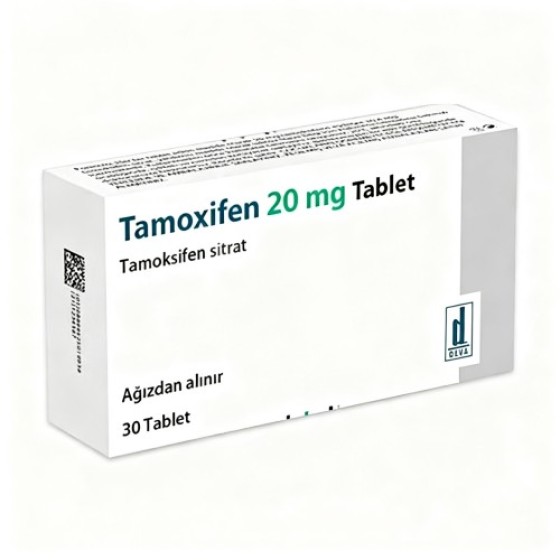
.jpeg)
Tamoxifen Long-Term Safety: Vigilance for Thrombosis and Endometrial Risks
1.Overview and Common Adverse Reactions
Tamoxifen is a long-established agent in breast cancer endocrine therapy,suitable for long-term use in most patients under standard protocols.Common adverse reactions include hot flashes,night sweats,vaginal discharge changes,menstrual irregularities,mood swings,and gastrointestinal discomfort.
It is important to note that tamoxifen exerts tissue-specific modulation of estrogen receptors—antagonistic in breast tissue but partially agonistic in endometrial tissue.Therefore,its side-effect profile cannot be simply attributed to"estrogen deprivation."The U.S.National Cancer Institute(NCI)lists hot flashes,venous thromboembolic events,and endometrial cancer as key safety concerns requiring close monitoring.
2.Venous Thromboembolism Risk
Venous thromboembolism is among the most serious potential adverse reactions of long-term tamoxifen use.Patients may develop deep vein thrombosis or pulmonary embolism,which can be life-threatening.NCI data clearly indicate that tamoxifen is associated with an increased risk of venous thromboembolic events.
Higher-risk groups include:
Individuals with a prior history of thrombosis;
Those with prolonged immobility;
Patients with underlying thrombotic risk factors(e.g.,obesity,smoking,inherited thrombophilia).
Clinical vigilance is warranted for warning signs such as sudden leg swelling or pain,chest pain,and dyspnea.Long-term endocrine therapy safety assessment must extend beyond breast cancer control to include systemic thrombotic risk.
3.Endometrial Abnormalities
While tamoxifen acts as an estrogen antagonist in breast tissue,it exhibits estrogen-like effects in the endometrium.Consequently,long-term use is associated with an elevated risk of endometrial cancer.NCI notes that this risk becomes more pronounced with longer duration of use and is particularly significant in postmenopausal women.
Clinical vigilance is advised for:
Any abnormal vaginal bleeding in postmenopausal women;
Bloody discharge or other signs of endometrial abnormality.
Timely gynecologic evaluation should be considered to rule out endometrial pathology.
4.Conclusion
Long-term tamoxifen management should be based on a benefit-risk assessment.Baseline evaluation of thrombotic and endometrial risk is recommended before initiation,with ongoing monitoring throughout treatment to ensure both safety and therapeutic continuity.
[ 免责声明 ] 本页面内容来自公开渠道(如FDA官网、Drugs官网、原研药厂官网等),仅供持有医疗专业资质的人员用于医学药学研究参考,不构成任何治疗建议或药品推荐。所涉药品可能未在中国大陆获批上市,不适用于中国境内销售和使用。如需治疗,请咨询正规医疗机构。本站不提供药品销售或代购服务。