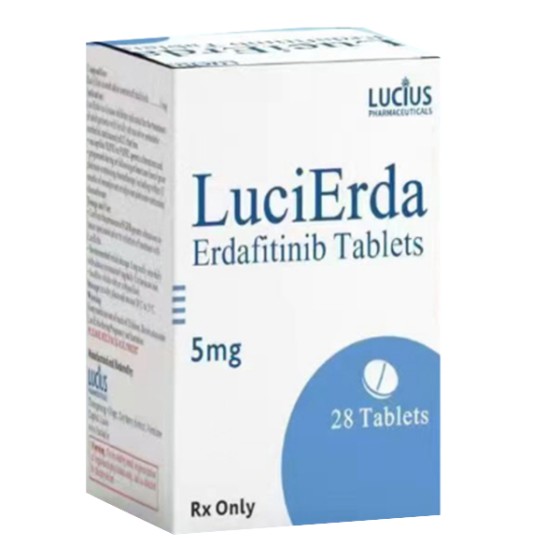
.jpeg)
Erdafitinib in Lung Squamous Cell Carcinoma: Indication Boundaries and FGFR Interpretation
1.Not a Routine Targeted Drug for Lung Squamous Cancer
Erdafitinib is an oral,selective FGFR1-4 tyrosine kinase inhibitor.Its core approved use is for adults with locally advanced or metastatic urothelial carcinoma harboring susceptible FGFR3 alterations after at least one prior line of systemic therapy.
Lung squamous cell carcinoma is a subtype of non-small cell lung cancer.Some patients test positive for FGFR-family abnormalities,but:
squamous histology alone does not justify use;
“FGFR positive”is not a complete enough reason to prescribe;
the drug is not a standard routine targeted option for lung squamous cancer.
2.How It Works
FGFRs regulate cell proliferation,survival,and differentiation.Certain genetic alterations can keep the receptor constitutively active.
Erdafitinib binds the FGFR kinase domain and suppresses abnormal signaling,which may reduce tumor cell proliferation and survival.However,“inhibits FGFR”is not the same as“will work in this patient.”
3.FGFR Abnormalities Are Not All the Same
At least three categories matter:
point mutations,e.g.activating FGFR3 mutations;
gene fusions,e.g.FGFR3-TACC3;
amplification,i.e.copy-number increase,which may not always be the primary driver.
In lung squamous carcinoma:
fusions and defined activating mutations carry stronger clinical relevance;
amplification may reflect passenger events or co-amplification;
protein overexpression alone is not sufficient to infer response.
The report should specify:which gene,what variant,how it was detected,and whether it is considered a clinically actionable alteration.
4.How to Evaluate Eligibility
A reasonable pathway:
use validated NGS or appropriate molecular testing;
have a molecular tumor board or thoracic oncologist interpret the finding;
check whether FGFR-variant NSCLC data or trials match the case;
review prior lines,immunotherapy exposure,performance status,and comorbidities;
prefer matched clinical trials or,when appropriate,fully informed off-label evaluation.
If classic drivers exist—EGFR,ALK,ROS1,BRAF,MET,etc.—those pathways usually take priority.
5.Keep Expectations Realistic
Even with a plausible target,response is not guaranteed:
different FGFR variants may behave differently;
co-alterations in TP53 or PI3K pathways can affect outcomes;
benefit may appear as shrinkage,stabilization,or slower progression.
Decisions should integrate imaging,symptoms,functional status,and subsequent treatment options—not a single genetic line item.
6.Safety Cannot Be Ignored
If erdafitinib is initiated,monitoring should include:
serum phosphate and renal-related parameters;
ocular toxicity,including blurred vision or retinal changes;
stomatitis,diarrhea,skin and nail toxicity;
liver/kidney function and electrolytes;
dose adjustments guided by phosphate levels and tolerability.
This reinforces that the drug belongs in specialist-led care,not self-directed use.
7.One-Line Summary
Erdafitinib is a drug to discuss only when the FGFR alteration is clearly defined—not a universal targeted therapy for lung squamous cell carcinoma.
[ 免责声明 ] 本页面内容来自公开渠道(如FDA官网、Drugs官网、原研药厂官网等),仅供持有医疗专业资质的人员用于医学药学研究参考,不构成任何治疗建议或药品推荐。所涉药品可能未在中国大陆获批上市,不适用于中国境内销售和使用。如需治疗,请咨询正规医疗机构。本站不提供药品销售或代购服务。