.jpeg)
Fulvestrant (Faslodex) Breast Cancer Guide: Indications, Dosage and Safety Specifications
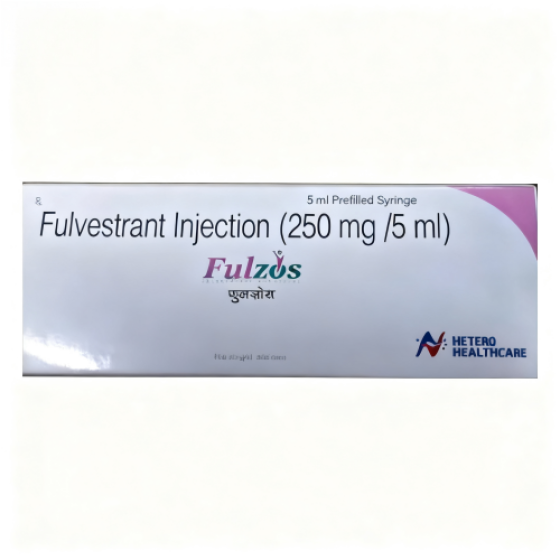
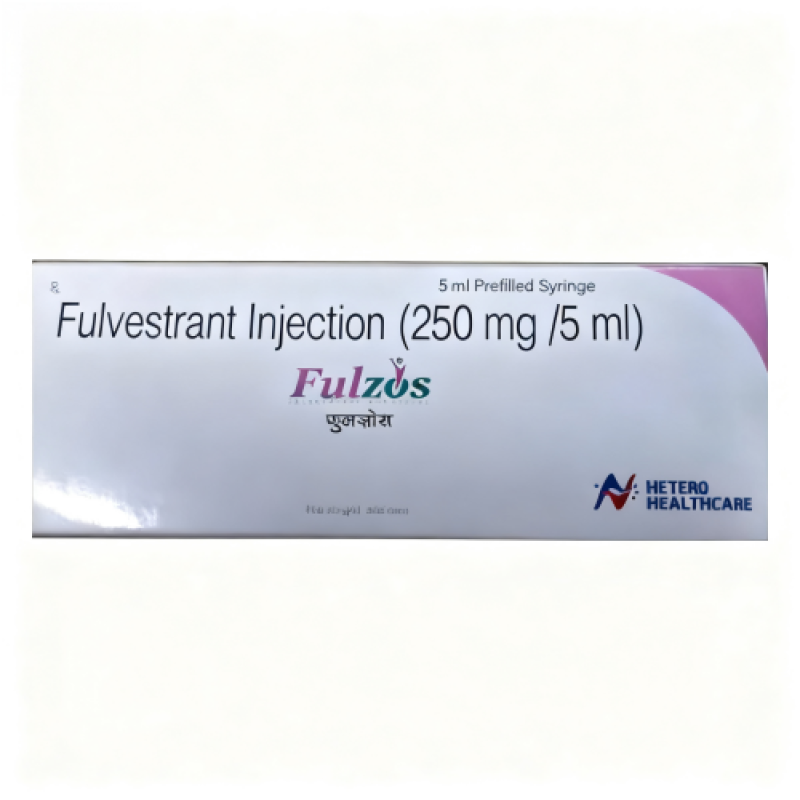
Fulvestrant(brand name Faslodex)is a selective estrogen receptor degrader(SERD)developed by AstraZeneca UK,which is a core endocrine therapy agent for the treatment of breast cancer.The drug competitively binds to estrogen receptors,induces degradation of the receptor structure,downregulates the expression level of estrogen receptors in tumor cells,thereby blocking the estrogen-mediated tumor proliferation signaling pathway and inhibiting the growth and survival of estrogen-dependent breast cancer cells.It is administered via intramuscular injection into the buttocks,with a conventional specification of 250mg/5ml.The core target population is patients with estrogen receptor-positive locally advanced or metastatic breast cancer,especially postmenopausal women who have failed previous anti-estrogen therapy or experienced disease progression.
Indications
The clinical application of Fulvestrant is divided into two major scenarios:single-agent therapy and combination therapy,both targeting hormone receptor(HR)-positive breast cancer as the core indication.
In the single-agent therapy setting,Fulvestrant is indicated for two groups of postmenopausal women:first,patients with hormone receptor(HR)-positive,human epidermal growth factor receptor 2(HER2)-negative advanced breast cancer who have not received prior endocrine therapy;second,patients with HR-positive advanced breast cancer who have experienced disease progression after prior endocrine therapy.
In the combination therapy setting,Fulvestrant can be used in combination with CDK4/6 inhibitors for patients with HR-positive,HER2-negative advanced or metastatic breast cancer.Among them,in combination with ribociclib,it is indicated for postmenopausal women as initial endocrine therapy or for those who have experienced disease progression after endocrine therapy;in combination with palbociclib or abemaciclib,it is indicated for female patients who have experienced disease progression after endocrine therapy.Of note,premenopausal or perimenopausal women receiving Fulvestrant in combination with a CDK4/6 inhibitor should receive concurrent therapy with a luteinizing hormone-releasing hormone(LHRH)agonist.
Dosage and Administration
Recommended Dosage
The recommended dose for single-agent therapy is 500mg,administered via slow intramuscular injection into the buttocks,with each injection lasting 1-2 minutes.A single dose requires 2 vials of 5ml specification injection,with 1 injection of 250mg into each buttock.The dosing schedule is administration on Day 1,Day 15 and Day 29,followed by a maintenance frequency of once monthly thereafter.
For combination therapy,the dosage,injection method and dosing schedule of Fulvestrant are completely consistent with those of single-agent therapy,that is,500mg intramuscular injection on Day 1,Day 15 and Day 29,followed by once monthly thereafter.The combined CDK4/6 inhibitor should be administered at the standard dose:when combined with palbociclib,the recommended dose is 125mg orally once daily for 21 consecutive days followed by 7 days off treatment,with a 28-day treatment cycle,and should be taken with food;when combined with abemaciclib,the recommended dose is 150mg orally twice daily,with or without food;when combined with ribociclib,the recommended dose is 600mg orally once daily for 21 consecutive days followed by 7 days off treatment,with a 28-day treatment cycle,with or without food.
Dose Adjustment
In the single-agent therapy setting,dose adjustment is mainly for patients with hepatic impairment.For patients with moderate hepatic impairment(Child-Pugh Class B),the recommended dose is adjusted to 250mg,administered via intramuscular injection into the buttocks on Day 1,Day 15 and Day 29,followed by once monthly thereafter.The safety and efficacy of Fulvestrant in patients with severe hepatic impairment(Child-Pugh Class C)have not been established in clinical studies,and use is not recommended.
In the combination therapy setting,the dose adjustment rules for Fulvestrant are consistent with those for single-agent therapy,and the combined CDK4/6 inhibitor should be dose-adjusted in accordance with its official prescribing information.
Adverse Reactions
In patients receiving 500mg Fulvestrant,the most common adverse reactions with an incidence rate of≥5%include:injection site pain,nausea,bone pain,arthralgia,headache,back pain,fatigue,pain in extremity,hot flush,vomiting,decreased appetite,asthenia,musculoskeletal pain,cough,dyspnea,constipation.In addition,clinical data show that the incidence of elevated liver function parameters(ALT,AST,ALP)is more than 15%in patients receiving Fulvestrant treatment,and this adverse reaction has no obvious dose dependence.
Contraindications
Fulvestrant is contraindicated in patients with hypersensitivity to the active substance or to any of the excipients.There have been post-marketing reports of hypersensitivity reactions,including urticaria and angioedema,in patients using Fulvestrant,and special caution should be exercised in patients with a history of hypersensitivity.
Warnings and Precautions
Fulvestrant is administered via intramuscular injection,therefore it should be used with caution in patients with bleeding diathesis,thrombocytopenia,or in patients receiving anticoagulant therapy,to avoid the risk of bleeding at the injection site.
Clinical pharmacokinetic studies have shown that drug exposure of Fulvestrant is significantly increased in patients with moderate hepatic impairment,so the dosage must be adjusted strictly in accordance with the specifications;there is no complete clinical research data for patients with severe hepatic impairment,and the use of this product is not recommended.
This product is administered via injection into the gluteus maximus,which is adjacent to the sciatic nerve.Injection site-related adverse events,including sciatica,neuralgia,neuropathic pain and peripheral neuropathy,have been reported after injection of Fulvestrant,so extreme caution is required during the injection operation and standardized administration.
Based on findings from animal studies and its mechanism of action,Fulvestrant can cause fetal harm when administered to a pregnant woman.Reproductive toxicity studies in pregnant rats and rabbits have shown that administration of Fulvestrant during organogenesis results in embryo-fetal toxicity at exposure levels well below the maximum recommended human dose.Pregnant women should be informed of the potential risk to the fetus,and women of reproductive potential are advised to use effective contraception during treatment and for 1 year after the last dose.
Due to the structural similarity between Fulvestrant and estradiol,Fulvestrant can interfere with the immunological assay of estradiol,resulting in falsely elevated estradiol levels.The medication history should be informed in advance during clinical testing to avoid misinterpretation of results.
Use in Specific Populations
Pregnancy:Based on findings from animal studies and its mechanism of action,Fulvestrant can cause fetal harm when administered to a pregnant woman.There are no adequate clinical data on the use of Fulvestrant in pregnant women to inform drug-associated risk.In reproductive toxicity studies,administration of Fulvestrant to pregnant rats and rabbits during organogenesis resulted in embryo-fetal toxicity,including skeletal malformations and fetal death,at daily doses that were only 6%and 30%of the maximum recommended human dose on a body surface area basis,respectively.Pregnant women should be clearly informed of the potential risk to the fetus.
Lactation:There is no information regarding the presence of Fulvestrant in human milk,the effects on milk production,or the effects on the breastfed infant.Fulvestrant has been detected in the milk of lactating rats.Due to the potential for serious adverse reactions in breastfed infants from Fulvestrant,lactating women are advised to discontinue breastfeeding during treatment and for 1 year after the last dose.
Females and Males of Reproductive Potential:Pregnancy testing is recommended for females of reproductive potential within 7 days prior to initiating Fulvestrant treatment;effective contraception should be used during treatment and for 1 year after the last dose.Animal studies have shown that Fulvestrant may impair fertility in males and females of reproductive potential,and the effects on fertility in female rats are reversible.
Pediatric Use:The safety and efficacy of Fulvestrant in pediatric patients have not been established,and use in the pediatric population is not recommended.
Geriatric Use:Clinical study data showed that in patients receiving 250mg Fulvestrant,the objective response rate was 22%and 24%in patients aged<65 years,and 11%and 16%in patients aged≥65 years.Treatment response should be closely monitored in elderly patients.
Hepatic Impairment:Fulvestrant is mainly metabolized in the liver.Patients with mild hepatic impairment(Child-Pugh Class A)have no significant difference in drug exposure and clearance compared with patients with normal liver function,and no dose adjustment is required.The mean drug exposure of patients with moderate hepatic impairment(Child-Pugh Class B)is 70%higher than that of the normal population,and the dose should be adjusted to 250mg.There is no clinical study data for patients with severe hepatic impairment(Child-Pugh Class C),and use is not recommended.
Renal Impairment:Very little of Fulvestrant is excreted via the urine,therefore no dedicated clinical studies have been conducted in patients with renal impairment.Clinical trial data in advanced breast cancer showed that patients with creatinine clearance as low as 30mL/min had similar plasma concentrations to patients with normal renal function,and no dose adjustment is required for patients with renal impairment.
Drug Interactions
No clinically significant drug interactions with Fulvestrant have been identified to date.Although Fulvestrant is metabolized by CYP3A4 in vitro,drug interaction studies with ketoconazole(a strong CYP3A4 inhibitor)and rifampicin(a strong CYP3A4 inducer)showed that the concomitant drugs had no significant effect on the pharmacokinetic profile of Fulvestrant.Therefore,no dose adjustment of Fulvestrant is required for patients concomitantly treated with CYP3A4 inhibitors or inducers.
Pharmacokinetics
In terms of absorption,clinical data of the 500mg dosing regimen(including the additional dose on Day 15)showed that an additional dose of Fulvestrant two weeks after the initial administration allows the plasma concentration to reach steady state within the first month of treatment.
In terms of distribution,the steady-state apparent volume of distribution of this product is approximately 3 to 5 L/kg,indicating that the drug is mainly distributed in extravascular tissues.Fulvestrant is highly bound to plasma proteins,with a binding rate of 99%.The main binding proteins are very low-density lipoprotein,low-density lipoprotein and high-density lipoprotein.It is currently unclear whether sex hormone-binding globulin is involved in drug binding.
In terms of metabolism,the biotransformation and disposition of Fulvestrant in humans have been characterized after intramuscular and intravenous administration of radiolabeled Fulvestrant.The metabolic pathway of Fulvestrant is similar to that of endogenous steroids,completed through a variety of pathways,including oxidation,aromatic ring hydroxylation,conjugation with glucuronic acid and/or sulfate at positions 2,3 and 17 of the steroid nucleus,and oxidation of the side chain sulfoxide.The identified metabolites have activity lower than or similar to that of the parent drug in anti-estrogen activity models.In vitro studies using human liver preparations and recombinant human enzymes have shown that CYP3A4 is the only P450 isoenzyme involved in the oxidative metabolism of Fulvestrant,but the relative contribution of P450 and non-P450 pathways in vivo is currently unclear.
In terms of excretion,Fulvestrant is mainly cleared rapidly via the hepatobiliary route,with approximately 90%of the drug excreted in feces and less than 1%excreted via the kidneys.After intramuscular injection of 250mg Fulvestrant,the mean drug clearance rate is 690±226mL/min,and the apparent half-life is approximately 40 days.
The content of this article is referenced from the official FDA website,clinical studies and prescribing information published by the original manufacturer,for reference only by medical professionals and patients,and does not constitute any diagnosis or treatment advice.Please follow the doctor's advice for specific medication plans.
[ 免责声明 ] 本页面内容来自公开渠道(如FDA官网、Drugs官网、原研药厂官网等),仅供持有医疗专业资质的人员用于医学药学研究参考,不构成任何治疗建议或药品推荐。所涉药品可能未在中国大陆获批上市,不适用于中国境内销售和使用。如需治疗,请咨询正规医疗机构。本站不提供药品销售或代购服务。