.jpeg)
Tivozanib: The Evolution of Highly Selective VEGFR Inhibition in Renal Cell Carcinoma
Tivozanib is a next-generation vascular endothelial growth factor receptor (VEGFR) tyrosine kinase inhibitor, distinguished by its high selectivity and potent, long-lasting target inhibition. Its development journey reflects a sophisticated approach to balancing efficacy with safety in oncology drug design.
1. Rational Design and Optimization
Prior VEGFR inhibitors often suffered from off-target toxicity or short half-lives. Tivozanib was engineered through structure-based drug design to achieve high-affinity inhibition of VEGFR-1, 2, and 3, while minimizing activity against other kinases. The modification of the quinoline urea scaffold allowed for precise hinge-binding interactions, resulting in a highly selective molecule.
2. Synthetic Route and Chemistry
The synthesis centers on a substituted quinoline intermediate. Key steps involve the preparation of 4-amino-6,7-dimethoxyquinoline and the formation of a critical urea bond, which serves as the primary pharmacophore linking to the phenyl derivative. Subsequent halogenation steps fine-tune the molecular conformation and metabolic stability. This route is atom-economical and avoids highly toxic reagents, facilitating large-scale production.
3. Pharmacological Validation
Preclinical data demonstrated sub-nanomolar inhibitory activity against VEGFR, with minimal cross-reactivity against PDGFR or c-Kit, ensuring specificity in blocking angiogenesis. In vivo models confirmed robust tumor growth inhibition with a favorable cardiovascular safety profile under a convenient once-daily dosing schedule.
4. Global Clinical Access
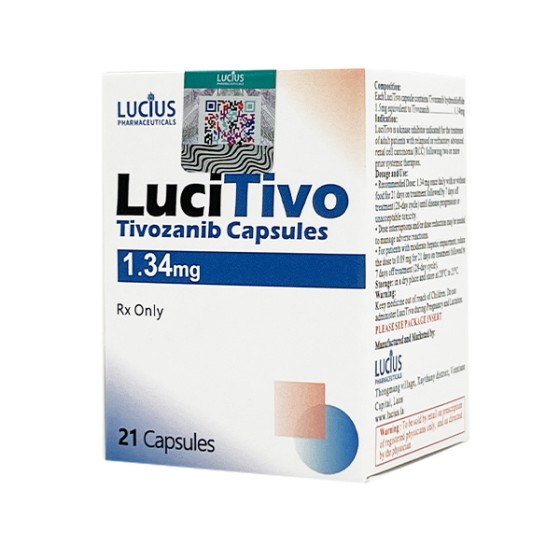
Tivozanib has been approved in various international markets for advanced renal cell carcinoma. While overall survival benefits were modest, significant improvements in progression-free survival and tolerability have solidified its clinical value. While branded versions remain a premium-priced option, generic versions available in select Southeast Asian markets offer affordable alternatives, expanding global access.
5. Quality Control in Generics
Generic manufacturing adheres to the original synthetic pathway but varies in raw material sourcing and purification. Reputable manufacturers employ rigorous HPLC and mass spectrometry testing to ensure impurity profiles meet strict safety limits, guaranteeing bioequivalence.
6. Future Directions
Given its clean safety profile, Tivozanib is poised for combination strategies with immunotherapy. Continued process optimization aims to reduce costs further, making this advanced therapy accessible to patients worldwide.
[ 免责声明 ] 本页面内容来自公开渠道(如FDA官网、Drugs官网、原研药厂官网等),仅供持有医疗专业资质的人员用于医学药学研究参考,不构成任何治疗建议或药品推荐。所涉药品可能未在中国大陆获批上市,不适用于中国境内销售和使用。如需治疗,请咨询正规医疗机构。本站不提供药品销售或代购服务。