.jpeg)
Adagrasib (Krazati): Full Guide to KRAS G12C Inhibitor for Cancer Treatment
Adagrasib(brand name Krazati)is a highly selective,oral small-molecule inhibitor of KRAS G12C,which exerts its anti-tumor effect by irreversibly binding to the"switch II pocket"of the mutant protein.Between 2024 and 2025,the U.S.Food and Drug Administration(FDA)granted accelerated approval to adagrasib,both as monotherapy and in combination regimens,for the treatment of non-small cell lung cancer(NSCLC)and metastatic colorectal cancer(mCRC),establishing it as a core precision therapy for KRAS G12C-mutated solid tumors.The agent features exceptional blood-brain barrier(BBB)penetration and a long half-life of approximately 23 hours,demonstrating anti-tumor activity even in patients with central nervous system(CNS)brain metastases.Currently,adagrasib has been approved for marketing in multiple countries and regions worldwide.While the U.S.originator formulation carries a high treatment cost,compliant generic versions from regions including Laos provide patients with a more affordable and accessible treatment alternative.
Mechanism of Action:Precise Targeting of Mutant KRAS to Block Tumor Proliferation Pathways
KRAS G12C mutation is a key oncogenic driver of multiple solid tumors,accounting for approximately 13%-15%of NSCLC cases and 3%-4%of mCRC cases.Historically,KRAS was deemed an"undruggable"target,and adagrasib represents a breakthrough in precision therapy through its innovative mechanism of action.
Adagrasib forms an irreversible covalent bond with the unique cysteine residue(Cys12)of the KRAS G12C mutant protein,locking the protein in its inactive GDP-bound conformation.This blocks the persistent activation of the downstream RAS/MAPK signaling pathway,thereby inhibiting the proliferation and metastasis of tumor cells at the source.
Compared with other agents in the same class,adagrasib has distinct pharmacokinetic advantages:it has high oral bioavailability and a half-life of approximately 23 hours,allowing twice-daily dosing to maintain stable plasma drug concentrations.Meanwhile,it exhibits excellent BBB penetration,with cerebrospinal fluid(CSF)concentrations reaching 20%-30%of plasma concentrations,bringing new treatment hope for patients with advanced tumors complicated by brain metastases.
Preclinical study data show that adagrasib induces significant tumor regression in xenograft models of KRAS G12C-mutated tumors,with minimal impact on wild-type KRAS protein,demonstrating excellent therapeutic selectivity and safety potential.
Approved Indications and Key Clinical Evidence
Non-Small Cell Lung Cancer(NSCLC)
Adagrasib is indicated for adult patients with locally advanced or metastatic NSCLC harboring KRAS G12C mutations,as detected by an FDA-approved test,who have received at least 1 prior line of systemic therapy.
For key clinical data,the KRYSTAL-1 trial showed that in previously treated patients who received chemotherapy and/or immunotherapy,adagrasib monotherapy achieved an Objective Response Rate(ORR)of 43%,a Disease Control Rate(DCR)of 80%,a median Progression-Free Survival(PFS)of 6.5 months,and a median Overall Survival(OS)of 12.6 months.In the subgroup of patients with brain metastases,the agent achieved an intracranial ORR of 33%-42%,an intracranial DCR of 82%-90%,and a median intracranial PFS of 5.4 months,with efficacy significantly superior to conventional chemotherapy regimens.Updated data from the phase III KRYSTAL-12 trial in 2026 showed that,compared with docetaxel chemotherapy,adagrasib prolonged median PFS from 3.8 months to 5.5 months(HR=0.58),increased ORR from 9%to 32%,and had a similar incidence of grade≥3 adverse events(47%vs 46%),further establishing its standard status in the second-line treatment of NSCLC.
Metastatic Colorectal Cancer(mCRC)
In June 2024,the U.S.FDA granted accelerated approval to the combination regimen of adagrasib plus cetuximab for adult patients with locally advanced or metastatic mCRC harboring KRAS G12C mutations,who have progressed after treatment with fluoropyrimidine-,oxaliplatin-,and irinotecan-containing chemotherapy.This marks the first approval of a KRAS G12C inhibitor for a solid tumor indication outside of lung cancer.
Key clinical data come from the mCRC cohort of the KRYSTAL-1 trial:94 previously treated patients received adagrasib 600mg twice daily plus cetuximab,with a median follow-up of 11.9 months.The combination achieved an ORR of 34.0%,a DCR of 85.1%,a median PFS of 6.9 months,a median OS of 15.9 months,and 31%of patients had a duration of response of≥6 months.The combination regimen showed significant advantages over monotherapy:adagrasib monotherapy only achieved an ORR of 21.4%and a median PFS of 4.1 months.The combination with cetuximab can effectively block EGFR bypass activation,greatly improve anti-tumor efficacy,and does not add additional safety risks.Currently,this combination regimen has been listed as one of the first-line treatment options for KRAS G12C-mutated advanced mCRC by the NCCN Guidelines.
Differentiated Clinical Advantages
Compared with conventional targeted agents,adagrasib has unique clinical advantages in its pharmacokinetic properties and target binding mode.Its long half-life allows the drug to maintain stable exposure concentrations in the body,which helps to continuously inhibit the KRAS signaling pathway and reduce the risk of target escape.Meanwhile,the agent has strong tissue penetration capacity,and multiple clinical studies have confirmed its anti-tumor activity against CNS metastases,an advantage that is particularly critical for the full-course management of patients with advanced lung cancer.
In addition,the covalent binding mechanism of adagrasib gives it extremely high selectivity for mutant KRAS protein,which can minimize the impact on normal cells,optimize the safety window of treatment while ensuring efficacy,and is the core optimization direction in the current field of precision targeted therapy.
Adverse Reactions and Safety Management
The overall safety profile of adagrasib is manageable.The adverse event profiles of monotherapy and combination regimens are slightly different,and the vast majority of adverse events are grade 1-2,which can be effectively relieved after symptomatic treatment or dose adjustment.
Common adverse reactions(incidence≥20%):Mainly gastrointestinal reactions,including nausea,vomiting,and diarrhea,most of which are mild to moderate.They can be symptomatically relieved by dietary adjustment,antiemetic and antidiarrheal drugs.In case of severe diarrhea,timely evaluation and dose adjustment should be considered.In addition,systemic symptoms including fatigue,musculoskeletal pain,and edema are also common,which are tolerable for most patients and can be gradually relieved with the extension of the treatment cycle.
Laboratory abnormalities:Common abnormalities include liver function abnormalities(elevated transaminases),lymphopenia,and decreased hemoglobin.Patients need to regularly monitor liver function and blood routine before and during treatment,and intervene in a timely manner when abnormalities occur.
Rare serious adverse reactions:Including interstitial lung disease(ILD)and QT interval prolongation.If patients have related symptoms such as dyspnea,cough,and palpitations,they should stop the drug immediately,complete imaging and electrocardiogram examinations,and give corresponding intervention measures.
Standardized Dosing Guidelines
Scientific and standardized dosing regimen is the core to ensure efficacy and reduce the risk of adverse reactions.Adagrasib is an oral tablet,with a clear clinically recommended dosing regimen.Patients must strictly follow the instructions of professional physicians,and should not adjust the dose or dosing frequency by themselves.
The standard recommended dose of the drug is 600mg orally twice daily,continued until disease progression or unacceptable toxicity.The tablets should be swallowed whole,and chewing,crushing or splitting the tablets is strictly prohibited to avoid damaging the drug structure and affecting the absorption efficiency.The dosing time is not limited by food,and it can be taken with or without food.It is recommended to fix the daily dosing time to maintain a stable plasma drug concentration in the body.
If a dose is missed,if the time to the next scheduled dose is less than 4 hours,the missed dose should be skipped directly,and double doses should not be taken to make up for the missed dose.If vomiting occurs after dosing,no additional dose is needed,and the next dose should be taken as scheduled to avoid the risk of aggravated adverse reactions caused by dose disorder.No dose adjustment of the starting dose is needed for elderly patients and patients with mild to moderate hepatic or renal insufficiency;patients with severe hepatic or renal impairment should use it with caution,and enhanced monitoring is required during treatment.
Global Accessibility
Originator Formulation:The U.S.marketed originator version of adagrasib(Krazati,specification 200mg*180 tablets per bottle)is priced at over$14,000 per bottle,with a high monthly treatment cost that is unaffordable for most patients in the long term.
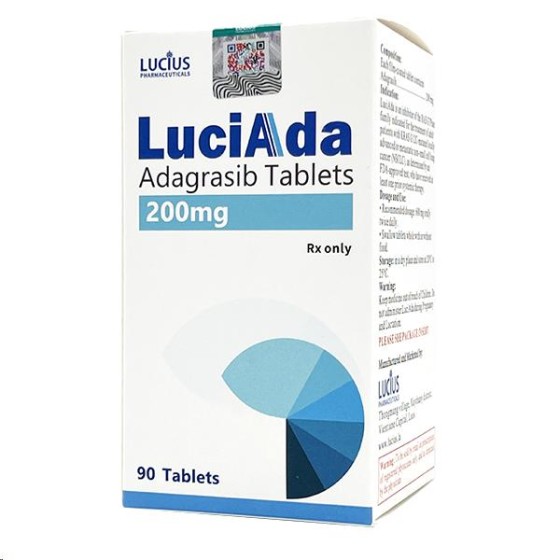
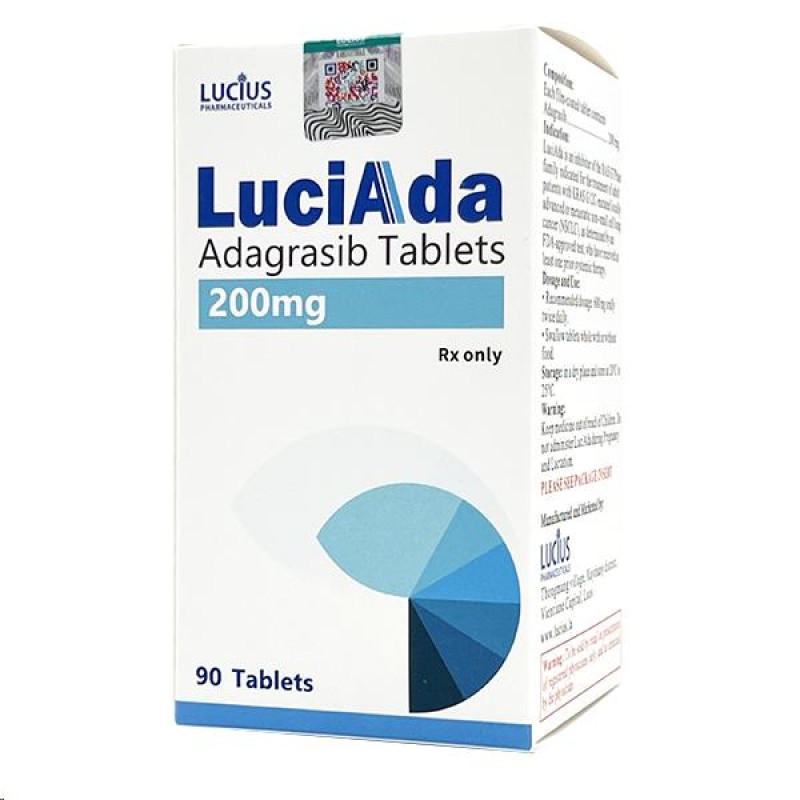
Compliant Generic Formulations:Generic versions of adagrasib manufactured by reputable,regulatory-approved pharmaceutical companies in regions including Laos(such as Lucius Pharmaceuticals and Daxiong Pharmaceutical)are available in a specification of 200mg*90 tablets per bottle,with a monthly treatment cost that is more than 90%lower than that of the originator drug.The specific price is subject to slight fluctuations due to exchange rates and supply channels.These generic products have the same core pharmaceutical ingredients as the originator drug,are approved for marketing by the local drug regulatory authority,and an official Certificate of Analysis(COA)is available from some manufacturers.Patients should obtain the product through formal and compliant channels,strictly verify the product qualification,and avoid purchasing counterfeit products.
[ 免责声明 ] 本页面内容来自公开渠道(如FDA官网、Drugs官网、原研药厂官网等),仅供持有医疗专业资质的人员用于医学药学研究参考,不构成任何治疗建议或药品推荐。所涉药品可能未在中国大陆获批上市,不适用于中国境内销售和使用。如需治疗,请咨询正规医疗机构。本站不提供药品销售或代购服务。