
.jpeg)
Evaluation of the efficacy of trametinib (Megenin) and comparison of the therapeutic effects of different patients
Trametinib (Trametinib) is a MEK inhibitor, mainly used to treat patients with melanoma carrying BRAF V600 mutations and certain non-small cell lung cancer (NSCLC). Its mechanism of action is by inhibiting MEKkinase activity and blocking the Raf-MEK-ERK signaling pathway, thereby inhibiting cancer cell proliferation and promoting apoptosis. Clinical data show that trametinib alone can extend the progression-free survival (PFS) of patients with advanced melanoma, and achieve tumor shrinkage and disease stabilization in some patients.
Effectiveness is usually evaluated through imaging examinations, tumor marker detection, and improvement in clinical symptoms. The study found that patients who carry BRAF V600 mutations and have more localized lesions have a more obvious response to trametinib. Their tumor shrinkage rate and progression-free survival after treatment are better than those of patients with extensive metastasis or advanced stages. At the same time, patients treated early with trametinib tend to have better outcomes because the tumor burden is lower and tumor cells are more sensitive to MEK inhibition.
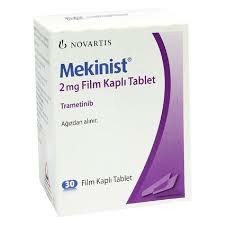
For different patient groups, the effect of trametinib combined with BRAF inhibitors (such as dabrafenib) is significantly better than monotherapy. Combination therapy can enhance the inhibitory effect of signaling pathways, improve tumor response rates, and prolong progression-free survival. This therapy is particularly suitable for patients with high risk or extensive metastasis and can significantly improve prognosis. However, for some patients with underlying diseases or elderly patients, combined treatment may increase the risk of toxic side effects, and efficacy and safety need to be weighed under the guidance of a doctor.
In general, trametinib shows stable and predictable efficacy in patients with BRAF V600 mutations, but the efficacy varies depending on the patient's condition, lesion extent, and medication regimen. Through regular imaging follow-up, tumor marker monitoring, and adverse reaction management, treatment plans can be optimized to achieve maximum efficacy. At the same time, patients should maintain good medication compliance and promptly report changes in efficacy to their doctors so that individualized adjustments can be made to improve the success rate of long-term treatment.
Reference materials:https://www.drugs.com/
[ 免责声明 ] 本页面内容来自公开渠道(如FDA官网、Drugs官网、原研药厂官网等),仅供持有医疗专业资质的人员用于医学药学研究参考,不构成任何治疗建议或药品推荐。所涉药品可能未在中国大陆获批上市,不适用于中国境内销售和使用。如需治疗,请咨询正规医疗机构。本站不提供药品销售或代购服务。


