
.jpeg)
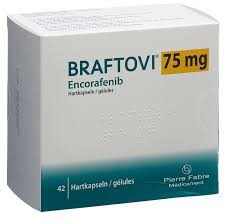
Analysis of the efficacy and risk of worsening of lung cancer treated with Canafenib/Encofenib (Betavit)
Canafenib (Encorafenib) is an oral small molecule BRAF inhibitor that mainly targets the BRAF V600 mutation. Such mutations are relatively rare in non-small cell lung cancer (NSCLC), but are usually associated with more aggressive disease and poorer prognosis. Encofenib inhibits the activity of BRAF kinase and blocks the MAPK signaling pathway, thereby inhibiting cancer cell proliferation, promoting apoptosis and delaying disease progression. In recent years, clinical studies on BRAF V600mutantNSCLC patients have shown that canafenib has demonstrated significant efficacy in the treatment of lung cancer. At the same time, attention needs to be paid to drug tolerance and potential risk of progression.
1. Overview of clinical efficacy
Clinical trial data show that canafenib can significantly improve the objective response rate (ORR) and progression-free survival (PFS) in patients with BRAF V600 mutated advanced non-small cell lung cancer. When used in combination with MEK inhibitors such as Trametinib, the efficacy is more significant. The overall response rate of patients reaches 50% and the progression-free survival can be extended to about 12 months on average. For patients who have failed chemotherapy or other targeted therapies, canafenib provides an effective treatment option and improves the patient's quality of life to a certain extent. Remission can also be achieved with single drug use, but combination therapy is often more effective in delaying the development of drug resistance.
2. Risk of deterioration and drug resistance mechanism
Although canafenib is highly effective, long-term use still carries the risk of disease progression. The deterioration mainly comes from drug resistance and tumor biology. Tumor cells may escape BRAF inhibition by activating alternative signaling pathways (such as PI3K-AKT or upstream RAS mutations), leading to disease progression. In addition, some patients respond well to drugs initially, but later develop local or distant metastasis, which suggests that BRAF inhibitors still need continuous monitoring when controlling lung cancer. After drug resistance occurs, combination with other targeted drugs or chemotherapy regimens can be considered to delay the progression of the disease.
3. Common adverse reactions and monitoring
Long-term use of canafenib is also associated with certain adverse reactions and requires regular monitoring. Common side effects include rash, fever, joint pain, fatigue, and gastrointestinal symptoms (such as nausea, diarrhea). Some patients may have prolonged electrocardiogram QT interval, abnormal liver function or hyperglycemia, which need to be detected in time through hematology tests, liver and kidney function monitoring and electrocardiogram follow-up. For patients who experience severe toxic reactions, the symptoms can be alleviated through dose adjustment, temporary drug suspension, or symptomatic treatment to ensure drug safety.
4. Individualized treatment and follow-up recommendations
The treatment of lung cancer with canafenib emphasizes individualized management. Before medication, BRAF gene testing should be performed to confirm the V600 V600 mutation type, and a dosage plan should be formulated based on the patient's previous treatment history, liver and kidney function, cardiovascular status and other factors. During treatment, regular imaging review, hematology monitoring, and side effect management are crucial. If drug resistance or disease progression occurs, treatment strategies can be adjusted in time, including combining MEK inhibitors, switching chemotherapy, or participating in clinical trials. Patients should also pay attention to lifestyle management, such as maintaining a reasonable schedule and controlling blood pressure and blood sugar, to assist in the treatment effect.
Overall, canafenib/encofenib provides a precise and effective targeted treatment option in BRAF V600 mutant non-small cell lung cancer. Combining MEK inhibitors can further improve efficacy and delay the risk of disease resistance and progression. However, long-term use still requires attention to drug tolerance, disease progression, and potential side effects. Reasonable dosage adjustment, regular monitoring, and individualized follow-up are the keys to ensuring efficacy and safety. With the deepening of targeted therapy research, the application prospects of canafenib in the treatment of lung cancer will become clearer, providing patients with more precise treatment opportunities.
Reference materials:https://www.drugs.com/
[ 免责声明 ] 本页面内容来自公开渠道(如FDA官网、Drugs官网、原研药厂官网等),仅供持有医疗专业资质的人员用于医学药学研究参考,不构成任何治疗建议或药品推荐。所涉药品可能未在中国大陆获批上市,不适用于中国境内销售和使用。如需治疗,请咨询正规医疗机构。本站不提供药品销售或代购服务。


