
.jpeg)
What are the contraindications and precautions for Ocriplasmin?
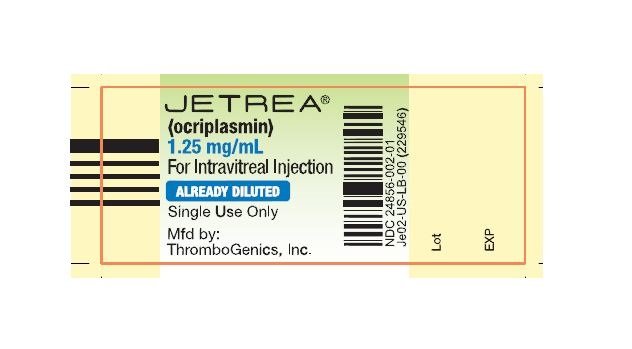
Ocriplasmin (Ocriplasmin) is a recombinant protein drug used to treat vitreomacular traction (VMT) and related macular holes. It promotes the separation of the vitreous and the macula by selectively cleavage the adhesion structure between the vitreous and the retina. However, since this drug acts on the intraocular microstructure, potential adverse reactions and contraindications for use need to be paid close attention to in clinical applications to ensure a balance between treatment safety and efficacy. The following are the main contraindications and precautions when using Oakplasmin.
1. Overview of contraindications
Oakplasmin is not intended for use in patients who are allergic to its active ingredients or excipients, and should be avoided in individuals with active inflammation or infection of the eye. In addition, it should be used with caution in patients with unstable lens status, unrepaired retinal breaks, or previous severe vitrectomy. Because this drug can change the mechanical environment of the intraocular structure, if the basic conditions are unstable, it may increase the risk of complications in the retina or lens.
2. Risk and monitoring of vision loss
Clinical studies have shown that approximately5.6% of patients experienced a decrease in best-corrected visual acuity (BCVA) of three lines or more after receiving Oakplasmin, which was slightly higher than the placebo group (3.2%). This type of vision loss is often related to the progression of traction or changes in retinal structure, and some patients ultimately require surgical intervention. Doctors should closely follow up changes in visual function after treatment and promptly identify signs of vision loss to prevent permanent damage.
3. Complications related to intravitreal injection
Intravitreal injection itself may cause reactions such as intraocular inflammation, infection, bleeding, and increased intraocular pressure. In controlled studies, the incidence of intraocular inflammation was 7.1% in the Oakplasmin group and 3.7% in the placebo group; most cases were mild and reversible. The proportions of intraocular hemorrhage were 2.4% and 3.7% respectively, and the incidence of elevated intraocular pressure were 4.1% and 5.3%. Therefore, intraocular pressure should be measured regularly after injection, and the reaction between cornea and aqueous humor should be observed, and corresponding treatment should be given if necessary.
4. Potential Risks of Lens Subluxation
Animal experiments and case reports suggest that high doses of Oak plasmin may cause the lens support structure to loosen, leading to the risk of lens subluxation. In a premature infant, the complication occurred after the injection dose was approximately 1.4 times higher than the recommended dose. Experiments on monkeys, rabbits, and mini pigs have all confirmed that when the concentration is 1.4 times higher than the therapeutic dose, structural changes in the vitreous can trigger lens displacement. If repeated treatment is required, the dose and interval must be strictly controlled to avoid similar adverse reactions.
5. Retinal breakage and detachment
Although rare, retinal tears and detachments are important warning events when using Oakplasmin. In the study, the incidence of retinal detachment in the Oak plasmin group was 0.9%, slightly lower than the 1.6% in the placebo group; while the incidence of simple retinal breaks was 1.1% and 2.7% respectively. Most cases occur during or after vitrectomy, so the fundus should be closely monitored clinically after injection, especially during the risk window period before and after surgery.
6. Color vision impairment and retinal electrophysiological changes
About2% of patients report abnormal color vision after receiving Oak plasmin treatment, mainly manifested as "yellow vision" or visual color shift. Some cases are accompanied by a decrease in electroretinogram (ERG) a-wave and b-wave amplitudes, suggesting temporary suppression of retinal function. Most of these changes are transient, but visual electrophysiological monitoring is still required after treatment to prevent potential sustained functional damage.
Reference materials:https://www.drugs.com/cdi/ocriplasmin.html
[ 免责声明 ] 本页面内容来自公开渠道(如FDA官网、Drugs官网、原研药厂官网等),仅供持有医疗专业资质的人员用于医学药学研究参考,不构成任何治疗建议或药品推荐。所涉药品可能未在中国大陆获批上市,不适用于中国境内销售和使用。如需治疗,请咨询正规医疗机构。本站不提供药品销售或代购服务。


