
.jpeg)
Clinical data analysis of how long adagrasib (Krazati) can prolong survival after taking it
Adagrasib (Krazati, generic name: Adagrasib) is a selective, irreversible KRAS G12C inhibitor, mainly used to treat patients with KRAS G12Cmutated advanced non-small cell lung cancer (NSCLC) and other malignant tumors. As the second KRAS G12C targeted drug approved for marketing, the clinical data of adagrasib has attracted much attention, especially its effect on prolonging patient survival. According to the results of international multi-center clinical studies, the drug has shown clinically meaningful efficacy in patients with KRAS G12C mutations who have received at least one systemic therapy in the past.
Patients with advancedNSCLC receive adagrasib in pivotalKRYSTAL-1 study After treatment, the median overall survival (OS) reached 12.6 months, which is a significantly better result than traditional chemotherapy. The median OS of traditional second-line treatments such as docetaxel is usually between 8 and 10 months, while adagrasib achieved a significant extension of survival in this population. In addition, its objective response rate (ORR) is 43%, and its disease control rate (DCR) is as high as 80%, showing the potential of the drug in controlling disease progression and prolonging patients' lives.
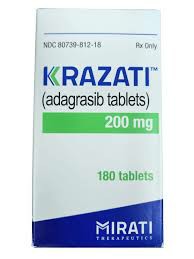
Further analysis showed that adagrasib can not only prolong overall survival, but also significantly prolong progression-free survival (PFS). In the KRYSTAL-1 study, the median PFS reached 6.5 months, and some patients even experienced stable disease or remission lasting more than a year. In a subgroup analysis of patients with brain metastases, adagrasib also showed certain central nervous system activity, making it one of the few KRAS G12C targeted drugs that is still effective in the context of brain metastases.
Overall, the clinical data for adagrasib indicate that forKRAS G12CPatients with advanced NSCLC mutations, especially those who have failed previous treatments, this drug can achieve a meaningful extension in progression-free survival and overall survival, which is significantly better than traditional second-line chemotherapy regimens. Its good oral administration method and controllable adverse reaction characteristics also bring better quality of life to patients. In the future, with the advancement of research into combination regimens with immunotherapy or other targeted drugs, its advantage in survival is expected to be further expanded.
Reference materials:https://www.drugs.com/
[ 免责声明 ] 本页面内容来自公开渠道(如FDA官网、Drugs官网、原研药厂官网等),仅供持有医疗专业资质的人员用于医学药学研究参考,不构成任何治疗建议或药品推荐。所涉药品可能未在中国大陆获批上市,不适用于中国境内销售和使用。如需治疗,请咨询正规医疗机构。本站不提供药品销售或代购服务。


