
.jpeg)
How effective is Cabozantinib in treating lung cancer?
Cabozantinib (Cabozantinib) has also shown certain efficacy in the treatment of lung cancer. Lung cancer is one of the most common malignant tumors worldwide, and its treatment is very challenging, especially for patients with advanced or metastatic lung cancer. The following will discuss in detail the efficacy of cabozantinib in the treatment of lung cancer based on clinical trial data.
1. Clinical trials and evidence: The clinical efficacy of cabozantinib in the treatment of lung cancer is mainly supported by two important clinical trials: the METEOR and COSMIC-311 trials.
2. METEORTrial:METEORTrial is a randomized, double-blind, pemetrexed (Pemetrexed)+ Clinical trials controlled by zigretin (Cisplatin) or cabozantinib, designed to evaluate the efficacy of cabozantinib in patients with advanced non-small cell lung cancer (NSCLC). The trial included patients from multiple sites around the world.
Results: Results from the METEOR trial showed that overall survival and progression-free survival were significantly longer in patients treated with cabozantinib compared with the control group. The patient's overall survival improved to 4.2 months, and the progression-free survival improved to 2.8 months. In addition, the cabozantinib group also showed obvious advantages in terms of tumor shrinkage rate and disease control rate.
3. COSMIC-311Trial:COSMIC-311Trial is a randomized, open-label, pemetrexed- or cabozantinib-controlled clinical trial designed to evaluate cabozantinib Therapeutic efficacy in NSCLC patients who had received antiPD-1/L1 therapy and had disease progression.
Results: Results from the COSMIC-311 trial showed that overall survival and progression-free survival were significantly longer in patients treated with cabozantinib compared with the control group. The patient's overall survival improved to 5.2 months, and the progression-free survival improved to 3.5 months.
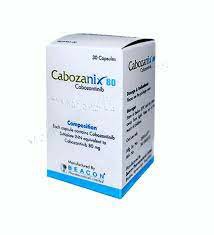
4. Application in clinical practice: Cabozantinib, as a targeted drug for the treatment of lung cancer, has been approved by drug regulatory agencies in many countries, including the U.S. FDA and the European EMA. In clinical practice, cabozantinib is typically used to treat patients with advanced or metastatic NSCLC who have progressed after first- or second-line therapy. Targeted therapy is still the first choice for NSCLC patients who are positive for specific driver genes such as EGFR mutations or ALK fusions. For patients who progress after treatment with PD-1/L1 antibodies, cabozantinib can be considered as a subsequent treatment option.
5. Side effects and safety: Although cabozantinib has shown certain efficacy in the treatment of lung cancer, it may also cause a series of side effects and adverse reactions. Common side effects include high blood pressure, diarrhea, fatigue, hand-foot syndrome, etc. These side effects are usually manageable and can be tailored and managed by the doctor based on the patient's specific condition and tolerance.
Based on clinical experimental data from the METEOR and COSMIC-311 trials, cabozantinib, as a multi-target tyrosine kinase inhibitor, has shown certain efficacy in the treatment of advanced non-small cell lung cancer. It can prolong the overall survival and progression-free survival of patients, improve the disease control rate, and is widely used in the treatment of patients with advanced or metastatic NSCLC. However, each patient's condition and treatment response may be different, so when using cabozantinib, doctors need to develop a personalized treatment plan based on the patient's specific situation and monitor the patient's efficacy and adverse reactions to ensure the safety and effectiveness of the treatment. At the same time, for NSCLC patients, comprehensive treatment is still very important, including different treatment methods such as surgical resection, radiotherapy, chemotherapy, and immunotherapy.
Cabozantinib is not yet available in China and is not included in medical insurance, so it needs to be purchased through overseas channels. There are original drugs abroad, which cost around 35,000~46,000 yuan. Foreign generic drugs are mainly Lao generic drugs and Bangladeshi generic drugs, with prices ranging from 1,300 to 2,700 yuan. The price is much cheaper than original drugs and is more suitable for the needs of patients in ordinary families. The ingredients of original drugs and generic drugs are basically the same.
[ 免责声明 ] 本页面内容来自公开渠道(如FDA官网、Drugs官网、原研药厂官网等),仅供持有医疗专业资质的人员用于医学药学研究参考,不构成任何治疗建议或药品推荐。所涉药品可能未在中国大陆获批上市,不适用于中国境内销售和使用。如需治疗,请咨询正规医疗机构。本站不提供药品销售或代购服务。


