
.jpeg)
Instructions for Panitumumab
1. Generic name: Panitumumab
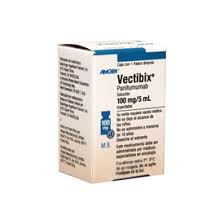
Product name: Vectibix
All names: panitumumab, Panitumumab, panitumumab, Vectibix, Vectibix, Verbis
2. Indications:
Panitumumab is indicated for the treatment of patients with metastatic colorectal cancer (mCRC) who have wild-type KRAS and NRAS, as defined by FDA-approved trials for this use. As monotherapy after disease progression in patients who have previously received chemotherapy containing fluoropyrimidine, oxaliplatin, and irinotecan; it can also be combined with FOLFOX as first-line treatment.
Limitations of use: Panitumumab is not indicated for the treatment of patients with RAS-mutated metastatic colorectal cancer (mCRC) or patients whose RAS mutation status is unknown.
3. Usage and dosage:
1. Before treatment: Before patients start treatment with panitumumab, doctors will evaluate the RAS mutation status of colorectal tumors and confirm that there are no RAS mutations in exon 2 (codons 12 and 13), exon 3 (codons 59 and 61) and exon 4 (codons 117 and 146) of KRAS and NRAS.
2. Recommended dose: The recommended dose of panitumumab is 6 mg/kg, intravenously infused over 60 minutes every 14 days. If the first infusion is tolerated, give subsequent infusions over 30-60 minutes, giving doses exceeding 1000 mg over 90 minutes.
3. Dosage adjustment:
If a patient experiences a mild or moderate (Grade 1 or 2) infusion reaction during the infusion, the physician will reduce the infusion rate by 50%. Patients who experience severe infusion reactions should have their infusion discontinued and, depending on the severity and/or persistence of the reaction, panitumumab should be permanently discontinued.
(1) Skin toxicity:
When a patient first develops a grade 3 skin reaction 1-2 doses of panitumumab need to be discontinued. If the reaction improves to
4. Adverse reactions:
In monotherapy with panitumumab, the most common adverse reactions(≥20%) are rash, paronychia, fatigue, nausea and diarrhea of various manifestations, and the most common (>5%) serious adverse reactions are worsening of general health and intestinal obstruction. In combination therapy with panitumumab, the most commonly reported adverse reactions (≥20%) were diarrhea, stomatitis, mucosal inflammation, fatigue, paronychia, anorexia, hypomagnesemia, hypokalemia, rash, acneiform dermatitis, pruritus, and dry skin. Serious adverse reactions were diarrhea and dehydration. Adverse events such as skin necrosis, angioedema, life-threatening and fatal bullous mucocutaneous diseases, infusion reactions, keratitis/ulcerative keratitis, and corneal perforation have occurred after the drug was put on the market.
5. Storage:
Store vials of panitumumab in the original carton and refrigerated at 2 to 8°C (36 to 46°F) until use. Avoid direct sunlight. Do not freeze. Discard any unused portion remaining in the bottle. Use diluted panitumumab infusion within 6 hours of preparation if stored at room temperature or within 24 hours of dilution if stored at 2 to 8°C (36 to 46°F).
6. Special groups:
(1) Females: Due to the potential for serious adverse reactions in infants breastfed with panitumumab, advise females not to breastfeed during treatment with panitumumab and for 2 months after the last dose of panitumumab; Females of reproductive potential use effective contraception during treatment with panitumumab and for 2 months after the last dose of panitumumab.
7. Mechanism of action:
Panitumumab specifically binds to normal and tumor cellsEGFR and competitively inhibits the binding of EGFR ligands. EGFR is a transmembrane glycoprotein and a member of the type I receptor tyrosine kinase subfamily, including EGFR, HER2, HER3 and HER4. EGFR is constitutively expressed in normal epithelial tissues, including skin and hair follicles. EGFR is overexpressed in certain human cancers, including colon and rectal cancers. Non-clinical studies have shown that the binding of panitumumab to EGFR prevents ligand-induced receptor autophosphorylation and activation of receptor-related kinases, thereby inhibiting cell growth, inducing apoptosis, reducing the production of pro-inflammatory cytokines and vascular growth factors, and the internalization of EGFR. In vitro experiments and in vivo animal studies have shown that panitumumab inhibits the growth and survival of selected human tumor cell lines expressing EGFR.
It is understood that the original version of panitumumab has not yet been launched in China, and therefore it has not been covered by medical insurance. The price of the Hong Kong original version of panitumumab sold in Hong Kong, China100mg/5mL may be around RMB 9,000 (the price may fluctuate due to exchange rates). There are currently no generic drugs of Panitumumab on the market. If a patient has a need to purchase Panitumumab, please consult a medical consultant for specific prices and more drug information.
[ 免责声明 ] 本页面内容来自公开渠道(如FDA官网、Drugs官网、原研药厂官网等),仅供持有医疗专业资质的人员用于医学药学研究参考,不构成任何治疗建议或药品推荐。所涉药品可能未在中国大陆获批上市,不适用于中国境内销售和使用。如需治疗,请咨询正规医疗机构。本站不提供药品销售或代购服务。


