
.jpeg)
What are the precautions for taking ozanimod?
In clinical trials, warnings and precautions for ozanimod (ozanimod) include infection, progressive multifocal leukoencephalopathy, bradyarrhythmia and atrioventricular conduction delay, liver damage, fetal risk, increased blood pressure, respiratory effects, macular edema, posterior reversible encephalopathy syndrome, etc.
1. Infection: Due to the reversible sequestration of lymphocytes in lymphoid tissue, Ozamod causes an average reduction in peripheral blood lymphocyte count to approximately 45% of the baseline value. ThereforeOzamod may increase susceptibility to infections, some of which are serious in nature. Patients receiving ozanimod have developed life-threatening and rare fatal infections. Before starting Ozamod , obtain a recent complete blood count (CBC), including lymphocyte count. Delay initiation of ozanimod in patients with active infection until the infection has resolved.
2. Progressive multifocal leukoencephalopathy (PML): is an opportunistic viral infection caused by JC virus (JCV) that usually occurs in immunocompromised patients and usually results in death or severe disability. It develops over days to weeks and includes progressive weakness on one side of the body or clumsiness of the limbs, visual impairment, and changes in thinking, memory, and orientation, leading to confusion and personality changes. If PML is diagnosed, treatment with ozanimod should be discontinued.
3. Bradyarrhythmia and atrioventricular conduction delay: Starting Ozamod may cause a temporary decrease in heart rate. After an initial dose of ozanimod 0.23 mg, the greatest mean decrease in heart rate from baseline occurred at 5 hours on Day 1 (1.2 bpm in Multiple Sclerosis Studies 1 and 2, 0.7 bpm in Ulcerative Colitis Studies 1 and 3), returning to near baseline at 6 hours. As the dose continued to increase, the maximum heart rate effect of ozanimod occurred on day 8. The utility of first-dose cardiac monitoring when initiating ozanimod is unclear when patient characteristics are similar to those studied in clinical trials of ozanimod.
4. Liver damage: Patients may experience elevated transaminases, so among patients with ulcerative colitis treated with Ozamod 0.92 mg, the discontinuation rate due to elevated liver enzymes is 0.4%. Patients who develop symptoms suggesting abnormal liver function (such as unexplained nausea, vomiting, abdominal pain, fatigue, anorexia or jaundice and/or dark urine) should have their liver enzymes checked. If severe liver damage is confirmed, Ozamod should be discontinued.
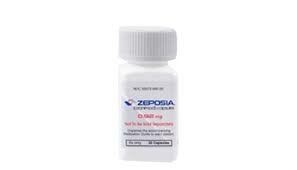
5. Fetal risks: According to animal studies, Ozamod may cause harm to the fetus. Since it takes about 3 months to eliminate Ozamod from the body, women of childbearing potential should use effective contraceptive measures to avoid pregnancy during treatment and within 3 months after discontinuing Ozamod.
6. Increased blood pressure: Blood pressure should be monitored during treatment with Ozamod and appropriately managed. Some may contain very high levelsFoods containing (i.e., more than 150 mg) tyramine may cause severe hypertension because tyramine interactions may exist in patients taking Ozamod, even at recommended doses. Due to increased sensitivity to tyramine, patients should be advised to avoid foods containing high amounts of tyramine while taking ozanimod.
7. Respiratory effects: A dose-dependent reduction in absolute forced expiratory volume in 1 second (FEV1) has been observed in patients with multiple sclerosis treated with ozanimod as early as 3 months after the start of treatment. Spirometry assessment of respiratory function should be performed during ozanimod treatment if clinically indicated.
8. Macular edema: Patients with a history of uveitis and patients with a history of diabetes are at increased risk of macular edema during treatment with Ozamod. Patients with a history of uveitis also have an increased incidence of macular edema. In addition to examination of the fundus, including the macula, patients with diabetes or a history of uveitis should have regular follow-up examinations before treatment.
9. Posterior reversible encephalopathy syndrome (PRES): Its symptoms are usually reversible, but may evolve into ischemic stroke or cerebral hemorrhage, and delays in diagnosis and treatment may lead to permanent neurological sequelae. Treatment with ozanimod should be discontinued if PRES is suspected, cognitive deficits, behavioral changes, cortical visual impairment, or any other neurocortical symptoms/signs occur.
The original drug Ozamod has been launched in China, but it has been on the market for a short time and has not been included in the medical insurance. The specific price is not yet clear, and domestic purchase channels are relatively difficult. The price of Ozamod original drug specifications0.92*28 capsules per box listed overseas may be around 19,000 yuan (the price may fluctuate due to the exchange rate), which is expensive. There is currently no generic version of Ozamod produced and launched. For more drug information and specific prices, please consult the medical consultant of Yaode.
[ 免责声明 ] 本页面内容来自公开渠道(如FDA官网、Drugs官网、原研药厂官网等),仅供持有医疗专业资质的人员用于医学药学研究参考,不构成任何治疗建议或药品推荐。所涉药品可能未在中国大陆获批上市,不适用于中国境内销售和使用。如需治疗,请咨询正规医疗机构。本站不提供药品销售或代购服务。


