
.jpeg)
Instructions for ozanimod
1. All names: ozanimod, ozanimod, Zeposia, ozanimod, RPC1063
2. Indications:
Ozanimod is indicated for the treatment of relapsing forms of multiple sclerosis (MS) in adults, including clinically isolated syndrome, relapsed-remitting disease, and active secondary progressive disease; is also indicated for the treatment of adults with moderately to severely active ulcerative colitis (UC).
3. Usage and dosage:
1. Before treatment: Before patients are treated with Ozamod, they should be evaluated for events such as complete blood count, electrocardiogram, liver function test, and ophthalmological examination.
2. Recommended dosage:
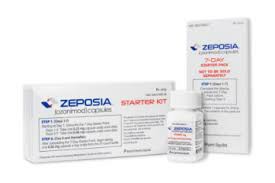
Ozamod is administered in a 7-day titration manner. After the initial dose is gradually increased, the recommended dose of Ozamod is 0.92 mg, which is taken orally once a day starting from the 8th day. On days from days 1 to 4, patients orally take 0.23 mg once a day; from days on days 5 to 7, patients take orally once a day0.46mg; on days and onwards, patients take orally once a day0.92mg.
3. Dosage adjustment:
(1) Hepatic Impairment: Patients with mild to moderate hepatic impairment (Child-Pugh Class A or B) should take 0.92 mg of Ozamod every other day.
(2) If a dose ofOzamod is missed during the first 2 weeks of treatment, restart treatment using a titration schedule; if a dose ofOzamod is missed after the first 2 weeks of treatment, continue treatment as planned.
4. Adverse reactions:
Adverse reactions reported in clinical trials of ozanimod in multiple sclerosis included upper respiratory tract infection, increased hepatic transaminases, orthostatic hypotension, urinary tract infection, back pain, and hypertension; in clinical trials of ozanimod in ulcerative colitis, adverse reactions included increased liver function tests, upper respiratory tract infection, and headache. Other adverse reactions include decreased heart rate, malignant tumors, allergic reactions (rash, urticaria), peripheral edema, etc.
5. Storage:
Ozamod is stored20°C to 25°C (68°F to 77°F); excursions allowed between 15°C and 30°C (59°F to 86°F).
6. Taboo:
Ozamod is contraindicated in patients who have had myocardial infarction, unstable angina, stroke, transient ischemic attack (TIA), decompensated heart failure requiring hospitalization, or class III or IV heart failure within the past Patients with exhaustion, Mobitz type second or third degree atrioventricular block, sick sinus syndrome, or sinoatrial block unless the patient has a functional pacemaker, patients with severe untreated sleep apnea, and patients taking monoamine oxidase inhibitors.
7. Mechanism of action:
Ozamod is a sphingosine1-phosphate (S1P) receptor modulator, which binds to S1P receptors 1 and 5 with high affinity. Ozamod blocks the ability of lymphocytes to flow out of lymph nodes and reduces the number of lymphocytes in peripheral blood. Ozamod has little or no activity against S1P2, S1P3, and S1P4. The mechanism by which ozanimod exerts its therapeutic effects in multiple sclerosis and ulcerative colitis is unknown but may involve reduced lymphocyte migration into the central nervous system and intestine.
The original drug Ozamod has been launched in China, but it has been on the market for a short time and has not been included in the medical insurance. The specific price is not yet clear, and domestic purchase channels are relatively difficult. The price of Ozamod original drug specifications0.92*28 capsules per box listed overseas may be around 19,000 yuan (the price may fluctuate due to the exchange rate), which is expensive. There is currently no generic version of Ozamod produced and launched. For more drug information and specific prices, please consult the medical consultant of Yaode.
[ 免责声明 ] 本页面内容来自公开渠道(如FDA官网、Drugs官网、原研药厂官网等),仅供持有医疗专业资质的人员用于医学药学研究参考,不构成任何治疗建议或药品推荐。所涉药品可能未在中国大陆获批上市,不适用于中国境内销售和使用。如需治疗,请咨询正规医疗机构。本站不提供药品销售或代购服务。


