
.jpeg)
Instructions for Binimetinib
1. Generic name: bimetinib
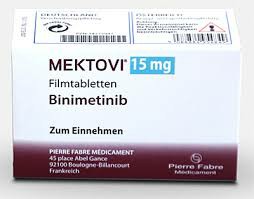
Product name:MEKTOVI
All names: Bimetinib, Binimetinib, Bemetinib, Fucanyu
2. Indications:
1. Unresectable or metastatic melanoma positive for BRAF V600E or V600K mutations: Binimetinib (Binimetinib) in combination with canafenib (Encorafenib) for the treatment of BRAF detected in an FDA-approved test Patients with unresectable or metastatic melanoma with V600E or V600K mutations.
2. BRAF V600E mutation-positive metastatic non-small cell lung cancer (NSCLC): Bimetinib is indicated in combination with canafenib for the treatment of adult patients with BRAF V600E mutation-positive metastatic non-small cell lung cancer, as detected by an FDA-approved test.
3. Usage and dosage:
1. Before use: Before starting to use bimetinib, doctors will confirm the presence of BRAF V600E or V600K mutations in tumor specimens. If no mutation is detected in plasma specimens, the tumor tissue will be detected.
2. Recommended dose: The recommended dose of bimetinib is 45 mg, taken orally twice a day, about 12 hours apart, and used in combination with encorafenib until disease progression or unacceptable toxicity occurs. Can be taken with or without food. Refer to the prescribing information for recommended doses of canafenib.
3. Dosage adjustment: If the patient experiences adverse reactions when using bimetinib, the doctor will adjust the dose of the drug according to the severity of the condition. The first dose can be reduced to 30 mg orally twice a day. If the patient cannot tolerate 30 mg twice a day, the drug will be permanently discontinued. For patients with moderate (total bilirubin levels greater than 1.5 and ≤3×ULN and any AST) or severe (total bilirubin levels >3×ULN and any AST) liver impairment, the recommended dose is 30 mg orally twice daily.
4. Adverse reactions:
In clinical studies of bimetinib in combination with canafenib for the treatment of disease, the most common (≥25%) adverse reactions were fatigue, nausea, diarrhea, vomiting, musculoskeletal pain, vomiting, abdominal pain, visual disturbance, constipation, dyspnea, rash, and cough. Serious adverse reactions (≥2%) include bleeding, diarrhea, anemia, dyspnea, pneumonia, cardiac arrhythmia, device-related infection, edema, myocardial infarction, and pleural effusion.
5. Storage:
Bimetinib is storage temperature20°C to 25°C (68°F to 77°F); excursions between 15°C and 30°C (59°F and 86°F) are allowed.
6. Special groups:
1. Women: Based on animal data, bimetinib can cause fetal damage when administered to pregnant women. Therefore, it is recommended that women of childbearing potential use effective contraceptive measures during treatment with bimetinib and within 30 days after the last dose; women are advised not to breastfeed during treatment with bimetinib and within 30 days after the last dose.
2. Hepatic impairment: The concentration of bimetinib may increase in patients with moderate or severe hepatic impairment. No dose adjustment of bimetinib is recommended in patients with mild hepatic impairment (total bilirubin 1 and ≤1.5 × ULN and any AST or total bilirubin ≤ ULN and AST > ULN). Reduce bimetinib dose in patients with moderate (total bilirubin level >3 × ULN and any AST) or severe (total bilirubin level >3 × ULN or any AST) hepatic impairment.
7. Mechanism of action:
Bimetinib is a reversible inhibitor of the activity of mitogen-activated extracellular signal-regulated kinase1 (MEK1) and MEK2. MEK protein is an upstream regulator of the extracellular signal-related kinase (ERK) pathway. In vitro, bimetinib inhibits extracellular signal-related kinase (ERK) phosphorylation in cell-free assays, as well as viability and MEK-dependent phosphorylation in BRAF-mutated human melanoma cell lines. Bimetinib also inhibited ERK phosphorylation and tumor growth in vivo in a BRAF mutant mouse xenograft model.
Bimetinib and canafenib target two different kinases in the RAS/RAF/MEK/ERK pathway In a mouse BRAF V600E mutant human melanoma xenograft study, the combination of bimetinib and canafenib had greater antiproliferative activity in BRAF mutation-positive cell lines in vitro and greater antitumor activity in terms of tumor growth inhibition than either agent alone. Furthermore, the combination of bimetinib and canafenib delayed the emergence of drug resistance in mouse BRAF V600E mutant human melanoma xenografts compared with either drug alone.
[ 免责声明 ] 本页面内容来自公开渠道(如FDA官网、Drugs官网、原研药厂官网等),仅供持有医疗专业资质的人员用于医学药学研究参考,不构成任何治疗建议或药品推荐。所涉药品可能未在中国大陆获批上市,不适用于中国境内销售和使用。如需治疗,请咨询正规医疗机构。本站不提供药品销售或代购服务。


