
.jpeg)
Bedaquilin Instructions
1. Generic name:Bedaquiline (Bedaquiline)
Trade Name:Bedaquiline
All names:Bedaquiline,Snerari,Bedaquiline,Bedaquilin
2. Indications:
For use in 3 drug combination regimens including pretomanid and linezolid, for the treatment of extensively drug-resistant(XDR)pulmonary tuberculosis(i.e., caused by Mycobacterium tuberculosis that is resistant to isoniazid, rifampicin, any fluoroquinolone, and at least one injectable antituberculosis drug)or intolerant or unresponsive to treatmentMDRpulmonary tuberculosis.
Three. Dosage and usage
The usual adult dose of anti-tuberculosis drugs is 1week and 2week:400 taken orally daily mg, week 3weeks 24:3 times per weekorally200 mg, with at least 48 hours between doses, and treatment duration: 24 weeks.
Four. Dosage form and strength
Bedaquiline 20 mgTablets:Uncoated, white to almost white rectangular functional scored tablets, with score lines on both sides, with "2" and "0" debossed on one side, and unscored on the other side.
Bedaquiline 100 mgTablets:Uncoated, white to almost white, round, biconvex tablets with "207" debossing on one side and "100" debossing on the other side.
Five. Contraindications
None
6. Warnings and Precautions
1.Mortality rate increases. In a placebo-controlled trial in adults, the risk of death was increased in those treated with bedaquiline (9/79, 11.4%) compared with those treated with placebo (2/81, 2.5%). When effective treatment options are not available, bedaquiline should only be used in patients 5 years of age and older.
2.QTExtension. Bedaquiline can cause prolongation of the QT interval. Concomitant use with drugs that prolong the QT interval may result in additive QT prolongation. Monitor electrocardiogram. If severe ventricular arrhythmias or QTcFinterval prolongation exceeds 500 ms, bedaquiline should be discontinued.
3.Risk of developing resistance to alkaline substances. The potential for the development of resistance to bedaquiline in meter (abbreviation for meter) tuberculosis exists, and bedaquiline should only be used in appropriate combination regimens to treat pulmonary multidrug-resistant tuberculosis to reduce the risk of developing resistance to bedaquiline..
4.Hepatotoxicity. In clinical trials, more liver-related adverse reactions were reported in adults taking bedaquiline with other tuberculosis treatments than with other tuberculosis treatments without bedaquiline. Alcohol and other hepatotoxic drugs should be avoided while taking bedaquiline, especially in patients with impaired liver function. Liver-related adverse reactions have also been reported in pediatric patients 5 years of age and older.
seven. side effects
1.Musculoskeletal
40%of pediatric patients(12 to 18 years old) suffer from joint pain, and as many as 33% of adults experience side effects.
Very common(10%or more):Joint pain(Up to40%)
Common(1% to 10%):Myalgia
2.Gastrointestinal
Very common(10%or more):Nausea(Up to38%) , vomiting(up to 20.6%), abdominal pain(up to13%)
Common(1% to 10%):Elevated blood amylase, diarrhea
3.Nervous System
Very common(10%or above):Headache(< span>up to28%), dizziness(up to12.7%)
4.Cardiovascular
Very common(10%or more):Hemoptysis(Up to 18%), chest pain(Up to11%)
Common(1% to 10%):ECGQT prolongation, QTinterval prolongation
5.Liver
Very common(10%or more):Aminotransferase is at least 3 times the upper limit of normal(Up to 10.8%)
Ordinary(1% to 10%):Increased aminotransferase, increased transferase
Unreported frequency: Elevated ALT, increased AST, hepatotoxicity, elevated liver enzymes, abnormal liver function
6.Dermatology
Common(1% to 10%):Skin rash
7.Metabolism
Common(1% to 10%):Anorexia
8. drug interactions
1.CYP3A4Inducer/Inhibitor
Bedaquiline exposure may be decreased when coadministered with CYP3A4 inducers and bedaquiline exposure may be increased when coadministered with CYP3A4 inhibitors.
2.CYP3A4Inducer
Because the therapeutic efficacy of bedaquiline may be reduced due to reduced systemic exposure, concomitant use of strong CYP3A4 inducers, such as rifamycins should be avoided during treatment with bedaquiline(i.e. rifampicin, rifapentine and rifabutin)or moderate CYP3A4 inducers.
3.CYP3A4Inhibitors
Due to the potential risk of adverse reactions to bedaquiline due to increased systemic exposure, bedaquiline should be avoided with strongCYP3A4inhibitors(Such as ketoconazole or itraconazole)Long-term combination therapy for more than 14 days. Appropriate clinical monitoring for bedaquiline-related adverse effects is recommended.
4.Other antibacterial drugs
No dose adjustment of isoniazid or pyrazinamide is required when coadministered with bedaquiline.
In a placebo-controlled clinical trial in adult patients with multidrug-resistant tuberculosis, no significant effects of coadministration of bedaquiline on the pharmacokinetics of ethambutol, kanamycin, pyrazinamide, ofloxacin, or cycloserine were observed.
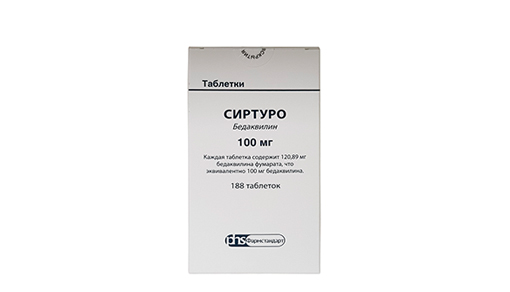
The Russian version, the price in Russian hospitals100mg188 tablets1 is around 40,000 to 50,000. If you want to get more high-quality information, you can contact Yaode, and Yaode will do its best to help you learn more about high-quality overseas drugs.
xa0
xa0
xa0
xa0
xa0
xa0
xa0
[ 免责声明 ] 本页面内容来自公开渠道(如FDA官网、Drugs官网、原研药厂官网等),仅供持有医疗专业资质的人员用于医学药学研究参考,不构成任何治疗建议或药品推荐。所涉药品可能未在中国大陆获批上市,不适用于中国境内销售和使用。如需治疗,请咨询正规医疗机构。本站不提供药品销售或代购服务。


