
.jpeg)
Must-read for patients: Overview of basic information in the instructions for Crizotinib/Xalkori targeted drugs
1. Generic names: Crizotinib,Crizotinib
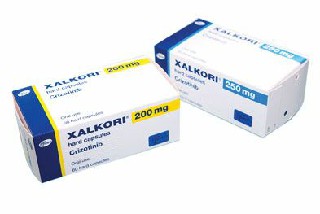
Product name: Xalkori,Xalkori
Other names: Crizotinib,Crizalk
2. Who can take crizotinib? Indications?
Crizotinib/Crizotinib is mainly used for the following conditions:
1. ALK- or ROS1-positive metastatic non-small cell lung cancer (NSCLC): It is suitable for the treatment of adult patients with metastatic non-small cell lung cancer whose tumors are anaplastic lymphoma kinase (ALK) or ROS1-positive.
2. Relapsed or refractory (R/R) systemic ALK-positive anaplastic large cell lymphoma (ALCL): It is suitable for the treatment of 1-year-old pediatric patients as well as the elderly and young people with ALK-positive relapsed or refractory systemic anaplastic large cell lymphoma.
Limitations of Use: The safety and efficacy of crizotinib in older adults with relapsed or refractory, systemic ALK-positive ALCL have not been established.
3. Unresectable, relapsed or refractory (R/R) ALK-positive inflammatory myofibroblastic tumor (IMT): It is suitable for the treatment of adult and pediatric patients 1 year old and above with ALK-positive unresectable, relapsed or refractory inflammatory myofibroblastic tumor.
3. What are the side effects of crizotinib?
In clinical studies of crizotinib, the most common side effects are visual impairment, nausea, diarrhea, vomiting, edema, constipation, elevated transaminases, fatigue, decreased appetite, upper respiratory tract infection, dizziness and neuropathy; after being put on the market, other side effects such as increased blood creatine phosphokinase have also appeared. Adverse events; warnings and precautions reported in the prescribing information also include hepatotoxicity, interstitial lung disease/pneumonitis, QT prolongation, bradycardia, severe vision loss, and gastrointestinal toxicity in children and young adults with ALCL or pediatric patients with IMT.
4. How should you take crizotinib?
1. Recommended dosage: For patients with For adult patients with ALK or ROS1-positive metastatic NSCLC, ALK-positive ALCL, and ALK-positive IMT, the recommended dose of crizotinib is 250 mg orally twice daily; for pediatric patients and young people, the recommended dose is 280 mg/m2 orally twice daily. If the patient is unable to swallow capsules, a granular form may be used. The recommended dose of granules is 250 mg taken orally twice daily (two 50 mg tablets and one 150 mg tablet) until disease progression or unacceptable toxicity occurs.
2. Medication management: Crizotinib is available in the form of oral capsules or granules, twice a day, regardless of eating or not. Do not chew, crush, or split capsules. If you miss a dose of crizotinib capsules or granules, make up the dose unless the next dose is due within 6 hours. If vomiting occurs after taking a certain dose, do not take additional doses. Take your next dose at the prescribed time.
Crizotinib granules can be administered in two ways. One is to open the shell containing crizotinib granules and pour the contents directly into the patient's mouth; the other is to open the shell containing crizotinib granules and pour the contents into an oral administration aid (such as a spoon, medicine cup) provided by the consumer. The particles are delivered directly into the patient's mouth via a delivery aid. Give plenty of water immediately after administration to ensure all medication is swallowed.
5. How to store crizotinib?
Crizotinib capsules (200 mg, 250 mg) and crizotinib oral granules (20 mg, 50 mg, 150 mg) may be stored at room temperature 20° to 25°C (68° to 77°F); excursions allowed between 15° to 30°C (59° to 86°F).
6. How does crizotinib work?
Crizotinib is an inhibitor of receptor tyrosine kinases, includingALK, hepatocyte growth factor receptor (HGFR, c-Met), ROS 1 (c-ROS), and receptor d'origine Nantais (RON). Translocations can affect the ALK gene, leading to the expression of oncogenic fusion proteins. The formation of ALK fusion proteins results in activation and dysregulation of gene expression and signaling, which contributes to increased cell proliferation and survival in tumors expressing these proteins. Crizotinib demonstrated concentration-dependent inhibition of ALK, ROS1, and c-Met phosphorylation in cell-based assays using tumor cell lines and demonstrated antitumor activity in mice bearing tumor xenografts expressing echinoderm microtubule-associated protein-like 4 (EML 4) or nucleophosmin (NPM)-ALK fusion proteins or c-Met.
In vitro, crizotinib induced at clinically achievable exposuresALCL-derived cell lines (containing NPM-ALK) undergo apoptosis and inhibit their proliferation and ALK-mediated signaling. In vivo data obtained in an ALCL mouse model showed complete tumor regression at a dose of 100 mg/kg once daily.
7. What will happen if you overdose on crizotinib?
The maximum tolerated dose of crizotinib is the same as the recommended dosing regimen (250 mg twice daily). This is based on a Phase 1 dose-escalation study in patients with advanced solid tumors. Treatment of crizotinib overdose should include symptomatic treatment and other supportive measures.
[ 免责声明 ] 本页面内容来自公开渠道(如FDA官网、Drugs官网、原研药厂官网等),仅供持有医疗专业资质的人员用于医学药学研究参考,不构成任何治疗建议或药品推荐。所涉药品可能未在中国大陆获批上市,不适用于中国境内销售和使用。如需治疗,请咨询正规医疗机构。本站不提供药品销售或代购服务。


