
.jpeg)
Fenelidone in patients with stage 4 CKD and type 2 diabetes
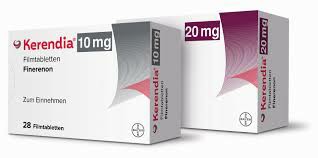
Finerenone (Finerenone) is a nonsteroidal mineralocorticoid receptor antagonist (MRA) that was approved by the U.S. Food and Drug Administration (FDA) in July 2021. It is used to reduce the risk of sustained decline in eGFR, end-stage renal disease, cardiovascular death, non-fatal myocardial infarction, and hospitalization for heart failure in adult patients with type 2 diabetes (T2D)-related chronic kidney disease (CKD).
In patients with type 2 diabetes andstage 4 chronic kidney disease (CKD), treatment options to reduce ongoing cardiovascular and renal risks are limited. Results from the prespecified pooled analyzes of FIDELIO-DKD (Finelinone in Reducing Kidney Failure and Disease Progression in Diabetic Kidney Disease) and FIGARO-DKD (Finelinone in Reducing Cardiovascular Mortality and Morbidity in Diabetic Kidney Disease) demonstrated improved cardiorenal outcomes in patients with CKD and type 2 diabetes treated with finerenone.
A fidelity subgroup analysis to examine the effect of fenelidone in participants with stage 4 chronic kidney disease (defined as estimated glomerular filtration rate [eGFR] <30 mL/min/1.73 m2). The efficacy outcomes of interest were the cardiovascular composite (cardiovascular death, nonfatal myocardial infarction, nonfatal stroke, or hospitalization for heart failure) and the renal composite (renal failure, sustained eGFR decline of ≥57% from baseline, or death from renal disease).
The FIDELITY study included 13,023 participants. Of these, 7% (n=890) had stage 4 chronic kidney disease. Among participants with stage 4 chronic kidney disease, the hazard ratio for the cardiovascular composite outcome was 0.78 (95% CI, 0.57-1.07) for taking fenelidone compared with placebo. Renal composite outcomes were not achieved throughout the study; protective effects of fenelidone compared with placebo were only shown for up to 2 years. After 2 years, the direction of the association was inconsistent, and the precision of the risk difference between fenelidone and placebo declined over time. Albuminuria and eGFR decline rates were consistently lower in the fenelidone group compared with placebo.
Treatment groups were balanced with respect to adverse events. The most common adverse event reported was hyperkalemia (Stage 4 CKD: 26% vs. placebo, 26% vs. 13%, respectively), with a lower incidence of hyperkalemia leading to permanent discontinuation (Stage 4 CKD: 3% vs. placebo, 3% vs. placebo).
In short, fenelidone is effective inCardiovascular benefits and safety among participants with stage 4 chronic kidney disease were consistent with the overall FIDELITY population; as were proteinuria and eGFR decline rates. Effects on composite renal outcomes were inconsistent over time.
[ 免责声明 ] 本页面内容来自公开渠道(如FDA官网、Drugs官网、原研药厂官网等),仅供持有医疗专业资质的人员用于医学药学研究参考,不构成任何治疗建议或药品推荐。所涉药品可能未在中国大陆获批上市,不适用于中国境内销售和使用。如需治疗,请咨询正规医疗机构。本站不提供药品销售或代购服务。


