
.jpeg)
The difference between fenelidone and spironolactone
Finerenone (Finerenone) and Spironolactone are both ketone diuretics commonly used in clinical practice for the treatment of certain diseases. Although they belong to the same class of drugs, there are some differences in chemical structure, mechanism of action, and clinical applications.
Finelidone, as a new aldosterone receptor antagonist (MRA), is specially designed for adult patients with chronic kidney disease (CKD) related to type 2 diabetes (T2D). Uniquely, fenelidone reduces the risk of sustained eGFR decline, end-stage renal disease, cardiovascular death, nonfatal myocardial infarction, and heart failure hospitalization. This advantage makes fenelidone occupy an important position in the treatment of chronic kidney disease.
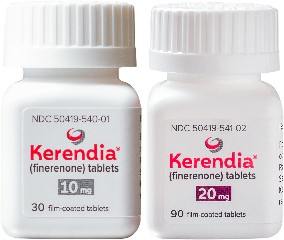
Spironolactone, meanwhile, is a classic diuretic used primarily to remove excess fluid from the body (edema), lower blood pressure, or treat hyperaldosteronism. One feature of spironolactone is that it does not cause a loss of potassium from the body, although other electrolytes may be depleted. This property makes spironolactone widely used in the treatment of hypertension and edema.
In terms of mechanism of action, the main difference between fenelidone and spironolactone is how they modulate aldosterone receptors. Fennelidone not only has higher receptor binding affinity, but also has a more even tissue distribution and can act on both the heart and kidneys. In addition, the pharmacokinetic properties of fenelinone are also superior, with a short half-life and no active metabolites, which makes its side effects relatively minor.
Preclinical studies further reveal the potential advantages of fenelidone. By exerting anti-inflammatory, anti-fibrotic, and anti-proliferative effects, fenelidone alters tissue remodeling in the heart and kidneys, thus slowing disease progression. The results of phase II clinical trials also show that compared with spironolactone, fenelinone can dose-dependently reduce proteinuria, and its side effects are similar to placebo or control, while inducing a smaller increase in serum potassium levels.
[ 免责声明 ] 本页面内容来自公开渠道(如FDA官网、Drugs官网、原研药厂官网等),仅供持有医疗专业资质的人员用于医学药学研究参考,不构成任何治疗建议或药品推荐。所涉药品可能未在中国大陆获批上市,不适用于中国境内销售和使用。如需治疗,请咨询正规医疗机构。本站不提供药品销售或代购服务。


