
.jpeg)
How dabrafenib and trametinib work
Dabrafenib (Dabrafenib) and trametinib (Trametinib), as targeted therapy drugs, play an important role in the treatment of cancers targeting BRAF gene mutations.
Dabrafenib is a BRAF inhibitor that mainly acts on the kinase activity of BRAF protein. The BRAF gene is a proto-oncogene encoding the BRAF protein, which is a key component of the MAPK signaling pathway. When the BRAF gene is mutated, especially the mutation of the V600 site, the activity of the BRAF protein will be abnormally enhanced, continuously activating the downstream MAPK signaling pathway, thereby promoting the proliferation, invasion and metastasis of tumor cells.
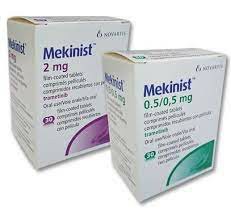
Dabrafenib competitively binds to the ATP binding site of the BRAF protein and inhibits its kinase activity, thereby blocking the MAPK signaling pathway and inhibiting the growth of tumor cells. Specifically, dabrafenib can form hydrogen bonds and hydrophobic interactions with the ATP binding site of BRAF kinase, preventing ATP binding and the catalytic effect of the kinase, thereby inhibiting the activation of BRAF downstream signaling pathways to achieve anti-tumor effects.
Trametinib is a MEK inhibitor that acts downstream of the MAPK signaling pathway. MEK is a key kinase in the MAPK signaling pathway, responsible for transferring signals from BRAFPassed toERK. When BRAF is abnormally activated, the activity of MEK will increase accordingly, thereby activating ERK and promoting the growth and proliferation of tumor cells.
Trametinib inhibits the growth and proliferation of tumor cells by inhibiting the catalytic activity of MEK and blocking the signal transmission from BRAF to ERK. Specifically, trametinib can bind to the ATP binding site of MEK, preventing the binding of ATP and the catalysis of the kinase, thereby inhibiting the activation of downstream ERK and the proliferation of tumor cells.
The combined use of dabrafenib and trametinib can more comprehensively inhibit the activation of theMAPK signaling pathway, thereby enhancing the anti-tumor effect. This combination therapy has shown significant efficacy in BRAF mutated melanoma, non-small cell lung cancer and other cancer types. Combined use can not only improve the tumor response rate and prolong the progression-free survival and overall survival of patients, but also reduce the incidence of adverse reactions and improve the patient's tolerance and quality of life.
[ 免责声明 ] 本页面内容来自公开渠道(如FDA官网、Drugs官网、原研药厂官网等),仅供持有医疗专业资质的人员用于医学药学研究参考,不构成任何治疗建议或药品推荐。所涉药品可能未在中国大陆获批上市,不适用于中国境内销售和使用。如需治疗,请咨询正规医疗机构。本站不提供药品销售或代购服务。


