
.jpeg)
What is the efficacy of trametinib combined with dabrafenib in the treatment of cholangiocarcinoma?
Trametinib combined with dabrafenib has shown good clinical efficacy in the treatment of cholangiocarcinoma, especially for patients carrying BRAF V600E mutations.
Cholangiocarcinoma is a malignant tumor originating from bile duct epithelial cells. Its incidence is relatively low, but its prognosis is poor. Traditional treatments include surgical resection, chemotherapy, and radiotherapy, but their efficacy is limited for patients with advanced or metastatic cholangiocarcinoma. In recent years, with the development of molecular biology technology, targeted therapy has gradually become a new direction in the treatment of cholangiocarcinoma. BRAF V600E mutation is one of the more common gene mutations in cholangiocarcinoma, accounting for about 5% of patients with cholangiocarcinoma. In response to this mutation, the treatment regimen of trametinib (MEKinhibitor) combined with dabrafenib (BRAFinhibitor) came into being.
Trametinib and dabrafenib act on the downstream and upstream of the MAPK signaling pathway respectively. BRAF V600E mutation leads to the continuous activation of the MAPK signaling pathway, thereby promoting the proliferation and metastasis of tumor cells. As a BRAF inhibitor, dabrafenib can specifically bind and inhibit the activity of BRAF V600E mutant protein, thus blocking the upstream signaling of the MAPK signaling pathway. Trametinib acts downstream of the MAPK signaling pathway and further inhibits signal transmission. The combined use of the two can more comprehensively inhibit the activation of the MAPK signaling pathway, thereby achieving the purpose of inhibiting tumor growth and metastasis.
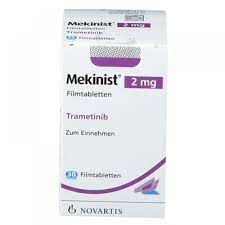
Multiple clinical trials have confirmed the efficacy of trametinib combined with dabrafenib in patients with BRAF V600E mutated cholangiocarcinoma.
In a Phase II, open-label, single-arm, multi-center clinical trial (ROAR study), a total of 43 patients were includedA case of biliary tumor patient with BRAF V600E mutation. All patients received dabrafenib (150 mg twice daily) combined with trametinib (2 mg once daily). The results showed that the ORR assessed by the researchers was as high as 51%, and the ORR assessed by the independent review committee was 47%. This shows that this combination treatment regimen has a higher tumor response rate in patients with BRAF V600Emutant cholangiocarcinoma.
In the ROAR study, patients had a median PFS of 9 months and a median OS of 14 months. This shows that this combination treatment regimen can significantly extend the progression-free survival and overall survival of patients.
Most adverse reactions are mild or moderate and can be alleviated by adjusting the dosage or suspending the medication. The most common grade ≥3 adverse reactions include increased gamma-glutamyltransferase (12%), fever (8%), etc. No treatment-related deaths were reported. This shows that the safety of this combination treatment regimen is controllable in patients with cholangiocarcinoma.
Treating the specific target ofBRAF V600E mutation realizes the concept of precision medicine. The higher ORR indicates that the combined treatment regimen can quickly alleviate the patient's tumor symptoms. Significantly prolonged PFS and OS provide patients with longer survival and better quality of life. Most adverse reactions were mild or moderate and manageable, reducing treatment risks.
Recommended for patients with cholangiocarcinomaBRAF V600EGenetic testing for mutations to determine whether the patient is suitable for treatment with trametinib combined with dabrafenib. The treatment of cholangiocarcinoma requires multidisciplinary collaboration, including medical oncology, surgery, radiotherapy, etc., to formulate a comprehensive treatment plan. Develop individualized treatment plans based on the patient's specific conditions (such as age, physical condition, comorbidities, etc.) to improve treatment effects and patient tolerance. For patients treated with trametinib combined with dabrafenib, long-term follow-up is recommended to monitor disease changes and the occurrence of adverse reactions.
[ 免责声明 ] 本页面内容来自公开渠道(如FDA官网、Drugs官网、原研药厂官网等),仅供持有医疗专业资质的人员用于医学药学研究参考,不构成任何治疗建议或药品推荐。所涉药品可能未在中国大陆获批上市,不适用于中国境内销售和使用。如需治疗,请咨询正规医疗机构。本站不提供药品销售或代购服务。


