
.jpeg)
What is the resistance process to trametinib and dabrafenib?
The resistance process of trametinib and dabrafenib is a complex and gradually developing phenomenon, which mainly involves the adaptive changes of tumor cells to the drugs and the reactivation of signaling pathways.
Dabrafenib, as a BRAF inhibitor, can usually effectively inhibit the growth of tumor cells carrying BRAF V600 mutations in the early stages of treatment. However, over time (usually after a few months), tumor cells gradually adapt to the presence of the drug and begin to develop resistance. This resistance is usually due to the heterogeneity of BRAF V600 mutations, that is, there are many different BRAF mutated subclones in tumor cells, and some subclones are insensitive to dabrafenib or can bypass the inhibitory effect of dabrafenib.
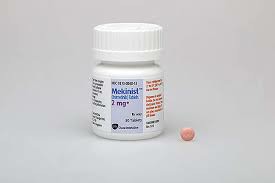
In addition to acquired resistance, delayed resistance may also occur with dabrafenib treatment. After a period of treatment (usually after 8 months to 1 year), the patient's disease may progress again. The development of this resistance is often related to new BRAF mutations or activation of mutations, causing dabrafenib to lose its effect on cancer cells.
As a MEK inhibitor, trametinib resistance usually develops within 6 to 7 months after treatment when used alone. This is because tumor cells are able to bypass the inhibitory effects of trametinib by activating other signaling pathways and continue to proliferate. When trametinib is used in combination with dabrafenib, although it can delay the emergence of resistance, resistance may eventually develop. This may be due to tumor cells reactivating the MAPK signaling pathway through various mechanisms (such as BRAF mutations, NRAS mutations, etc.), or evading the inhibitory effect of drugs by activating other signaling pathways related to tumor growth.
To target resistance to dabrafenib and trametinib, the drug resistance of cancer cells is destroyed by combining multiple targeted drugs or a combination of targeted drugs and immunotherapy. Develop new targeted drugs or signaling pathway inhibitors for drug resistance mechanisms. Develop individualized treatment plans based on patients' genotypic and phenotypic characteristics to improve treatment efficacy and reduce the occurrence of drug resistance.
[ 免责声明 ] 本页面内容来自公开渠道(如FDA官网、Drugs官网、原研药厂官网等),仅供持有医疗专业资质的人员用于医学药学研究参考,不构成任何治疗建议或药品推荐。所涉药品可能未在中国大陆获批上市,不适用于中国境内销售和使用。如需治疗,请咨询正规医疗机构。本站不提供药品销售或代购服务。


