
.jpeg)
What disease is ivonib used to treat?
Ivosidenib is a targeted drug used to treat a specific type of acute myeloid leukemia (AML). AML is a malignant blood cancer that primarily affects hematopoietic stem cells in the bone marrow and blood, causing the overproduction of abnormal white blood cells. The disease progresses rapidly and often poses a serious threat to the patient's health within a short period of time. Ivonib is unique in that it specifically targets AML patients with mutations in the IDH1 (isocitrate dehydrogenase 1) gene.
Among AML patients, approximately 6-10% have mutations in the IDH1 gene. This mutation causes abnormal accumulation of the metabolite 2-hydroxyglutarate (2-HG), which interferes with the normal hematopoietic process and promotes the development and progression of AML. Ivonib inhibits the activity of mutated IDH1 enzyme and reduces the production of 2-HG, thereby restoring the normal differentiation and maturation process of cells. This mechanism allows ivonib to show significant efficacy in the treatment of patients with IDH1 mutated AML.
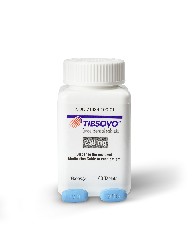
Ivonib is commonly used to treat patients with IDH1mutatedAML who have received at least one prior therapy but are still relapsed or refractory. For these patients, traditional chemotherapy methods often have limited effects, and ivonib provides a new treatment option that can delay the progression of the disease and improve the survival rate of patients. In clinical trials, ivosidenib has shown good response rates and was able to achieve longer complete remissions in some patients.
Avosidenib is also being studied for its potential in other types of cancer in addition toAML. For example, IDH1 mutations have also been found in solid tumors such as cholangiocarcinoma, leading researchers to explore whether ivosidenib could be equally effective in treating these types of cancer. However, the main indication for ivonib is stillIDH1mutated acute myeloid leukemia.
It should be noted that ivonib is not suitable for all AML patients, and its therapeutic effect is mainly limited to those patients who do have IDH1 mutations. Therefore, genetic testing is often required before using ivosidenib to determine whether the patient has this specific gene mutation. This personalized treatment approach demonstrates the importance of targeted drugs in modern cancer treatment.
[ 免责声明 ] 本页面内容来自公开渠道(如FDA官网、Drugs官网、原研药厂官网等),仅供持有医疗专业资质的人员用于医学药学研究参考,不构成任何治疗建议或药品推荐。所涉药品可能未在中国大陆获批上市,不适用于中国境内销售和使用。如需治疗,请咨询正规医疗机构。本站不提供药品销售或代购服务。


