
.jpeg)
Can ivonib treat liver cancer?
Ivosidenib is a targeted drug designed to treat a specific type of acute myeloid leukemia (AML). Its mechanism of action is to prevent the growth and proliferation of cancer cells by inhibiting the activity of IDH1 (isocitrate dehydrogenase 1) mutant enzyme. Avosidenib showed significant efficacy in patients with IDH1mutated AML. However, ivonib is not currently approved as a treatment for liver cancer.
Treatment strategies for liver cancer mainly include surgical resection, radiotherapy, systemic treatments such as chemotherapy, targeted therapy and immunotherapy. Targeted therapy has made great progress in the treatment of liver cancer in recent years. For example, sorafenib (Sorafenib) and lenvatinib (Lenvatinib) have become standard treatments for advanced liver cancer. These drugs control tumor progression by inhibiting specific signaling pathways in cancer cells. However, the mechanism of action of ivonib mainly targets IDH1 mutations, which are relatively rare in liver cancer. Therefore, there is currently insufficient scientific evidence that ivonib is effective in patients with liver cancer.
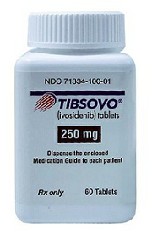
Nonetheless, the biological characteristics of liver cancer are complex and diverse, and different subtypes may have different molecular markers, which provides the possibility of targeted therapy in the future. Researchers are actively exploring new treatment targets and trying to apply different targeted drugs to different cancer types. Although ivonib is not yet approved to treat liver cancer, its success in AML has inspired researchers to explore its potential in other cancers.
Future clinical studies may further explore the application prospects of ivonib in patients with liver cancer in the context of specific genetic mutations. However, without conclusive clinical evidence, ivonib is not recommended as a treatment for liver cancer.
For patients with liver cancer, they should still follow the current clinical treatment guidelines and choose a treatment plan suitable for their disease characteristics. Treatment decisions related to liver cancer should be made under the guidance of professional doctors, taking into account the patient's specific situation and the best available treatments. In the future, with the continuous progress of scientific research, the treatment of liver cancer is expected to be more precise and personalized, but the application of ivonib in liver cancer still requires more research and verification.
[ 免责声明 ] 本页面内容来自公开渠道(如FDA官网、Drugs官网、原研药厂官网等),仅供持有医疗专业资质的人员用于医学药学研究参考,不构成任何治疗建议或药品推荐。所涉药品可能未在中国大陆获批上市,不适用于中国境内销售和使用。如需治疗,请咨询正规医疗机构。本站不提供药品销售或代购服务。


