
.jpeg)
List of Chinese instructions for molotinib/mometinib
1. Generic name: Momelotinib
Product name:Ojjaara
Other names: molotinib, mometinib
2. Who can take molotinib? Indications?
Momelotinib is indicated for the treatment of anemic adults with moderate or high-risk myelofibrosis (MF), including primary MF or secondary MF [post-polycythemia vera (PV) and post-essential thrombocythemia (ET)].
3. What are the side effects of molotinib?
In the two major clinical studies of molotinib, common side effects were thrombocytopenia, diarrhea, bleeding and fatigue, dizziness, bacterial infection, and nausea. After molotinib was put on the market, adverse events such as eye diseases (blurred vision), infections and infections (fungal infections), neurological diseases (neuralgia, peripheral neuropathy, peripheral motor neuropathy, polyneuropathy), vascular diseases (flushing), etc. also occurred.
4. How should you take molotinib?
Molotinibis available as an oral tablet. The following blood tests, including platelet complete blood count (CBC) and liver tests, should be performed before starting treatment, periodically during treatment, and as clinically indicated. The recommended dose of molotinib is 200 mg taken orally once daily with or without food. Swallow molotinib tablets whole. Do not cut, crush, or chew tablets. If a dose is missed, the next dose should be taken the next day.
The recommended starting dose for patients with severe hepatic impairment (Child-Pugh Class C) is 150 mg orally once daily. Patients who cannot tolerate 100 mg once daily should discontinue molotinib.
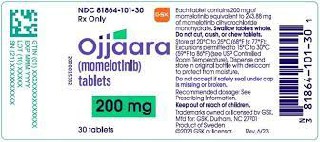
5. How to store molotinib?
Molotinib available in tablets100mg, 150mg, 200mg dosage, 30 tablets per box, storage temperature 20°C to 25°C (68°F to 77°F); tolerance is within the temperature range of 15°C to 30°C (59°F to 86°F). Distribute to patients only in original bottles. Store in original bottle to protect from moisture. Replace the lid after each opening and do not discard the desiccant.
6. How does molotinib work?
Molotinib is an inhibitor of wild-type Janus kinase 1 and 2 (JAK1/JAK2) and mutant JAK2V617F, which contribute to the signaling of many cytokines and growth factors that are important for hematopoiesis and immune function. Compared with JAK3 and tyrosine kinase 2 (TYK2), molotinib and its major human circulating metabolite M21 have higher inhibitory activity against JAK2.
Molotinib andM21 also inhibit activin A receptor type 1 (ACVR1), also known as activin receptor-like kinase 2 (ALK2), which subsequently inhibits hepatic hepcidin expression and increases iron availability, leading to increased erythropoiesis. MF is a myeloproliferative neoplasm associated with constitutive activation and dysregulation of JAK signaling, leading to inflammation and overactivation of ACVR1. JAK signaling recruits and activates STAT (signal transducer and activator of transcription) proteins, leading to nuclear localization and subsequent regulation of gene transcription.
7. What will happen if you overdose on molotinib?
There is no known antidote for molotinib overdose. If overdose is suspected, the patient should be monitored for signs or symptoms of adverse reactions or effects and appropriate supportive care instituted promptly. Further treatment should be based on clinical indications. Hemodialysis is not expected to enhance the elimination of molotinib.
8. Who should pay attention to when using molotinib?
1. Women: It is recommended that women of childbearing potential but not pregnant use highly effective contraceptive pills during treatment and for at least 1 week after the last dose. Because breastfed children may have serious adverse reactions, patients should not breastfeed during treatment and for at least 1 week after the last dose.
2. Liver function impairment: Molotinib is extensively metabolized. Molotinib exposure increases with severe hepatic impairment (Child-Pugh C). No clinical changes in molotinib exposure were observed in subjects with mild hepatic impairment (Child-Pugh A) or moderate hepatic impairment (Child-Pugh B). Therefore, the recommended starting dose for oral administration in patients with severe hepatic impairment is 150 mg once daily.
[ 免责声明 ] 本页面内容来自公开渠道(如FDA官网、Drugs官网、原研药厂官网等),仅供持有医疗专业资质的人员用于医学药学研究参考,不构成任何治疗建议或药品推荐。所涉药品可能未在中国大陆获批上市,不适用于中国境内销售和使用。如需治疗,请咨询正规医疗机构。本站不提供药品销售或代购服务。


