
.jpeg)
Molotinib/mometinib wins approval for myelofibrosis
Data fromThe Phase 3 MOMENTUM trial (NCT04173494) and the SIMPLIFY-1 trial (NCT01969838) support the regulatory agency's decision to approve momelotinib for patients with myelofibrosis.
In the MOMENTUM trial, 25% of patients (n=130) who received molotinib had Myelofibrosis Symptom Assessment Form (MFSAF) at week 24 v4.0) Tumor Symptom Score (TSS) decreased by 50% or greater from baseline compared with 9% of patients treated with danazol; this translated into a 16% difference between the two groups, consistent with the study's primary endpoint (95% CI, 6%-26%; P<0.01). Additionally, 22% of patients in the morotinib group experienced a 35% or greater reduction in spleen volume response (SVR) compared with 3% in the danazol group, translating into an 18% difference between the two groups (95% CI, 10%-27%; P = 0.001). Finally, 30% of patients in the molotinib group and 20% in the danazol group achieved transfusion independence (TI), which translated into a 14% noninferior treatment difference (95% CI, 2%-25%; P=0.023).
In theSIMPLIFY-1 trial , there was no SVR reduction of 35% or greater. Lotinib (n=215) was shown to be noninferior to ruxolitinib (n=217), with a 9% difference between the two groups (95% CI, 2%-16%). Treatment with molotinib also resulted in an increased TI rate compared with ruxolitinib, 66.5% versus 49.3%, respectively, translating into an 18% difference between the two groups (95% CI, 9%-26%).
1. Evaluation of the MOMENTUM trial study
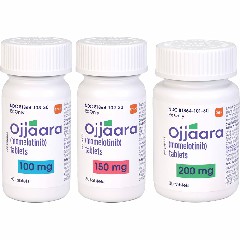
A total of195 patients with primary myelofibrosis, post-polycythemia vera myelofibrosis, or essential thrombocytopenic myelofibrosis participated in this double-blind, active-controlled Phase 3 study. To participate, they needed to be at least 18 years old, have been previously exposed to an approved JAK inhibitor for at least 90 days, have an ECOG performance status of 0 to 2, and have symptomatic disease, defined as a TSS of at least 10 at screening. Patients also need to be anemic, with a hemoglobin level below 10g/dL and a platelet count above 25x10^9 cells/L, baseline splenomegaly. According to the Dynamic International Prognostic Scoring System criteria, patients may have high-risk, intermediate-risk 2, or intermediate-risk 1 disease.
They were randomly assigned in a 2:1 ratio to receive molotinib 200 mg once daily or danazol 300 mg twice daily for 24 weeks. Patients in the danazol group were subsequently switched to open-label treatment with molotinib. In addition to the trial's primary endpoint of at least a 50% reduction in MFSAF v4.0 TSS compared to baseline at Week 24, other key endpoints include TI, SVR, change in MFSAF v4.0 TSS from baseline, and the percentage of patients who were not transfused
The median age of patients was 71 years (range, 38-86 years), and the majority were male (63%) and white (81%). In terms of disease, the majority of patients had primary myelofibrosis (64%) and intermediate-2 risk disease (57%). During the 8 weeks before study treatment, 79% of patients received a red blood cell (RBC) transfusion, with a median of 4 RBC units (interquartile range, 1-6). At baseline, 13% of patients in the molotinib group and 15% in the danazol group had TI. The median hemoglobin and platelet counts at baseline were 8 g/dL and 96x10^9/L, respectively.
Other efficacy results showed that 39% of patients in the molotinib group achieved an SVR of 25% or greater, compared with 6% in the danazol group, implying a 33% treatment difference between the two groups (95% CI, 23%-44%; P<0.0001). Additionally, during 24 weeks of treatment, 35% and 17% of patients were transfusion-free (difference, 17%; 95% CI, 8%-26%; P=0.001). The MFSAF v4.0 TSS changes from baseline were -9.4 and -3.1 for molotinib and danazol, respectively, which translated into a difference of -6.2 (95% CI, -10 to -2.4; P=0.001).
Regarding safety, the most common adverse reactions (AEs) experienced by at least5% of patients taking molotinib included thrombocytopenia, diarrhea, bleeding, fatigue, cough, paresthesia, dizziness, and vomiting.
2. Overview of SIMPLIFY-1 research
This double-blind, active-controlled Phase 3 study enrolled 432 patients with myelofibrosis who had not previously received JAK inhibitor treatment. They received 200 mg of molotinib once daily or an adjusted dose of ruxolitinib twice daily for 24 weeks. Patients in the ruxolitinib group were allowed to switch to molotinib.
There was a subgroup of patients who had anemia at baseline; this was defined as a hemoglobin level lower than10g/dL (n=181). The median age of patients in this subgroup was 68 years (range, 25-86 years). Slightly more than half of the patients were male (59%), and the majority were white (81%). 63% had primary myelofibrosis and 71% had high-risk disease. More patients had TI at baseline in the ruxolitinib group than in the molotinib group, 44% versus 29%.
The most common adverse events observed in at least20% of the anemic subgroup included dizziness, fatigue, bacterial infection, bleeding, thrombocytopenia, diarrhea renal and urinary tract infections, elevated liver enzymes, headache, peripheral edema, cardiac arrhythmias, paresthesia, pneumonia, vomiting, back pain, viral infection, and vitamin B1 deficiency.
[ 免责声明 ] 本页面内容来自公开渠道(如FDA官网、Drugs官网、原研药厂官网等),仅供持有医疗专业资质的人员用于医学药学研究参考,不构成任何治疗建议或药品推荐。所涉药品可能未在中国大陆获批上市,不适用于中国境内销售和使用。如需治疗,请咨询正规医疗机构。本站不提供药品销售或代购服务。


