
.jpeg)
What are the advantages of pralsetinib in treating RET-positive cancers?
As a highly selective RET inhibitor, Pralsetinib can precisely target RET mutations in tumor cells. Compared with traditional chemotherapy drugs, it can reduce damage to normal cells, thus reducing the incidence of side effects. This high selectivity makes platinib more targeted and safer during treatment.
In clinical trials, Platinib has shown significant efficacy in treating RETfusion-positive non-small cell lung cancer (NSCLC) and RET mutant medullary thyroid cancer. For example, in 87 patients who had received platinum-based chemotherapy, platinib achieved an overall response rate of (ORR)57%, of which the complete response rate(CR) was 5.7%. These data strongly demonstrate the effectiveness of platinib in the treatment of RET-positive cancers.
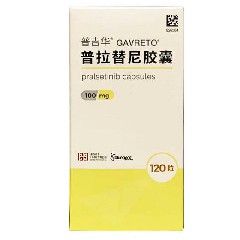
The incidence of adverse events of platinib is low, and most of them are mild to moderate, with little impact on patients' quality of life. This means that patients who receive platinib can better tolerate the drug and reduce the pain caused by the drug's side effects. At the same time, the safety of Platinib has also been verified by clinical trials, providing a strong guarantee for patient treatment.
Patients using platinib showed longer progression-free survival(PFS) and overall survival(OS), indicating that patients can obtain longer-term survival benefits. This advantage is crucial for cancer patients because it means patients can remain stable for a longer period of time and improve their quality of life.
Platinib not only excels in the treatment of RETfusion-positive NSCLC but also shows therapeutic potential in RETmutated medullary thyroid carcinoma and other RETpositive cancers. This makes platinib potentially an anticancer drug with broad indications, bringing hope to more patients.
[ 免责声明 ] 本页面内容来自公开渠道(如FDA官网、Drugs官网、原研药厂官网等),仅供持有医疗专业资质的人员用于医学药学研究参考,不构成任何治疗建议或药品推荐。所涉药品可能未在中国大陆获批上市,不适用于中国境内销售和使用。如需治疗,请咨询正规医疗机构。本站不提供药品销售或代购服务。


