
.jpeg)
Analysis of the effectiveness and clinical performance of platinib targeted therapy in various cancers
Platinib, as a targeted therapy drug targeting RET gene mutations, has attracted widespread attention in the field of cancer treatment in recent years. Its unique mechanism allows Platinib to exhibit significant therapeutic effects in a variety of cancers.
Platinib is a highly selective RET inhibitor. Its main mechanism of action is to block the signal transduction pathway in cancer cells by inhibiting the activity of RET receptors. RETThe gene plays an important role in a variety of cancers, and its mutations or fusion forms can lead to abnormal proliferation and spread of cancer cells. Platinib can specifically bind to the RET receptor and prevent its phosphorylation, thereby inhibiting the growth and metastasis of cancer cells.
Non-small cell lung cancer is the most common type of lung cancer, among which RET gene fusion is one of the important mechanisms leading to the development of NSCLC. Platinib has demonstrated significant therapeutic effects in patients with RET fusion-positive NSCLC. According to clinical trial data, the overall response rate (ORR) of patients treated with platinib for RETfusion-positive NSCLC reached a higher level, and the duration of response (DOR) was longer. This shows that platinib can effectively control the disease of NSCLC patients and prolong their survival.
Medullary thyroid carcinoma is a malignant tumor originating from thyroid parafollicular cells, in which RET gene mutation is an important driving factor in its occurrence and development. Platinib has also shown excellent results in the treatment of RETmutated MTC patients. Clinical trial results show that platinib can significantly prolong the progression-free survival (PFS) of patients with RETmutated MTC and improve the overall survival rate (OS). This discovery provides new treatment options for RETmutantMTC patients.
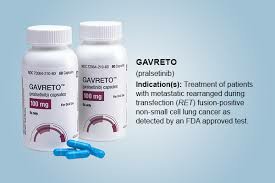
In addition toMTC, platinib has also shown potential therapeutic effects in other types of thyroid cancer. Especially for patients with advanced or metastatic RET fusion-positive thyroid cancer that is refractory to radioactive iodine, the emergence of platinib brings them new hope. Although there are currently limited data on the specific efficacy of platinib in this type of patients, existing clinical trial results show that platinib also has certain therapeutic value in this type of patients.
Platinib has shown good safety and tolerability in clinical applications. Most patients did not experience serious adverse reactions or side effects while receiving platinib. Common adverse reactions mainly include mild to moderate gastrointestinal reactions (such as nausea, vomiting, diarrhea, etc.), skin reactions (such as rash, itching, etc.), and hypertension. Most of these adverse reactions can be alleviated through appropriate drug adjustments or symptomatic treatment.
Platinib also exhibits good pharmacokinetic properties, making its absorption, distribution, metabolism and excretion processes in the body more stable and controllable. This provides patients with a more convenient medication regimen and helps ensure the stability and sustainability of treatment effects.
It is worth noting that as a targeted therapy drug, the efficacy of platinib may vary between different patients. This is mainly related to factors such as individual differences among patients, severity of the disease, and the specific type of RET gene mutation. Therefore, when using platinib for treatment, a personalized treatment plan should be formulated according to the patient's specific situation, and the patient's efficacy and adverse reactions should be closely monitored so that the treatment plan can be adjusted in a timely manner.
[ 免责声明 ] 本页面内容来自公开渠道(如FDA官网、Drugs官网、原研药厂官网等),仅供持有医疗专业资质的人员用于医学药学研究参考,不构成任何治疗建议或药品推荐。所涉药品可能未在中国大陆获批上市,不适用于中国境内销售和使用。如需治疗,请咨询正规医疗机构。本站不提供药品销售或代购服务。


