
.jpeg)
How effective is venetoclax in treating small lymphocytic lymphoma?
Venetoclax (Venetoclax), as a targeted drug, has demonstrated significant efficacy in the treatment of small lymphocytic lymphoma (SLL). Small lymphocytic lymphoma (SLL) is a hematological malignant tumor closely related to chronic lymphocytic leukemia (CLL). The two have many similarities in biological characteristics and treatment strategies. SLLmainly affects lymph nodes, while CLLmainly affects peripheral blood and bone marrow. Because the two have the same cellular origin and similar biomarkers, the therapeutic effects of venetoclax in these two diseases are also quite similar.
The mechanism of action of venetoclax
Venetoclax targets the cell lymphoma-2 (BCL-2) protein, which is often overexpressed in lymphomas such as SLL and CLL. BCL-2The protein can inhibit cell apoptosis and is an important factor in the survival of cancer cells. By inhibiting BCL-2, venetoclax induces apoptosis in cancer cells, thereby reducing the number of cancer cells and controlling disease progression. Compared with traditional chemotherapy, venetoclax is more precise because it directly targets the survival mechanism of cancer cells and avoids extensive damage to normal cells.
Clinical efficacy
In multiple clinical trials, venetoclax has demonstrated significant efficacy in the treatment of small lymphocytic lymphoma (SLL). Especially for patients with relapsed or refractory SLL, the use of venetoclax has shown a high overall response rate (ORR). In some trials, venetoclax monotherapy has achieved a response rate of more than 70% in patients with SLL, which is a major improvement for patients who have failed traditional treatments.
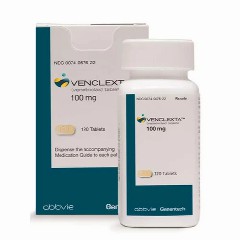
For treatment-naïve patients, venetoclax is often given in combination with other drugs, such as obinutuzumab (Obinutuzumab) or rituximab (Rituximab). This combination therapy has shown higher complete response rates in the clinic, with many patients seeing significant tumor shrinkage early in treatment. Studies have shown that the treatment regimen of venetoclax combined with obinutuzumab has a complete response rate of nearly 50% in patients with SLL, and the progression-free survival is also significantly prolonged. This represents a breakthrough treatment for patients with relapsed or refractory SLL.
Side Effects and Risk Management
Although venetoclax is highly effective in the treatment ofSLL, it is also associated with certain side effects, especially in the initial treatment stage, including the risk of tumor lysis syndrome. Because venetoclax can rapidly induce apoptosis in cancer cells, the massive death of cancer cells may lead to the release of excessive metabolites in the body, which may lead to serious complications such as renal failure. To reduce this risk, patients are put on a step-up dose regimen early in treatment, usually gradually increasing to the target dose over 5 weeks.
Other common side effects include neutropenia, anemia, and gastrointestinal discomfort. However, the side effects of venetoclax are generally milder than those of traditional chemotherapy and are well tolerated by most patients.
The problem of drug resistance to venetoclax
Although venetoclax has shown high efficacy in the treatment ofSLL, some patients may develop drug resistance during long-term treatment. This drug resistance is often related to genetic mutations within cancer cells or changes in the BCL-2 protein. To deal with this situation, researchers are exploring the combination of venetoclax with other novel targeted drugs, such as BTK inhibitors (such as ibrutinib) or PI3K inhibitors, in the hope of improving efficacy and overcoming drug resistance.
Currently, venetoclax has been approved in many countries for the treatment of small lymphocytic lymphoma and chronic lymphocytic leukemia. Due to its excellent clinical performance, it is regarded as one of the important options for the treatment of these hematological malignancies. In the future, with the deepening of more clinical studies, venetoclax may be used in combination with more innovative drugs to further improve the prognosis ofSLL patients.
In addition, the optimized treatment plan for venetoclax is still being explored, including issues such as the best combination regimen, dosage adjustment, and determination of treatment duration. Through the accumulation of more clinical data, doctors can better tailor personalized treatment plans for patients.
[ 免责声明 ] 本页面内容来自公开渠道(如FDA官网、Drugs官网、原研药厂官网等),仅供持有医疗专业资质的人员用于医学药学研究参考,不构成任何治疗建议或药品推荐。所涉药品可能未在中国大陆获批上市,不适用于中国境内销售和使用。如需治疗,请咨询正规医疗机构。本站不提供药品销售或代购服务。


