
.jpeg)
Lazcluze (Lazertinib) - Is lazertinib on the market?
Lazcluze (Lazertinib) - Lazertinib is an oral, third-generation epidermal growth factor receptor (EGFR) tyrosine kinase inhibitor (TKI) developed by Janssen Biotech for the treatment of non-small cell lung cancer (NSCLC). It is a brain-penetrating, irreversible EGFR-TKI that targets the T790M mutation and activates EGFR mutations Ex19del and L858R while sparing wild-type EGFR.
Lazcluze was first approved in South Korea on January 18, 2021, for the treatment of EGFR T790M mutation-positive non-small cell lung cancer with EGFR mutations. These patients had previously received EGFR-TKI therapy; it was approved by the U.S. Food and Drug Administration (FDA) on August 19, 2024, with the trade names of Lazcluze and Leclaza. Lazcluze can be used alone or in combination with other chemotherapy drugs, such as amivantamab (evantumumab).
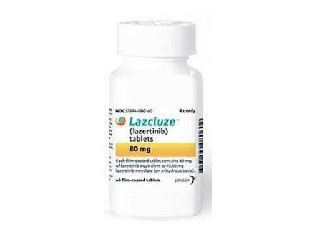
The FDA's approval is based on positive results from the phase 3 MARIPOSA study, which showed that in patients with locally advanced or metastatic non-small cell lung cancer and EGFR exon 19 deletion or exon 21 Lazcluze plus amivantamab reduced the risk of disease progression or death by 30% compared with osimertinib (osimertinib) in first-line treatment of patients with L858R substitution mutations, with a median progression-free survival [PFS] of 23.7 months versus 16.6 months. Lazcluze plus amivantamab extended the median duration of response (DOR) by 9 months. Its unique combination has shown excellent efficacy in the first-line treatment of certain patients with EGFR-mutated advanced non-small cell lung cancer.
Although overall survival (OS) results from the current analysis are premature, with the final analysis reporting 55% of prespecified deaths, no trend toward harm was observed. The most common adverse reactions were rash, nail toxicity, infusion-related reactions, musculoskeletal pain, edema, stomatitis, venous thromboembolism, paresthesia, fatigue, diarrhea, constipation, COVID-19 infection, bleeding, dry skin, decreased appetite, pruritus, nausea, and ocular toxicity.
[ 免责声明 ] 本页面内容来自公开渠道(如FDA官网、Drugs官网、原研药厂官网等),仅供持有医疗专业资质的人员用于医学药学研究参考,不构成任何治疗建议或药品推荐。所涉药品可能未在中国大陆获批上市,不适用于中国境内销售和使用。如需治疗,请咨询正规医疗机构。本站不提供药品销售或代购服务。


