
.jpeg)
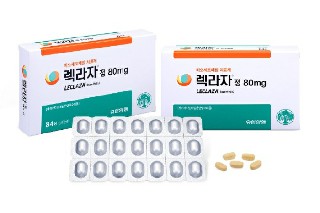
Lazcluze (Lazertinib) - How effective is Lazertinib?
A comprehensive analysis of phase 1/2 studies evaluated the efficacy and safety of the third-generation EGFR tyrosine kinase inhibitor (TKI) Lazcluze (Lazertinib) in patients with EGFR T790M-positive advanced non-small cell lung cancer (NSCLC) after prior EGFR TKI treatment.
Adults withEGFR mutation-positive non-small cell lung cancer that progressed after a prior EGFR-guided TKI received Lazcluze 240 mg orally once daily until disease progression. The use of TKIs in the treatment of T790M-positive non-small cell lung cancer is prohibited. The primary endpoints were safety and objective response rate (ORR). Secondary endpoints include progression-free survival, overall survival, and intracranial ORR.
Clinical study results showed that a total of 78 patients received 240mg of Lazcluze. Among patients with baseline T790M-positive tumors (N=76), 1.3% had a complete response and 53.9% had a partial response, for an ORR of 55.3% (95% confidence interval [CI]: 44.1-66.4). Median progression-free survival was 11.1 months (95% CI: 5.5-16.4). Median overall survival was not reached (median follow-up = 22.0 months). Among patients with measurable intracranial disease (n=7), 14.3% had a complete intracranial response and 71.4% had a partial response, with an intracranial ORR of 85.7% (95% CI: 59.8%-100.0%). The most common treatment-emergent adverse events were rash, pruritus, and paresthesia; most were mild to moderate.
Three patients experienced serious drug-related adverse events (gastritis, pneumonia, pneumonia). The main mechanism of resistance is loss ofEGFR T790M. The study results show that Lazcluze 240mg/d has a controllable safety profile and durable anti-tumor efficacy in patients with T790M-positive advanced non-small cell lung cancer after receiving EGFR·TKI treatment, including brain metastasis.
[ 免责声明 ] 本页面内容来自公开渠道(如FDA官网、Drugs官网、原研药厂官网等),仅供持有医疗专业资质的人员用于医学药学研究参考,不构成任何治疗建议或药品推荐。所涉药品可能未在中国大陆获批上市,不适用于中国境内销售和使用。如需治疗,请咨询正规医疗机构。本站不提供药品销售或代购服务。


