
.jpeg)
How effective is ritexitinib in treating alopecia areata?
Ritlecitinib, a new type of JAK3 inhibitor, has emerged in recent years in the treatment of autoimmune diseases such as alopecia areata (Alopecia Areata), and its unique efficacy and safety have attracted much attention. Alopecia areata, a disease caused by abnormal immune system attack on hair follicles, often leads to partial or systemic hair loss, seriously affecting the patient's appearance and mental health. With the in-depth exploration of the pathological mechanism of alopecia areata, targeted therapy has gradually become an important direction in the treatment of alopecia areata, and ritexitinib is one of the best.
1. The mechanism of action of ritexitinib: precise intervention in immune response
Ritexitinib achieves precise regulation of immune responses by inhibiting the JAK-STAT signaling pathway, especially targeting the activity of JAK3. Under normal circumstances, cytokines (such as IL-2, IL-4, IL-6, etc.) regulate the proliferation and activation of immune cells through this pathway. However, in patients with alopecia areata, overactivation of these cytokines causes the immune system to mistakenly attack hair follicles, triggering hair loss. The intervention of ritexitinib effectively blocks these signaling pathways, thereby reducing the immune system's attack on hair follicles and creating favorable conditions for hair regeneration.
2. Clinical studies verify efficacy: significantly promote hair regeneration
The efficacy of ritexitinib in the treatment of alopecia areata has been fully verified in multiple clinical trials. Research data shows that after 8 to 12 weeks of treatment, hair in the hair loss areas of many patients begins to regenerate, especially in patients with moderate to severe alopecia areata, the treatment effect is particularly significant.
Preliminary efficacy: Clinical trials have shown that about50%-60% of alopecia areata patients have significantly reduced hair loss area and good hair regeneration after receiving ritexitinib treatment. This data fully demonstrates the preliminary efficacy of ritexitinib in the treatment of alopecia areata.
Long-term efficacy: During long-term treatment, patients' hair density and growth continue to improve. Some patients have almost returned to normal hair growth on their scalps after receiving ritixitinib treatment for 6 months. This result undoubtedly brings great hope to patients.
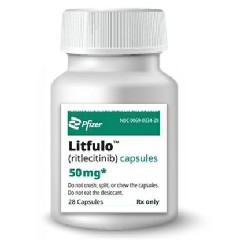
3. Safety assessment: Pay attention to side effects and ensure drug safety
Although ritixitinib has shown good efficacy in the treatment of alopecia areata, its safety also deserves attention. Common side effects include upper respiratory tract infection, headache, fatigue and diarrhea. These reactions are usually mild or moderate and can be tolerated by patients. In addition, in rare cases, liver function abnormalities, such as elevated liver enzymes, may occur. Therefore, when using ritexitinib, liver function needs to be monitored regularly to ensure medication safety.
4. Risk of recurrence and response strategies: gradually reduce dosage to reduce recurrence
Although ritexitinib is effective in promoting hair regrowth, the risk of recurrence after discontinuation of treatment remains. Research shows that about 30%-50% of patients will experience varying degrees of recurrence of hair loss within a few months after stopping the drug. In order to reduce the risk of recurrence, doctors usually recommend that patients maintain a certain medication regimen during treatment and gradually reduce the dosage when the medication is discontinued. This strategy helps reduce immune system flare-ups, thereby lowering the risk of hair loss returning.
5. Future Outlook: Expand applications and bring more hope to patients
With in-depth research on the efficacy of ritexitinib in the treatment of alopecia areata, more precise treatment plans are expected to be developed in the future. At the same time, the successful application of ritexitinib also provides new ideas for the treatment of other autoimmune diseases. Its unique mechanism of action makes it possible to become an important treatment option for a variety of autoimmune diseases, bringing more hope and good news to patients.
In summary, ritexitinib has demonstrated good efficacy and safety in the treatment of alopecia areata. It can effectively promote hair regeneration and improve patients' quality of life. Although there are certain side effects and risks of recurrence, under the guidance of professional doctors, its efficacy and safety are still worthy of recognition. In the future, with the conduct of more clinical studies and in-depth exploration, ritixitinib is expected to play a greater role in the treatment of alopecia areata and other autoimmune diseases, bringing new hope and the possibility of cure to patients.
[ 免责声明 ] 本页面内容来自公开渠道(如FDA官网、Drugs官网、原研药厂官网等),仅供持有医疗专业资质的人员用于医学药学研究参考,不构成任何治疗建议或药品推荐。所涉药品可能未在中国大陆获批上市,不适用于中国境内销售和使用。如需治疗,请咨询正规医疗机构。本站不提供药品销售或代购服务。


