
.jpeg)
FDA approves olaparib/olaparib/abiraterone for companion diagnosis of BRCA+mCRPC
The U.S. Food and Drug Administration (FDA) has approved tissue-based FoundationOne CDx and blood-based FoundationOne Liquid The CDx test is used as a diagnostic adjunct to identify patients with or suspected of having deleterious BRCA-mutated metastatic castration-resistant prostate cancer (mCRPC) who may benefit from treatment with olaparib in combination with abiraterone acetate and prednisone or prednisolone.
This approval reinforces the importance of detecting genomic mutations in metastatic diagnosis to help guide treatment decisions. High-quality tissue and liquid biopsy companion diagnostic tests will allow more patients to undergo genomic testing regardless of specimen type and will simplify complex decisions by generating optimal information, resulting in better decisions. There is an urgent unmet need for first-line treatment options for patients with BRCA-mutated metastatic castration-resistant prostate cancer, and this combination treatment is an important advance.
This announcement follows earlier this yearThe FDA's decision to approve the company's liquid biopsy test FoundationOneLiquid CDx as a diagnostic adjunct to identify patients with BRCA-positive mCRPC who may benefit from treatment with niraparib and abiraterone acetate dual-action tablets (Akeega). FoundationOne CDx is a tissue-based comprehensive genomic profiling test also approved by the FDA in August 2023 for the same treatment and indication.
With the recentFDA approval of FoundationOne CDx and FoundationOneLiquid CDx, Foundation Medicine now has seven FDA-approved prostate cancer indications for its companion diagnostics. This is an important milestone for men with aggressive prostate cancer.
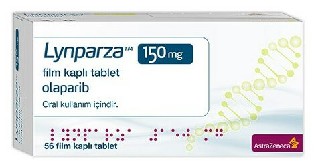
The FDA approved the combination of olaparib plus abiraterone and prednisone or prednisolone in May 2023 for the treatment of adult patients with or suspected of having deleterious BRCA-mutated mCRPC, as determined by an FDA-approved companion diagnostic test.
The approval was mainly provided byThis is supported by data from the phase 3 PROpel trial (NCT03732820), in which results from the intention-to-treat (ITT) population showed that adding olaparib to first-line abiraterone acetate and prednisone/prednisolone significantly improved radiographic progression-free survival (rPFS) compared with abiraterone acetate and prednisone/prednisolone alone in patients with mCRPC.
Across the entireITT population, investigator-assessed median rPFS for olaparib/abiraterone was 24.8 months compared with 16.6 months for placebo/abiraterone, equivalent to a 34% reduction in the risk of radiographic disease progression or death (HR, 0.66; 95% CI, 0.54-0.81; P<0.0001).
Data from the final assigned overall survival (OS) analysis of the ITT population showed that the median OS was 42.1 months in the abiraterone/olaparib group compared with 34.7 months in the abiraterone/placebo group, equivalent to a 19% reduction in the risk of death (HR, 0.81; 95% CI, 0.67-1.00; P=0.0544). The survival period is 47.9%. The results were not statistically significant.
The FDA's decision to limit approval to BRCA-positive people was based on a subanalysis that focused on only 11% (n=85) of patients with confirmed BRCA mutations in the PROpel trial. In this subgroup, adding olaparib to abiraterone reduced the risk of disease progression or death by 76% (HR, 0.24) and reduced the risk of death by 70% (HR, 0.3) compared with abiraterone alone. Median rPFS was not reached in the olaparib plus abiraterone group compared with patients who received placebo and abiraterone at 8 months (95% CI, 6-15).
In contrast, among patients withoutBRCA mutations (n=711), adding olaparib resulted in only a 23% reduction in the risk of disease progression or death (HR, 0.77) but no reduction in the risk of death (HR, 0.96).
Regarding safety, the incidence of adverse events in the olaparib/abiraterone treatment group and the placebo/abiraterone treatment group were 97.2% and 94.9%, respectively. Grade 3 or higher AEs occurred in 47.2% and 38.4% of patients, respectively. AE-related death occurred in 4.0% (n=16) of patients in the olaparib group compared with 4.3% (n=17) of patients in the placebo group.
Overall, the international, double-blind, Phase 3 PROpel trial enrolled 796 patients with first-line mCRPC. Patients were randomly assigned in a 1:1 ratio to receive olaparib 300 mg twice daily plus abiraterone 1000 mg daily (n = 399) or placebo plus abiraterone 1000 mg daily (n = 397). The primary endpoint is rPFS, and OS is another endpoint.
[ 免责声明 ] 本页面内容来自公开渠道(如FDA官网、Drugs官网、原研药厂官网等),仅供持有医疗专业资质的人员用于医学药学研究参考,不构成任何治疗建议或药品推荐。所涉药品可能未在中国大陆获批上市,不适用于中国境内销售和使用。如需治疗,请咨询正规医疗机构。本站不提供药品销售或代购服务。


