
.jpeg)
Lynparza/Olaparib/Cediranib misses survival endpoint in recurrent ovarian cancer trial
According todata from the Phase 3 ICON9 study (NCT03278717) presented at the 2024 ESMO Conference, compared with single useOlaparib/olaparib (Ol Compared with aparib), maintaining olaparib plus Cediranib did not significantly improve progression-free survival (PFS) or overall survival (OS) in patients with recurrent platinum-sensitive ovarian cancer. At a median follow-up of 37.0 months, the median PFS was 11.0 months in the olaparib and olaparib/cediranib arms, respectively (95% confidence interval [CI], 8 .4-12.8) and 13.9 months (95%CI, 11.3-16.1) (HR=0.84; 95%CI:0.65-1.07; P=0.24).
ICON9 is an international academic, controlled, randomized phase 3 trial evaluating olaparib and cediranib as maintenance therapy in the first platinum-sensitive recurrent ovarian cancer to have previously responded to platinum therapy. For context, most patients with advanced ovarian cancer will have a recurrence within 18 to 24 months. In platinum-sensitive relapses, the PARP inhibitor olaparib and the VEGF inhibitor cediranib each led to improved outcomes.
Patients with recurrent platinum-sensitive ovarian, fallopian tube, and primary peritoneal cancer were included in the study (n=330). Key eligibility criteria include platinum-sensitive relapse, up to 2 prior lines of therapy, complete response or partial response after at least 4 cycles of chemotherapy, BRCA of any type, and no prior treatment with a PARP inhibitor. Patients were stratified according to tumor BRCA status, surgical versus nonsurgical recurrence, prior treatment with bevacizumab, progression-free interval of 6 to 12 months versus more than 12 months, and country.
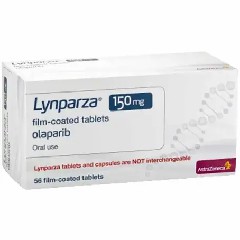
Cohort 1 included 167 patients who received oral olaparib 300 mg twice daily (BD) plus oral Cediranib 20 mg once daily (OD) until disease progression or beyond clinical benefit. Cohort 2 included 170 patients who received 300 mg of oral olaparib BD until disease progression or clinical benefit. The primary endpoint is PFS. Secondary endpoints include OS, toxicity, compliance, quality of life (QoL), cost-effectiveness, further treatment and response rate.
Baseline characteristics were balanced across the two treatment groups: olaparib monotherapy and olaparibMedian age in the /Cediranib treatment group was 64 years (range 34-81) and 62 years (range 34-85); most had an ECOG performance status of 0 (56.5% vs. 61.1%); most had serous carcinoma (97.0% vs. 97.6%); most patients did not undergo surgery at the time of recurrence (85.3% vs. 88.6%).
According to the results, at a median follow-up of 37.0 months, OS in the intention-to-treat (ITT) population was not significantly different by any stratification factor, including BRCA status. The median OS of the olaparib monotherapy group and the olaparib/Cediranib treatment group were 37.8 months (95% CI, 26.9-45.0) and 37.2 months (95% CI, 29.3-44.5) respectively (HR=0.92; 95% CI, 0.67-1.26; P=0.81). According to BRCA status, the P values u200bu200bfor BRCA-mutated and wild-type BRCA patients were 0.60 and 0.94, respectively.
Regarding safety, safety was generally consistent with expected toxicities for both drugs. The event rates in the olaparib monotherapy group and the olaparib/cediranib treatment group were 17.6% (n=30/170) and 19.8% (n=33/167), respectively. Respectively, 82.1% (n=115) and 76.9% (n=103) of patients experienced disease progression; the incidence rates of toxic reactions were 10.7% (n=15) and 13.4% (n=18) respectively. The median number of periods was 8 (range 0-51) and 11 (range 0-55) respectively. The most common grade 3 or higher adverse events (AEs) occurred in the olaparib plus cediranib versus olaparib alone groups and included anemia, hypertension, diarrhea, fatigue, decreased neutrophil count, and abdominal pain.
In summary, the improvement in progression or overall survival with maintenance olaparib and cediranib was not statistically significant compared with olaparib alone, but it is worth noting that in the olaparib arm, progression-free survival of 11 months was better than our expectation of 8.4 months, and in terms of overall survival, it was significantly better than the expectation of 37.8 months instead of 29.8 months.
[ 免责声明 ] 本页面内容来自公开渠道(如FDA官网、Drugs官网、原研药厂官网等),仅供持有医疗专业资质的人员用于医学药学研究参考,不构成任何治疗建议或药品推荐。所涉药品可能未在中国大陆获批上市,不适用于中国境内销售和使用。如需治疗,请咨询正规医疗机构。本站不提供药品销售或代购服务。


