
.jpeg)
Latest pathological classification and molecular characteristics of intrahepatic cholangiocarcinoma
Intrahepatic cholangiocarcinoma (ICC) is a malignant tumor derived from intrahepatic bile duct epithelium. Its pathological classification and molecular characteristics are of great significance for diagnosis and treatment. The following is an analysis of the latest pathological classification and molecular characteristics of intrahepatic cholangiocarcinoma:
1. Latest pathological classification
The pathological classification of intrahepatic cholangiocarcinoma is mainly based on its gross morphology, tissue structure, and cellular characteristics. Currently, the more recognized classification methods include:
1.General morphological classification:
Mass type: the most common, accounting for 60% to 80% of ICC, and manifests as a solid mass with clear boundaries in the liver parenchyma.
Peritubular infiltration type: accounting for 15%~35%, diffuse infiltration along the bile duct system and portal vein system, resulting in bile duct stenosis and peripheral bile duct dilation.
Intraductal growth type: accounting for 8% to 29%, usually showing papillary, polypoid or granular growth, spreading superficially along the bile duct.
2.Organizational structure classification:
Adenocarcinoma:ICCMost are adenocarcinomas with different degrees of differentiation, which can be divided into high, moderate and low differentiation.
Adenosquamous carcinoma, squamous carcinoma, mucinous carcinoma, signet ring cell carcinoma: less common, but have unique tissue structure and cell characteristics.
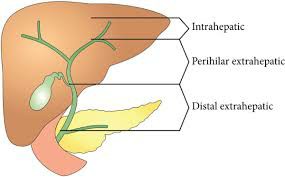
3.Cell feature classification:
Based on the shape, arrangement and degree of differentiation of cancer cells,ICC can be further subdivided into multiple subtypes, such as ordinary type and unusual type.
2. Molecular Characteristics
The molecular characteristics of intrahepatic cholangiocarcinoma are complex and diverse, involving abnormalities in multiple genes and signaling pathways. Here are some of the main molecular features:
Gene mutations and fusions: ICCA variety of gene mutations and fusions are common, such asKRAS, Mutation of TP53, BRAF and other genes, and DNAJB1-PRKACA and other gene fusions. These gene mutations and fusions play an important role in the occurrence and development of ICC.
Abnormal signaling pathways: ICC Abnormal activation or inhibition of multiple signaling pathways, such as Wnt/β -cateninsignaling pathway, MAPKsignaling pathway, PI3K/Akt/mTORsignaling pathway, etc. Abnormalities in these signaling pathways are closely related to biological behaviors such as proliferation, invasion and metastasis of ICC.
Immune microenvironment:ICC’s immune microenvironment is complex and diverse, including the abnormal expression of a variety of immune cells and molecules. For example, tumor-associated macrophages (TAMs) and regulatory T are commonly seen in ICC Increased infiltration of pan> cells (Tregs), and overexpression of immune checkpoint molecules such as PD-L1. Abnormalities in these immune microenvironments are related to immune escape and poor prognosis in ICC.
(Click to view the introduction of drugs for the treatment of cholangiocarcinoma. For specific drug details, please click for one-to-one consultation.)
Reference materials:https://pubmed.ncbi.nlm.nih.gov/35433771/
[ 免责声明 ] 本页面内容来自公开渠道(如FDA官网、Drugs官网、原研药厂官网等),仅供持有医疗专业资质的人员用于医学药学研究参考,不构成任何治疗建议或药品推荐。所涉药品可能未在中国大陆获批上市,不适用于中国境内销售和使用。如需治疗,请咨询正规医疗机构。本站不提供药品销售或代购服务。


