
.jpeg)
Difference Between Ulcerative Colitis and Crohn's Disease
Ulcerative Colitis (UC) and Crohn's Disease (CD) are both major types of inflammatory bowel disease (IBD). They have significant differences in pathological mechanisms, clinical manifestations, affected sites, and treatment strategies. Understanding the difference between the two is critical for proper diagnosis and individualized treatment.
From the perspective of the site of onset, ulcerative colitis mainly affects the colon and rectum, and the lesions are usually continuous, starting from the rectum and extending upward, possibly affecting the entire colon. Crohn's disease can occur in any part of the digestive tract, ranging from the mouth to the cardia, and is most common in the small intestine. The lesions of Crohn's disease often exhibit "jumping" characteristics, that is, healthy parts of the intestine and diseased parts appear alternately. This characteristic makes the diagnosis of Crohn's disease more complicated.
From the perspective of pathological characteristics, the inflammation of ulcerative colitis is mainly concentrated in the innermost layer of the intestinal wall, that is, the mucosal layer, accompanied by obvious ulcer formation. Crohn's disease, on the other hand, can affect all levels of the intestinal wall, often accompanied by intestinal fibrosis and stricture, and may even lead to intestinal perforation or fistula formation. This deep inflammation makes people with Crohn's disease more susceptible to serious complications, such as intestinal obstruction and abscesses.
In terms of clinical symptoms, the two are also different. The main symptoms of ulcerative colitis include diarrhea (often with blood and mucus), abdominal pain, urgency, weight loss, and fatigue. Since it primarily affects the colon, patients often face increased frequency of bowel movements, which in severe cases can lead to dehydration and electrolyte imbalance. The symptoms of Crohn's disease are more diverse. In addition to the above-mentioned diarrhea and abdominal pain, patients may also experience digestive system symptoms such as bloating, nausea, vomiting, and loss of appetite. In addition, because Crohn's disease may involve other organs throughout the body, patients sometimes experience systemic symptoms such as joint pain, skin lesions, and eye inflammation.
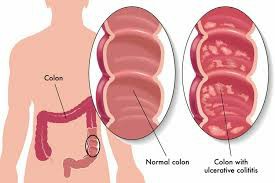
In terms of diagnostic methods, although both diseases require endoscopy, imaging examinations, and tissue biopsies, due to different lesion characteristics, doctors will make distinctions based on the patient's specific symptoms and imaging results when evaluating. In ulcerative colitis, redness, swelling, ulcers, and bleeding in the intestinal mucosa are usually found during colonoscopy, while in Crohn's disease, strictures, fistulas, and "earthworm-like" lesions of the intestine may be found during endoscopy.
In terms of treatment, although both diseases require drug intervention, there are differences in strategies and drug selection. The treatment of ulcerative colitis usually focuses on 5-aminosalicylic acid drugs and steroids, which can effectively control inflammation in the large intestine. For patients with moderate to severe ulcerative colitis, immunitySuppressants and biologics are also commonly used to help maintain long-term remission. The treatment of Crohn's disease is more complicated. In addition to the above-mentioned drugs, because it may affect all levels of the intestine, patients sometimes need to take antibiotics to treat the infection. At the same time, surgery may need to be considered earlier to solve problems such as intestinal strictures or fistulas.
Although ulcerative colitis and Crohn's disease are significantly different in many ways, both are chronic diseases and may sometimes coexist in the same patient, which requires the medical team to have sufficient expertise and clinical experience in diagnosis and treatment. Doctors need to comprehensively consider the patient's medical history, symptoms, and examination results to formulate an individualized treatment plan that is most suitable for the patient, thereby improving the treatment effect and quality of life.
Reference materials:https://www.webmd.com/ibd-crohns-disease/crohns-colitis-difference
(Click to view the introduction of drugs for the treatment of ulcerative colitis. For specific drug details, please click for one-to-one consultation.)
[ 免责声明 ] 本页面内容来自公开渠道(如FDA官网、Drugs官网、原研药厂官网等),仅供持有医疗专业资质的人员用于医学药学研究参考,不构成任何治疗建议或药品推荐。所涉药品可能未在中国大陆获批上市,不适用于中国境内销售和使用。如需治疗,请咨询正规医疗机构。本站不提供药品销售或代购服务。


