
.jpeg)
Rubicatin plus irinotecan is safe and extends efficacy in high-risk pretreated small cell lung cancer
According to data from the dose expansion portion of the phase 1/2 study PM1183-A-014-15 (NCT02611024), in high-risk patients with small cell lung cancer (SCLC), particularly those with a chemotherapy treatment-free interval (CTFI) of more than 30 days Among patients, second-line treatment with lubicatin/Lurbinectedin and irinotecan showed a favorable risk/benefit profile and resulted in high rates of durable responses.
Study results showed that the independent review committee (IRC) produced an overall response rate of 43.6% (95% CI, 33.7%-53.8%) for the two-shot vaccine in the overall population (n=101), with a median duration of response (DOR) of 7.1 months (95% CI, 4.6-9.4) . The median progression-free survival (PFS) was 4.7 months (95% CI, 3.8-5.7), and the median overall survival (OS) was 9.6 months (95% CI, 7.8-13.4). In addition, the overall survival rate at 12 months was 43.4% (95% CI, 33.4%-53.4%).
Further evaluation of efficacy based on CTFI interval showed that 90 days or more of CTFI was less than 90 days (n=52), 90 days or more (n=49), or more than 30 days (n=74). The ORRs were 25.0% (95%CI, 14.0%-38.9%), 63.3% (95%CI48.3%-76.6%) and 52.7% (95%CI-40.7%-64.4%) respectively. The median DOR for each interval was 6.9 months (95% CI, 3.9-7.6), 8.2 months (95% CI, 4.4-12.4), and 7.6 months (95% CI, 4.6-9.7), respectively. The median progression-free survival for each interval was 3.3 months (95% CI, 2.6-5.0), 5.7 months (95% CI, 4.2-8.3), and 5.0 months (95% CI, 4.1-7.2) respectively; the median OS was 7.5 months (3.5-8.8), 14.0 months (10.1-21.4), and 12.7 months, respectively. The 12-month OS rates of these groups were 25.3% (95% CI, 13.2%-37.5%), 63.1% (95% CI, 49.1%-77.2%), and 52.0% (95% CI-40.3%-63.8%), respectively.
This study demonstrated promising response rates, with a high proportion of patients experiencing prolongedDORs. Particularly striking results were observed in those with poor prognosis, which is largely determined by known prognostic factors, such as CTFI, central nervous system [CNS] involvement, and lactate dehydrogenase [LDH] levels.
The FDA and other global regulatory agencies approved rubicatin for the treatment of adult patients with metastatic small cell lung cancer who have experienced disease progression during or after platinum-based chemotherapy and is considered the standard of care in the field. Preclinical studies demonstrate synergy between rubicatin and irinotecan, supporting further evaluation of the safety and clinical efficacy of this combination approach.
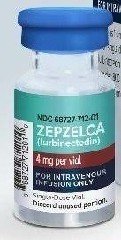
PM1183-A-014-15 evaluated the combination in pretreated patients with advanced solid tumors. In the Phase 1b portion of the study, the regimen produced positive results and the recommended Phase 2 dose (RP2D) was determined to be 2 mg/m2 of rubicatin on Day 1 plus 75 mg/m2 of irinotecan on Days 1 and 8. Treatment was given every 3 weeks with concurrent granulocyte colony-stimulating factor prophylaxis.
Therefore, an expanded cohort study of 101 second-line small cell lung cancer patients was initiated. In RP2D, the combination is being used in patients with established SCLC who have progressed on 1 platinum-containing regimen, with or without prior anti-PD-1 drugs. The patient's brain metastases were under control and his ECOG performance status was 0 or 1. The primary endpoint of the study was ORR as assessed by IRC. In the most recent platinum-based regimen, 68.3% of patients achieved partial response, 3.0% achieved complete response, 6.9% had stable disease, and 11.9% developed PD.
Patients received a median of 6 cycles (range, 1-34) of rubicatin and irinotecan, with 29.7% of patients receiving more than 10 cycles of treatment.
The safety profile of rubicatin plus irinotecan was considered manageable, with a low percentage of treatment discontinuations (3.0%) and no treatment-related deaths reported. Treatment-related adverse events (TRAEs) of any grade were reported by 99.0% of patients, with 70.3% grade 3 or higher. Grade 3 or higher treatment-emergent AEs were observed in 86.1% of patients. Serious AEs of any grade occurred in 51.5% of patients, of which 47.5% were grade 3 or higher. Treatment-related serious AEs of any grade were reported in 26.7% of patients, of which 23.8% were grade 3 or higher. TRAEs resulted in dose delays or reductions in 31.7% and 50.5% of patients, respectively.
Drug-related or unknown adverse events that occurred in more than 5% of patients included fatigue (any grade, 84.2%; Grade 3/4, 18.8%), diarrhea (70.3%; 19.8%), nausea (52.5%; 5.0%), decreased appetite (42.6%; 4.0%), and vomiting (35.6%; 6.9%), febrile neutropenia (10.9%; 10.9%), constipation (10.9%; 0.0%), weight loss (9.9%; 0.0%), mucositis (6.9%; 0.0%.), dysgeusia (5.9%; 0.0%-), and arthralgia (5.0%; 1.0%).
Observed laboratory abnormalities included anemia (≥Grade 1, 97.0%; Grade 3/4, 28.7%), neutropenia (75.2%; 53.5%), lymphopenia (86.1%; 37.6%), and thrombocytopenia (55. 4%; 11.9%), increased aspartate aminotransferase (52.5%; 6.9%), increased alanine aminotransferase (63.4%; 7.9%), increased total bilirubin (21.8%; 1.0%), increased creatinine (89.1%; 1.0%), and increased creatine phosphokinase (8.9%; 2.0%).
These encouraging results strengthen the case for this combination as an experimental arm in the ongoing pivotal Phase 3 Lagoon trial [NCT05153239] in relapsed SCLC with a CTFI greater than 30 days.
[ 免责声明 ] 本页面内容来自公开渠道(如FDA官网、Drugs官网、原研药厂官网等),仅供持有医疗专业资质的人员用于医学药学研究参考,不构成任何治疗建议或药品推荐。所涉药品可能未在中国大陆获批上市,不适用于中国境内销售和使用。如需治疗,请咨询正规医疗机构。本站不提供药品销售或代购服务。


