
.jpeg)
Combination treatment of rubicatin/rubicidine/Atezolizumab improves survival rate of ES-SCLC patients
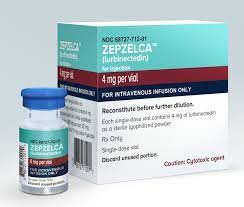
Lurbinectedin plus Atezolizum based on topline findings from the ongoing Phase 3 IMforte trial (NCT05091567) ab (ateezolizumab), as first-line maintenance therapy for adults with extensive-stage small cell lung cancer (ES-SCLC), demonstrated statistically significant overall survival (OS) and progression-free survival (PFS) benefits compared with atezolizumab monotherapy. This combination is generally well tolerated. Preliminary safety data from IMforte are consistent with the known safety profile of rubicatin and atezolizumab, and no new safety signals were reported in the combination arm of the trial.
In the United States, approximately 30,000 new cases of small cell lung cancer are reported each year. The majority of these patients are diagnosed with extensive-stage disease, which is aggressive, often difficult to treat, and carries a poor prognosis. These trial results demonstrate the efficacy of combining rubicatin, the most widely used drug in second-line small cell lung cancer in the United States, with atezolizumab, the standard of care for patients on first-line maintenance therapy, a much-needed advance for patients with a broad range of disease.
Randomized, multicenter The IMforte trial enrolled patients at least 18 years of age with histologically or cytologically confirmed ES-SCLC. The trial is divided into 2 phases: induction phase and maintenance phase. To be eligible for the induction phase, patients needed to have an ECOG performance status (PS) of 0 or 1; be insensitive to prior treatment for ES-SCLC; be treatment-free for at least 6 months since the last dose of chemotherapy or radiation for localized small cell lung cancer; have adequate hematologic and end-organ function to receive 4 cycles of induction therapy with carboplatin, etoposide, and atezolizumab; and have measurable disease according to RECIST 1.1 criteria.
To be eligible for the maintenance phase of the trial, patients needed to have an ECOG PS of 0 or 1, sustained response or stable disease meeting RECIST 1.1 criteria after the trial's induction phase, and adequate hematologic and end-organ function.
During the induction phase, patients received 4 cycles of carboplatin, etoposide, and atezolizumab. Atezolizumab 1200 mg was administered on Day 1 of each 21-day cycle, standard doses of carboplatin were administered on Day 1 of each cycle, and standard doses of etoposide were administered on Days 1, 2, and 3 of each cycle. During the maintenance phase, patients were randomized 1:1 to receive rubicatin combinationAtezolizumab or atezolizumab monotherapy. The dosage and schedule of atezolizumab are the same as during the induction phase. Rubicatin was administered at 3.2 mg/m2 on day 1 of each 21-day cycle.
OS and independent review agency-assessed PFS served as the trial's primary endpoints. Key secondary endpoints include investigator-assessed PFS, ORR, DOR, and safety. Results from the Phase 3 IMforte trial are very encouraging, showing a statistically significant benefit from the combination of [rubicatin] and atezolizumab in [ES-SCLC] patients receiving this therapy in the first-line maintenance setting. These results demonstrate the potential of this regimen to slow disease progression and extend survival in patients with this aggressive disease.
[ 免责声明 ] 本页面内容来自公开渠道(如FDA官网、Drugs官网、原研药厂官网等),仅供持有医疗专业资质的人员用于医学药学研究参考,不构成任何治疗建议或药品推荐。所涉药品可能未在中国大陆获批上市,不适用于中国境内销售和使用。如需治疗,请咨询正规医疗机构。本站不提供药品销售或代购服务。


