
.jpeg)
The therapeutic effect and safety evaluation of enasidenib/Idhifa
Enasidenib (trade name Idhifa) is a targeted therapy for patients with acute myeloid leukemia (AML) who carry isocitrate dehydrogenase 2 (IDH2) gene mutations.
Ensidipine inhibits the activity of the IDH2 mutant enzyme and reduces the production of the abnormal metabolite 2-hydroxyglutarate (2-HG), thereby inducing the differentiation of leukemia cells and inhibiting their proliferation. Clinical trials have shown that ensidipine has achieved significant efficacy in the treatment of patients with IDH2 mutated AML.
The objective response rate (ORR) of ensidipine is 40.3%, of which complete response (CR ) rate is 19.3%, and partial response (PR) rate is 15.6%. This means that more than 40% of patients have improved their condition to varying degrees after receiving ensidipine treatment. The median duration of response to ensidipine was 8.2 months, and for patients who achieved CR, the median duration of response was 19.7 months. This shows that ensidipine can not only effectively alleviate the disease, but also maintain its effect for a long time. Ensidipine significantly prolonged patient survival. For patients treated with ensidipine, the median overall survival (OS) was 9.3 months, which was significantly improved compared with traditional treatment options.
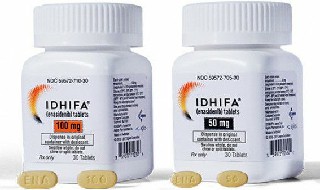
Although ensidipine is effective in the treatment ofAMLIt has shown remarkable efficacy, but its safety cannot be ignored. Common side effects of ensidipine include nausea, vomiting, diarrhea, abnormal liver function, etc. These side effects are usually mild and can be alleviated in most patients by adjusting the dose or taking other measures. Some patients may experience serious side effects during ensidipine treatment, such as tumor lysis syndrome, differentiation syndrome, etc. These side effects can be life-threatening to patients and therefore need to be recognized and addressed promptly.
Ensidipine may interact with other medications, affecting each other's effectiveness or increasing the risk of side effects. Therefore, before using ensidipine, doctors need to inquire about the patient's medication history in detail and assess the risk of potential drug interactions.
The safety of ensidipine has not been fully evaluated in pregnant women, lactating women, and patients with hepatic and renal impairment. Therefore, these special groups need to be cautious when using ensidipine and under the guidance of a doctor.
xa0
References:
https://pmc.ncbi.nlm.nih.gov/articles/PMC6347084/
[ 免责声明 ] 本页面内容来自公开渠道(如FDA官网、Drugs官网、原研药厂官网等),仅供持有医疗专业资质的人员用于医学药学研究参考,不构成任何治疗建议或药品推荐。所涉药品可能未在中国大陆获批上市,不适用于中国境内销售和使用。如需治疗,请咨询正规医疗机构。本站不提供药品销售或代购服务。


