
.jpeg)
Discussion on the therapeutic effect and working principle of ensidipine
Enasidenib is a targeted drug for specific types of leukemia. It is mainly used to treat patients with acute myeloid leukemia (AML) who have IDH2 gene mutations. This drug specifically inhibits the activity of IDH2 enzyme and interferes with the abnormal protein produced by IDH2 gene mutation, thereby interfering with the growth and division of AML cells.
IDH2The enzyme participates in redox reactions during cell metabolism under normal circumstances, converting isocitrate into α-ketoglutarate, thereby generating NADPH, which is an important reducing agent that can protect cells from oxidative stress damage. However, in the leukemia cells of some AML patients, the IDH2 gene undergoes mutations, resulting in abnormal enzyme activity and converting α -Ketoglutarate is converted into isocitrate and produces an abnormal metabolite - 2-hydroxyglutarate (2-HG). 2-HGAs a tumor-promoting factor, it can inhibit cell differentiation, promote cell proliferation, induce abnormal gene expression, interfere with DNA and histone modifications, and activate cancer-related signaling pathways. Therefore, IDH2mutation is a driver of AML and a poor prognostic indicator.
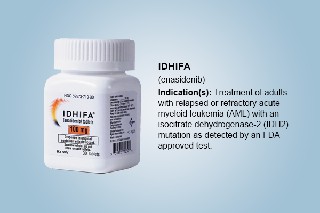
The principle of action of ensidipine is to reduce the level of 2-HG by inhibiting the mutated IDH2 enzyme, thereby restoring normal cell differentiation, inhibiting the growth of leukemia cells, inducing apoptosis of leukemia cells, and reversing cancer-related epigenetic changes. Ensidipine can highly selectively bind to the active site of IDH2, block its catalytic activity, and effectively inhibit the synthesis of 2-HG. This inhibitory effect effectively controls the accumulation of 2-HG in leukemia cells, helping to restore the normal metabolic state of the cells.
In clinical studies, ensidipine has performed well, with significant efficacy and high safety. Multiple clinical trials have shown that ensidipine is effective in treating IDH2 mutant acute myeloid leukemia (AML) and drugs containing
In addition, the use of ensidipine can also promote the differentiation and maturation of leukemia cells by reducing the accumulation of 2-HG, thereby further inhibiting the development of leukemia. Common adverse reactions of ensidipine include nausea, vomiting, diarrhea, loss of appetite, increased bilirubin, etc., but they can generally be alleviated by adjusting dosage, monitoring indicators, and symptomatic treatment.
References:
https://www.dovepress.com/enasidenib-in-the-treatment-of-relapsedrefractory-acute-myeloid-leukem-peer-reviewed-fulltext-article-CE
[ 免责声明 ] 本页面内容来自公开渠道(如FDA官网、Drugs官网、原研药厂官网等),仅供持有医疗专业资质的人员用于医学药学研究参考,不构成任何治疗建议或药品推荐。所涉药品可能未在中国大陆获批上市,不适用于中国境内销售和使用。如需治疗,请咨询正规医疗机构。本站不提供药品销售或代购服务。


