
.jpeg)
How effective is ensidipine in treating acute myeloid leukemia?
Enasidenib, also known as Idhifa, is an isocitrate dehydrogenase 2 ( IDH2) inhibitors are mainly used to treat patients with relapsed or refractory acute myeloid leukemia (AML) who carry specific IDH2 mutations. Since the U.S. FDA approved its marketing in 2017, ensidipine has demonstrated significant clinical effects in the treatment of AML, bringing new hope to many patients.
AMLThe most common type of acute leukemia, it originates in the bone marrow and quickly enters the bloodstream. Unlike normal blood cell development, the rapid accumulation of abnormal white blood cells in the bone marrow of patients with AML may interfere with the production of normal blood cells, resulting in a decrease in healthy white blood cells, red blood cells, and platelets. AML progresses rapidly. Without effective treatment, the patient’s survival may be only 6-10 months. IDH2 gene mutations are more common in AML patients. This mutation causes IDH2 enzyme activity Sexual abnormality produces excessive 2-hydroxyglutarate (2-HG). This metabolite can interfere with the normal differentiation and apoptosis of cells, thereby promoting the proliferation and survival of leukemia cells.
The mechanism of action of ensidipine is to specifically bind and inhibit the mutated IDH2 enzyme, blocking its production of 2-HG, thereby restoring the normal metabolism and differentiation of cells, thereby inhibiting the growth and division of leukemia cells. This unique mechanism of metabolic therapy has enabled ensidipine to achieve remarkable results in the treatment of IDH2 mutant leukemia.
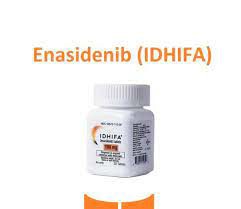
In clinical trials, the efficacy of ensidipine has been fully verified. For example, in a single centerIIIn phase 1 clinical trials, ensidipine combined with azacitidine achieved remarkable results in the treatment of IDH2 mutated AML patients. The patients' complete response rate and composite complete response rate reached a high level, and the median duration of response was also longer. In addition, ensidipine combined with venetoclax (VEN) is used to treat IDH2 mutated AMLPatient studies have also shown encouraging results, with an overall response rate of 70%, including a complete response rate of 57%.
Clinical data of ensidipine show that it has significant efficacy in patients with IDH2mutated AML. In a single-arm study of 199 patients with relapsed or refractory AML harboring an IDH2 mutation, the overall response rate (ORR) of ensidipine was 40.3%, of which the complete response rate (CR) is 19.3% and the partial response rate (PR) is 15.6%. In addition, the median progression-free survival (PFS) of ensidipine was 6.9 months, and the median overall survival (OS) was 9.3 months, and the median OS for patients who achieved CR was 19.7 months. These data show that ensidipine not only effectively reduces the leukemia cell load, but also significantly prolongs patient survival.
The efficacy of ensidipine is not only reflected in improving the patient's remission rate and survival time, but also significantly improving the patient's quality of life. Many patients have experienced significant remission and even achieved long-term disease control after receiving ensidipine treatment. In addition, ensidipine can also have a positive impact on blood hematopoietic function, reduce the need for blood transfusions, and improve patients' quality of life.
However, it is worth noting that ensidipine is not effective against allIDH2It is effective in patients with mutant leukemia. Its efficacy may be affected by a variety of factors, including the patient's age, overall health, stage of the disease and other concomitant genetic abnormalities. In addition, ensidipine may also produce some side effects during treatment, such as nausea, vomiting, diarrhea, and increased bilirubin levels. Therefore, when using ensidipine, patient response and safety need to be closely monitored to ensure that patients can obtain the maximum benefit from it.
Although ensidipine has achieved significant clinical results in the treatment ofAML, it is not a panacea. Ensidipine may not be effective in patients without IDH2 mutations. In addition, ensidipine also has some potential side effects and risks, such as IDHdifferentiation syndrome, etc., which require close monitoring and treatment during use.
References:
https://pubmed.ncbi.nlm.nih.gov/28588020/
[ 免责声明 ] 本页面内容来自公开渠道(如FDA官网、Drugs官网、原研药厂官网等),仅供持有医疗专业资质的人员用于医学药学研究参考,不构成任何治疗建议或药品推荐。所涉药品可能未在中国大陆获批上市,不适用于中国境内销售和使用。如需治疗,请咨询正规医疗机构。本站不提供药品销售或代购服务。


