
.jpeg)
Is lung cancer a solid tumor?
Lung cancer is a malignant tumor formed by abnormal proliferation of cells in lung tissue and belongs to the category of solid tumors. Solid tumors are cancers characterized by solid masses that, unlike hematological tumors (such as leukemia), have well-defined structures and borders. Lung cancer is common in the epithelial tissue of the lungs and usually appears as dense solid lesions on imaging examinations.
Based on pathological characteristics, lung cancer is divided into two main types: non-small cell lung cancer (NSCLC) and small cell lung cancer (SCLC).
Non-small cell lung cancer: accounts for about 85% of lung cancer cases, including subtypes such as adenocarcinoma, squamous cell carcinoma and large cell carcinoma.
Small cell lung cancer: It is highly malignant, grows rapidly, and has usually metastasized extensively at the time of diagnosis.
Both types of lung cancer are solid tumors, but their biological behavior and treatment strategies differ significantly.
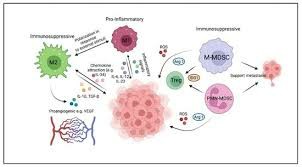
Major causes of lung cancer include smoking, air pollution, occupational exposure (such as asbestos), and genetic factors. As a solid tumor, lung cancer is usually localized to the lungs in its early stages, but as the disease progresses, tumor cells may spread throughout the body through the blood or lymphatic system (i.e., metastasize). Common metastasis sites include bone, liver, and brain.
The diagnosis of lung cancer is usually confirmed by imaging tests (such asCT, MRI) and tissue biopsy, and treatment varies by stage and type. Early localized lung cancer is mostly treated with surgical resection, while advanced or metastatic lung cancer requires a combination of radiotherapy, chemotherapy, targeted therapy or immunotherapy. In recent years, targeted drugs (such as EGFR and ALK inhibitors) and immune checkpoint inhibitors (such as PD-1/PD-L1 antibodies) have significantly improved the survival rate of some patients with advanced lung cancer.
As a type of solid tumor, progress in lung cancer research not only promotes the development of lung cancer treatment, but also has a profound impact on the diagnosis and treatment strategies of other solid tumors. For example, the concepts of precision medicine and targeted therapy were first widely used in the treatment of lung cancer. Lung cancer, as a typical representative of solid tumors, is of great significance to both medical research and clinical practice.
(Click to view an introduction to drugs for the treatment of solid tumors.)
xa0
Reference materials
National Cancer Institute - Lung Cancer
https://www.cancer.gov/types/lung
[ 免责声明 ] 本页面内容来自公开渠道(如FDA官网、Drugs官网、原研药厂官网等),仅供持有医疗专业资质的人员用于医学药学研究参考,不构成任何治疗建议或药品推荐。所涉药品可能未在中国大陆获批上市,不适用于中国境内销售和使用。如需治疗,请咨询正规医疗机构。本站不提供药品销售或代购服务。


