.jpeg)
Effects of Gilteritinib (Xospata) Discontinuation in Acute Myeloid Leukemia Treatment
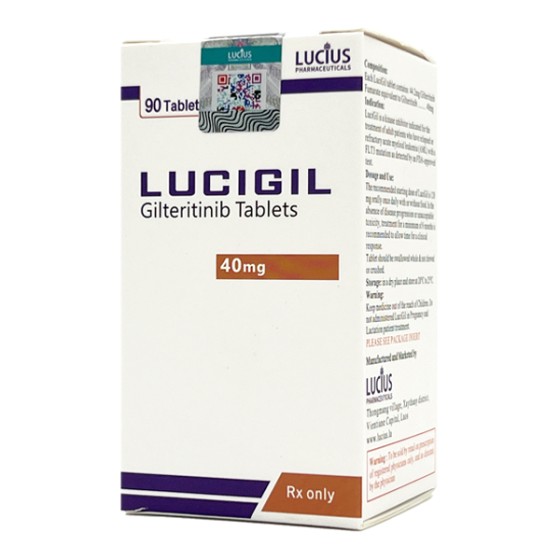
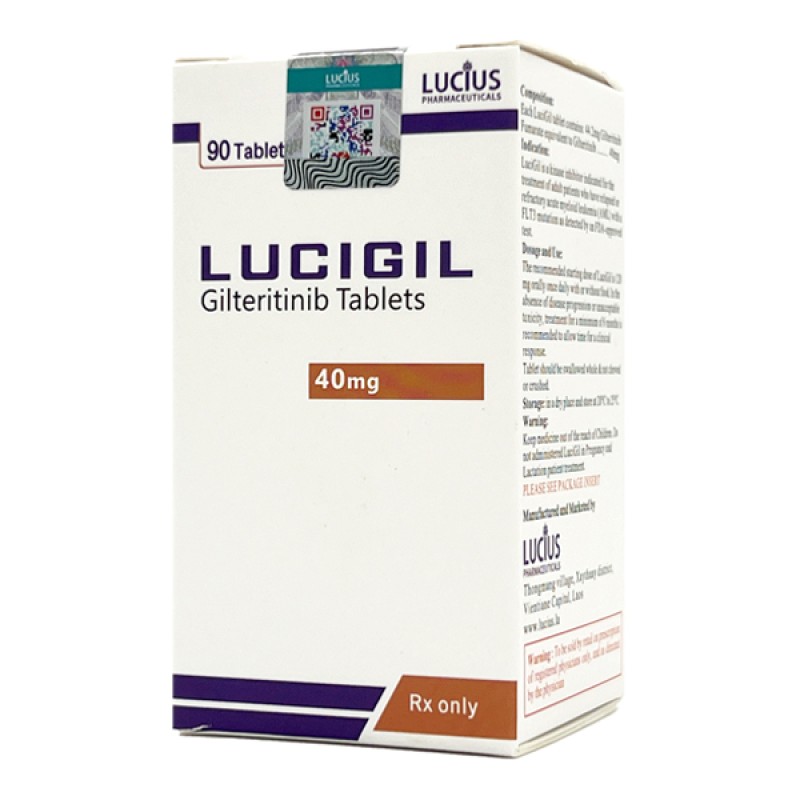
Gilteritinib(brand name Xospata)is a targeted therapeutic agent designed for FLT3 mutations.Its core mechanism of action is to inhibit the abnormal signaling pathway mediated by FLT3 mutations,thereby regulating the proliferation and survival of leukemic cells in acute myeloid leukemia(AML),and it serves as a core treatment for FLT3-mutated AML.The clinical impacts of its discontinuation are directly linked to this core mechanism,especially in patients whose disease is not fully controlled or still requires maintenance therapy with the agent.
From a pharmacological mechanism perspective,Gilteritinib does not directly eliminate all leukemic cells in the body.Instead,it achieves long-term stable disease control through continuous targeted inhibition of the FLT3 signaling pathway.Once the drug is discontinued,the inhibitory effect on the FLT3 pathway rapidly subsides,and residual leukemic cells in the body regain their proliferative advantage,driving a significant increase in disease activity.For this reason,some patients may experience fluctuations in hematological parameters or even disease progression after treatment cessation.
From the perspective of clinical practice,the impact of drug discontinuation on patients mostly presents as a progressive change,rather than immediate disease deterioration after withdrawal.Some patients can maintain short-term disease stability in the initial period after discontinuation;however,as the FLT3-driven abnormal signaling pathway is reactivated,the disease will most likely re-enter an active state.This manifestation is particularly prominent in patients with relapsed/refractory AML,whose disease control is highly dependent on continuous inhibition of the FLT3 pathway by targeted agents.
The clinical impact of treatment discontinuation is closely correlated with the patient’s treatment stage.For patients who have completed hematopoietic stem cell transplantation or achieved deep molecular remission,the risk of disease recurrence after discontinuation is relatively low.In contrast,for patients still in the maintenance treatment phase who rely on the agent to maintain disease control,unauthorized discontinuation means losing the core means of disease management,and the risk of disease progression will be significantly elevated.
In terms of treatment safety,some patients will experience gradual resolution of drug-related adverse events after discontinuation,such as improvement in abnormal liver function and musculoskeletal discomfort.However,such benefits must be fully weighed against the risk of loss of disease control.As a targeted therapeutic agent,the core clinical value of Gilteritinib relies on continuous target inhibition.Therefore,the decision of whether and when to discontinue the drug must be made by a qualified physician based on a comprehensive assessment of the patient’s individual condition and treatment response,to formulate a personalized treatment plan.Patients must not adjust their medication or discontinue treatment without medical guidance.
[ 免责声明 ] 本页面内容来自公开渠道(如FDA官网、Drugs官网、原研药厂官网等),仅供持有医疗专业资质的人员用于医学药学研究参考,不构成任何治疗建议或药品推荐。所涉药品可能未在中国大陆获批上市,不适用于中国境内销售和使用。如需治疗,请咨询正规医疗机构。本站不提供药品销售或代购服务。