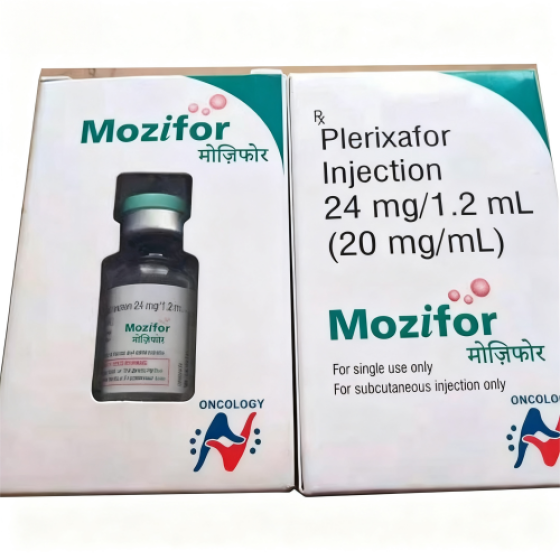
.jpeg)
Plerixafor: Mobilizing Hematopoietic Stem Cells for Autologous Transplantation
Plerixafor is a chemokine receptor type 4 (CXCR4) antagonist developed to mobilize hematopoietic stem cells (HSCs) into peripheral blood for collection and subsequent autologous transplantation. Primarily indicated for patients with Non-Hodgkin's Lymphoma (NHL) and Multiple Myeloma (MM), it is administered subcutaneously in combination with granulocyte colony-stimulating factor (G-CSF).
1. Mechanism and Indications
By blocking the CXCR4/SDF-1 signaling pathway, Plerixafor disrupts the retention of HSCs within the bone marrow, prompting their release into the bloodstream. This significantly enhances the efficiency of stem cell collection compared to G-CSF alone.
2. Dosage and Administration
-
Regimen: Plerixafor is administered approximately 11 hours prior to each apheresis session. It is typically initiated after 4 days of G-CSF therapy.
-
Calculation: Dosage is weight-based.
-
For patients weighing ≤83 kg: A fixed dose of 20 mg or 0.24 mg/kg is recommended.
-
For patients weighing >83 kg: A dose of 0.24 mg/kg is required.
-
Maximum Daily Dose: Must not exceed 40 mg, regardless of weight.
-
-
Renal Impairment: For patients with moderate to severe renal impairment (CrCl ≤50 mL/min), the dose must be reduced by one-third (to 0.16 mg/kg). The maximum daily dose in this group is 27 mg.
3. Critical Safety Information
-
Hypersensitivity: Serious allergic reactions, including anaphylaxis, have been reported. Administration should only occur in settings equipped for emergency resuscitation. Patients must be monitored for at least 30 minutes post-injection.
-
Splenic Rupture: Although rare, cases of splenic rupture have been reported. Patients presenting with left upper abdominal pain or shoulder tip pain require immediate evaluation.
-
Leukocytosis: Plerixafor increases circulating white blood cells. Monitor blood counts closely.
-
Tumor Cell Mobilization: There is a risk of mobilizing malignant cells into the apheresis product. Not recommended for patients with leukemia.
-
Embryo-Fetal Toxicity: Can cause fetal harm. Advise effective contraception for both males and females during treatment and for one week after the last dose.
4. Common Adverse Reactions
The most frequently reported side effects (≥10%) include diarrhea, nausea, fatigue, injection site reactions, headache, arthralgia, dizziness, and vomiting.
5. Special Populations
-
Pediatrics: Safety and efficacy not established.
-
Geriatrics: No significant differences in safety or efficacy were observed in patients aged 65 and older compared to younger adults, though renal function monitoring is advised.
-
Lactation: Discontinue breastfeeding during treatment and for one week after the last dose.
[ 免责声明 ] 本页面内容来自公开渠道(如FDA官网、Drugs官网、原研药厂官网等),仅供持有医疗专业资质的人员用于医学药学研究参考,不构成任何治疗建议或药品推荐。所涉药品可能未在中国大陆获批上市,不适用于中国境内销售和使用。如需治疗,请咨询正规医疗机构。本站不提供药品销售或代购服务。