.jpeg)
Elacestrant US Approval and Treatment Planning While Not Yet Available Locally
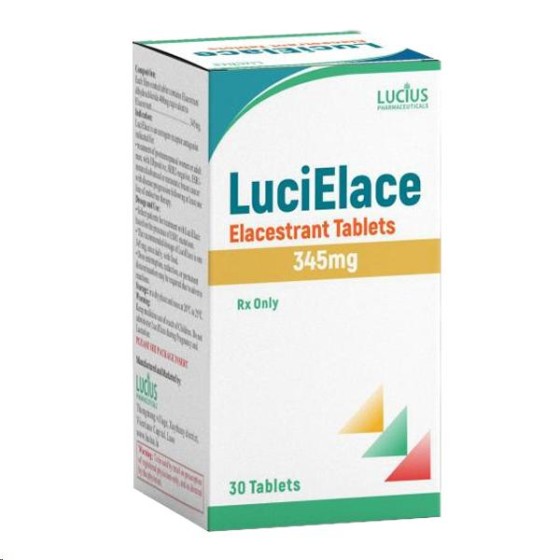
Elacestrant is an oral selective estrogen receptor degrader approved by the FDA in January 2023 under the brand name Orserdu.It is indicated for adult patients with ER-positive,HER2-negative,ESR1-mutant advanced or metastatic breast cancer that progressed after at least one prior endocrine therapy;the approved population includes postmenopausal women and adult men.The approval was primarily supported by the phase III EMERALD trial.In patients with ESR1 mutations,elacestrant improved progression-free survival versus physician’s choice endocrine therapy,with published summaries reporting a median of approximately 3.8 months versus 1.9 months and a hazard ratio around 0.55.This positions elacestrant as a mutation-directed endocrine option after endocrine resistance.
Where a jurisdiction has no verifiable local marketing authorization,the product should be treated as not routinely available.Whether a marketing application has been submitted and whether it is under review,clinical evaluation,inspection,or supplementary assessment must be confirmed through official regulator and manufacturer disclosures.Media reports of partnerships or investigational activity are not sufficient to predict approval dates.
Regulatory approval generally involves evaluation of clinical efficacy and safety data,manufacturing site inspection,labeling negotiation,and pharmacovigilance or quality commitments.Additional studies may be requested for special populations,companion diagnostics,or unresolved safety questions.Because data completeness,inspection findings,and review cycles vary by application,US approval timing cannot reliably predict approval elsewhere.
While elacestrant is unavailable,patients may first ask whether a qualifying clinical trial is open.Any plan to obtain the drug from outside the local market requires verification of prescription validity,authenticated supply,import rules,customs restrictions,and local adverse-event management.Foreign procurement carries risks related to product authenticity,storage conditions,dosing guidance,and traceability if toxicity occurs.
Treatment should not be delayed pending approval.For ESR1-mutant,ER-positive,HER2-negative advanced disease,physicians can continue or modify endocrine therapy based on prior lines,CDK4/6 inhibitor exposure,visceral disease burden,and performance status.Regular imaging,liver-function monitoring,and documented ESR1 testing are recommended.If disease progresses rapidly,visceral crisis develops,or symptoms worsen,the oncology team should change systemic therapy promptly rather than wait for a single agent.
[ 免责声明 ] 本页面内容来自公开渠道(如FDA官网、Drugs官网、原研药厂官网等),仅供持有医疗专业资质的人员用于医学药学研究参考,不构成任何治疗建议或药品推荐。所涉药品可能未在中国大陆获批上市,不适用于中国境内销售和使用。如需治疗,请咨询正规医疗机构。本站不提供药品销售或代购服务。