.jpeg)
Complete Guide to Dosage and Dose Adjustment of Entrectinib
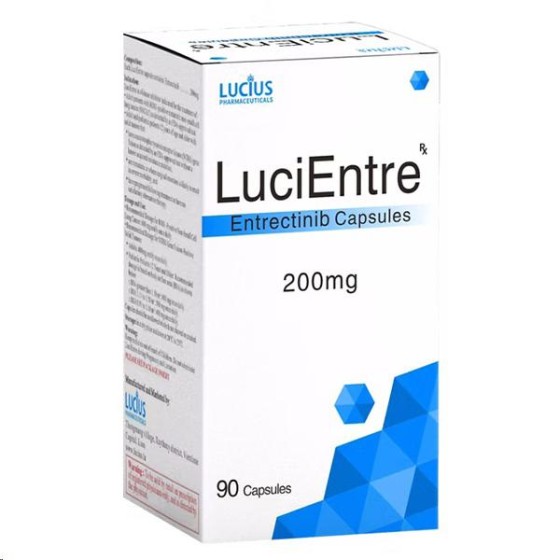
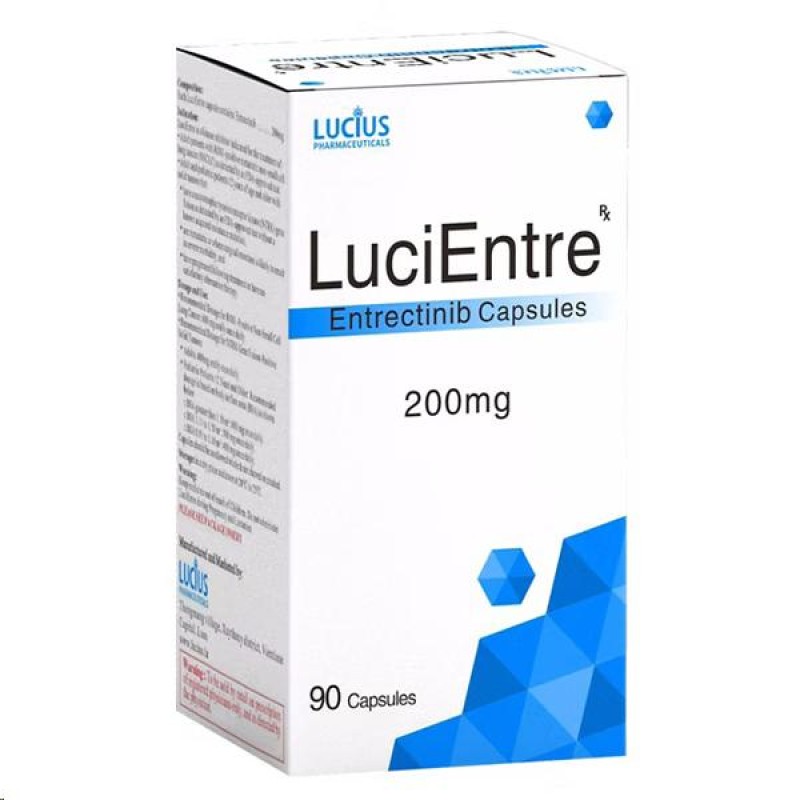
Entrectinib is a tyrosine kinase inhibitor with central nervous system activity,and its dosage is closely related to the patient's age and body surface area.The recommended baseline dose for adults is 600 mg orally once daily,while pediatric patients aged 12 years and older require individualized dose adjustment based on body surface area.All patients'specific medication regimens should be formulated under the guidance of a qualified physician.
Standard Dosage for Adults
Metastatic ROS1-Positive Non-Small Cell Lung Cancer
Entrectinib is approved for the treatment of adult patients with metastatic non-small cell lung cancer whose tumors are ROS1-positive.The recommended dose is 600 mg orally once daily,continued until disease progression or unacceptable toxicity occurs.
NTRK Gene Fusion Solid Tumors
It is indicated for adult patients with solid tumors who meet all of the following criteria:have a neurotrophic tyrosine receptor kinase(NTRK)gene fusion without a known acquired resistance mutation;have metastatic disease or where surgical resection is likely to result in severe morbidity;and have progressed following prior treatment or have no satisfactory alternative treatment options.The recommended dose is also 600 mg orally once daily,continued until disease progression or unacceptable toxicity occurs.
Standard Dosage for Pediatric Patients Aged 12 Years and Older
Entrectinib is approved for pediatric patients aged 12 years and older with solid tumors who meet all the above criteria for NTRK gene fusion solid tumors.The recommended dose is precisely adjusted based on body surface area(BSA):patients with a BSA greater than 1.5 m²receive 600 mg orally once daily;those with a BSA between 1.11 and 1.5 m²receive 500 mg orally once daily;and those with a BSA between 0.91 and 1.1 m²receive 400 mg orally once daily.Treatment should be continued until disease progression or unacceptable toxicity occurs.
General Medication Precautions
Entrectinib can be taken with or without food.The capsules should be swallowed whole,and patients must not open,crush,chew,or dissolve the contents of the capsules.
If a dose is missed,it should be taken as soon as possible if the next scheduled dose is more than 12 hours away.If the next dose is due in less than 12 hours,the missed dose should be skipped,and the next dose should be taken at the regularly scheduled time.Double doses should not be taken to make up for a missed dose.
If a patient vomits immediately after taking a dose,they should be instructed to take another full dose immediately.
Dose Adjustments for Special Populations
No dose adjustment is required for patients with mild or moderate renal impairment(creatinine clearance 30 to<90 mL/min).
Patients with hepatic impairment require dose adjustment based on the severity of liver injury.Patients with grade 3 hepatic impairment should interrupt dosing until liver function recovers to≤grade 1 or baseline.If the adverse reaction resolves within 4 weeks,treatment may be resumed at the same dose;if it does not resolve within 4 weeks,treatment should be permanently discontinued.For recurrent grade 3 events that resolve within 4 weeks,treatment should be resumed at a reduced dose.Patients with grade 4 hepatic impairment should also interrupt dosing until recovery to≤grade 1 or baseline.If it resolves within 4 weeks,treatment may be resumed at a reduced dose;if not,treatment should be permanently discontinued.Recurrent grade 4 events require permanent discontinuation.If a patient develops alanine aminotransferase(ALT)or aspartate aminotransferase(AST)elevation greater than 3 times the upper limit of normal(ULN)with concurrent total bilirubin elevation greater than 1.5 times ULN(in the absence of cholestasis or hemolysis),treatment should be immediately and permanently discontinued.
The safety and efficacy of entrectinib have not been established in pediatric patients younger than 12 years with NTRK gene fusion solid tumors,or in patients younger than 18 years with ROS1-positive non-small cell lung cancer.There are no available clinical data on the use of entrectinib in dialysis patients.
Dose Adjustment Regimens for Adverse Reactions
Dose adjustment for entrectinib follows a stepwise reduction principle.For the first dose reduction,adults and pediatric patients aged 12 years and older with a BSA>1.50 m²are adjusted to 400 mg once daily;pediatric patients with a BSA of 1.11 to 1.50 m²are adjusted to 400 mg once daily;and pediatric patients with a BSA of 0.91 to 1.1 m²are adjusted to 300 mg once daily.For the second dose reduction,all patients are adjusted to 200 mg once daily.If a patient cannot tolerate the dose after the second reduction,treatment should be permanently discontinued.
Corresponding dose adjustment strategies are required for different types of adverse reactions.For patients with congestive heart failure,grade 2 or 3 events require interruption of dosing until recovery to≤grade 1,and treatment should be resumed at a reduced dose;grade 4 events require permanent discontinuation.Regarding central nervous system effects,intolerable grade 2 events require interruption of dosing until recovery to≤grade 1 or baseline,and treatment may be resumed at the same dose or a reduced dose.For grade 3 events,if they resolve within 4 weeks after interruption,treatment may be resumed at the same dose;recurrent grade 3 events require dose reduction,and those not resolving within 4 weeks require permanent discontinuation.For grade 4 events,if they resolve within 4 weeks after interruption,treatment may be resumed at the same dose or a reduced dose;recurrent grade 4 events require permanent discontinuation.Grade 2 or higher visual disturbances require interruption of dosing until symptoms improve or stabilize,and treatment may be resumed at the same dose or a reduced dose as appropriate.Grade 3 or 4 anemia or neutropenia requires interruption of dosing until recovery to grade 1 or baseline.If they resolve within 4 weeks,treatment may be resumed at the same dose or a reduced dose;recurrent grade 4 events require permanent discontinuation,and those not resolving within 4 weeks require permanent discontinuation.
Dose Adjustment for Concomitant Use with Moderate and Strong CYP450 3A Inhibitors
Concomitant use of entrectinib with moderate or strong CYP450 3A inhibitors should be avoided whenever possible.If concomitant use cannot be avoided,dose adjustment is required for adults and pediatric patients aged 12 years and older with a BSA>1.5 m²:200 mg orally once daily when used with a moderate CYP450 3A inhibitor,and 100 mg orally once daily when used with a strong CYP450 3A inhibitor.After discontinuation of the moderate or strong CYP450 3A inhibitor for 3 to 5 elimination half-lives,the dose of entrectinib may be resumed to the dose used before initiation of the CYP450 3A inhibitor.
[ 免责声明 ] 本页面内容来自公开渠道(如FDA官网、Drugs官网、原研药厂官网等),仅供持有医疗专业资质的人员用于医学药学研究参考,不构成任何治疗建议或药品推荐。所涉药品可能未在中国大陆获批上市,不适用于中国境内销售和使用。如需治疗,请咨询正规医疗机构。本站不提供药品销售或代购服务。