
.jpeg)
Comprehensive Analysis of the Third-Generation EGFR-TKI
Basic Information and R&D Background
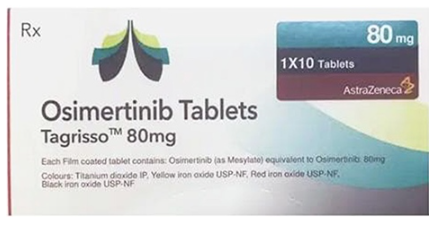
Osimertinib(brand names Tagrisso/Tarceva),developed by AstraZeneca(UK),is a third-generation epidermal growth factor receptor tyrosine kinase inhibitor(EGFR-TKI).Its core mechanism involves selective inhibition of EGFR T790M mutation(common after 1st/2nd-gen TKI resistance)and L858R/exon 19 deletion mutations(primary sensitive mutations),blocking cancer cell proliferation signals.It is primarily indicated for EGFR-mutant advanced non-small cell lung cancer(NSCLC).
Key Indications(FDA-Approved)
Adjuvant Therapy:For adult NSCLC patients with EGFR exon 19 deletion or L858R mutation(confirmed by FDA-approved tests)after tumor resection.
Locally Advanced Unresectable(Stage III):For patients with disease not progressed during/after concurrent/sequential platinum-based chemoradiotherapy and confirmed EGFR mutations.
Metastatic First-Line Monotherapy:For metastatic NSCLC adults with confirmed EGFR exon 19 deletion or L858R mutation.
Locally Advanced/Metastatic First-Line Combination:Combined with pemetrexed+platinum chemotherapy for the above EGFR-mutant NSCLC.
T790M-Resistant Post-TKI:For metastatic NSCLC adults with confirmed EGFR T790M mutation and progression after EGFR-TKI therapy.
Dosage and Administration(Oral,Once Daily)
Adjuvant:80mg,with/without food,until recurrence,intolerable toxicity,or max 3 years.
Locally Advanced Unresectable(Stage III):80mg after platinum-based chemoradiotherapy,until progression or toxicity.
Metastatic Monotherapy:80mg,until progression or toxicity.
Combination Therapy:80mg+pemetrexed+platinum chemotherapy,until progression or osimertinib-related toxicity.
Adverse Reactions(Incidence>20%)
Monotherapy:Leukopenia,lymphocytopenia,thrombocytopenia,anemia,diarrhea,rash,musculoskeletal pain,neutropenia,nail toxicity,dry skin,stomatitis,fatigue.
Post-Chemoradiotherapy Monotherapy:Lymphocytopenia,leukopenia,interstitial lung disease/pneumonitis,thrombocytopenia,neutropenia,rash,diarrhea,nail toxicity,musculoskeletal pain,cough,COVID-19.
Combination Chemotherapy:Leukopenia,thrombocytopenia,neutropenia,lymphocytopenia,rash,diarrhea,stomatitis,nail toxicity,dry skin,elevated blood creatinine.
Key Precautions
Interstitial Lung Disease/Pneumonitis:May cause fatal ILD;suspend and investigate if dyspnea,cough,fever occur;permanently discontinue if confirmed(except grade 1 post-chemoradiotherapy).
QTc Prolongation:1.1%monotherapy patients had QTc>500ms;10.5%combination patients had>60ms increase from baseline.Monitor ECG in cardiac/electrolyte abnormality patients.
Cardiomyopathy:May induce heart failure;monitor LVEF at baseline and during treatment;permanently discontinue if symptomatic heart failure occurs.
Other Risks:Keratitis(0.6%monotherapy),severe skin reactions(EMM/SJS/TEN),vasculitis,aplastic anemia(0.06%trial incidence)—all require prompt intervention.
Embryo-Fetal Toxicity:Contraindicated in pregnancy;contraception required for women(6 weeks post-last dose)and men(4 months post-last dose).
Special Populations
Pregnancy:Animal studies show fetal loss at 1.5x clinical exposure;contraindicated.
Lactation:May be excreted in breast milk;avoid breastfeeding during treatment and 2 weeks post-last dose.
Geriatrics:≥65-year-olds have slightly higher grade 3+adverse events(43%vs 33%monotherapy)but similar overall safety.
Hepatic/Renal Impairment:No dose adjustment for mild-moderate liver impairment(Child-Pugh A/B)or normal renal function;no recommendation for severe liver impairment/end-stage renal disease.
Drug Interactions
Avoid strong CYP3A4 inducers(e.g.,rifampin)to prevent reduced osimertinib exposure;no adjustment for moderate/weak inducers.
Caution with BCRP/P-gp substrates(e.g.,methotrexate)due to increased toxicity risk.
Avoid QTc-prolonging drugs(e.g.,amiodarone);monitor ECG if coadministered.
Pharmacokinetics
Absorption:Median Tmax 6 hours;high-fat meals do not affect absorption.
Distribution:95%plasma protein-bound;crosses blood-brain barrier(effective in brain metastases).
Metabolism:Primarily CYP3A-mediated oxidation/dealkylation;two active metabolites(AZ7550,AZ5104,~10%exposure of parent drug).
Excretion:Mainly feces(68%)and urine(14%);half-life 48 hours,steady state reached in 15 days.
[ 免责声明 ] 本页面内容来自公开渠道(如FDA官网、Drugs官网、原研药厂官网等),仅供持有医疗专业资质的人员用于医学药学研究参考,不构成任何治疗建议或药品推荐。所涉药品可能未在中国大陆获批上市,不适用于中国境内销售和使用。如需治疗,请咨询正规医疗机构。本站不提供药品销售或代购服务。


